
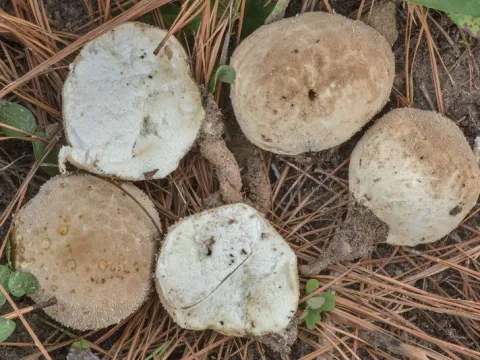
Rooted puffball
Lycoperdon radicatum
The rooted puffball (Lycoperdon radicatum) is a member of the Agaricaceae family, recognized primarily for its distinct cord-like mycelial base that anchors it into the ground.
What the section contains
Rooted puffball
While often classified as a saprotrophic fungus, it plays an active role in decomposing organic matter within the soil environment of gardens and plantations.
The organism produces spherical fruit bodies that release spores, which are distributed by wind or rain, facilitating the colonization of nutrient-rich, damp substrates.
It thrives in soils containing substantial organic debris, such as decaying wood chips or uncomposted manure, often appearing in clusters under canopy shadows.
Biologically, the fungus is highly competitive, quickly occupying available organic resources, which can alter the local nutrient cycle in the soil profile.
Optimal development for Lycoperdon radicatum occurs during periods of high humidity, particularly throughout late summer and autumn when moisture levels remain high.
Shaded areas with poor airflow and high soil moisture provide the perfect environment for the fungus to establish its mycelial network and eventually produce fruit bodies.
Accumulated leaf litter, woody remnants, and moist soil surfaces serve as the primary growth medium, encouraging the fungus to spread across planting areas.
Compacted soil prevents effective evaporation and drainage, creating a stagnant microclimate that the rooted puffball exploits for rapid proliferation.
Preventative management includes modifying these environmental triggers by enhancing soil aeration and reducing the moisture content of the topsoil.
The primary concern regarding this fungus is its ability to outcompete beneficial microorganisms and interfere with the nutrient uptake of sensitive crop roots.
In dense patches, the fungal mycelium can physically obstruct water and nutrient flow to the root systems of agricultural crops and ornamental plants.
The presence of Lycoperdon radicatum often indicates a degradation of soil quality or an excess of undecomposed organic materials, which may negatively impact plant health.
While not a primary plant pathogen, it can disrupt the microbial balance of the soil, potentially leaving plants more vulnerable to genuine fungal infections.
Consistent growth of the fungus in agricultural beds can lead to the depletion of surface nutrients required for crop vigor and long-term productivity.
The most effective strategy is rigorous sanitation, which involves removing woody debris, rotting leaves, and other organic waste from the soil surface.
Introducing beneficial soil fungi, such as Trichoderma species, can help suppress the growth of Lycoperdon radicatum through direct competition for the substrate.
Improving drainage and regularly tilling the soil surface to break up the mycelium will disrupt the fungus's ability to thrive and colonize new areas.
Manual removal of visible fruit bodies before they release their spores is essential to prevent the spread of the fungus during the next growing season.
Avoid excessive use of uncomposted organic fertilizers in planting zones, as these materials create highly favorable conditions for puffball colonization.