
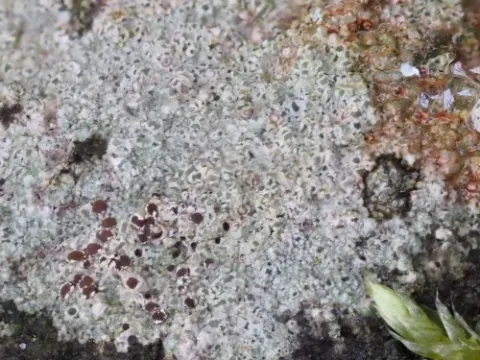
Baeomycetales lichens
Baeomycetales
The order Baeomycetales consists of lichenized fungi living in symbiosis with algal partners. These organisms are not pathogens, as they do not attack living plant cells or absorb nutrients from the host plant.
What the section contains
Baeomycetales lichens
They exist as epiphytes, utilizing the bark of trees, stones, or soil surfaces solely as a physical substrate for anchoring. Their biological life cycle is entirely independent of the plant's metabolic functions.
Systematically, these fungi belong to the class Lecanoromycetes. They lack the specialized enzymes required to penetrate and digest plant tissue, meaning they cannot cause infectious plant diseases.
In agriculture, their presence on trees is often mistaken for a fungal infection. However, they are distinct from parasitic fungi that cause rots, blights, or systemic diseases in crops and trees.
Understanding that these are symbionts is crucial for responsible farm management. They are part of the local ecosystem's biodiversity and are sensitive indicators of ambient air quality and humidity.
Signs of Baeomycetales presence include the appearance of small, crust-like or shrubby growths on bark or soil. They may appear as tiny, greyish or olive-green patches with small, club-shaped reproductive structures.
These growths are usually superficial and can be scraped off easily without causing damage to the underlying bark or wood. There is no discoloration or necrosis around the area where the lichen is attached.
The visual impact changes depending on the moisture level: in rainy conditions, they become more vivid and soft, while in dry weather, they may look shriveled and crusty, firmly adhering to the substrate.
Unlike pathogenic fungi that produce mycelial mats beneath the bark or inside leaves, these lichens grow exclusively on the surface. They do not cause the bark to crack, peel, or weep fluids.
Observing a distinct, organized growth pattern with specific reproductive structures (apothecia) helps differentiate them from disorganized, soft fungal infections characteristic of true plant diseases.
Baeomycetales lichens thrive in environments with consistent high humidity and moderate temperatures. They are most commonly found in shaded, unventilated areas where moisture remains on surfaces for extended periods.
The texture of the bark plays a role; trees with rough, aged bark provide better attachment sites for spores to germinate and develop into mature thalli over several years.
They are highly sensitive to air pollution and chemical pesticides, particularly copper-based fungicides. Their absence in heavily treated industrial orchards is a common occurrence due to their physiological sensitivity.
Poor orchard management, such as neglected pruning, creates microclimates characterized by reduced airflow and increased moisture, which favors the accumulation and spread of these organisms on tree trunks.
They do not have a rapid life cycle and generally require stable, undisturbed conditions to colonize and form visible colonies, which is why they are rarely found on young or actively growing annual crops.
There is no direct physiological harm caused by these lichens. They do not compete with the plant for nutrients or water, as they obtain their sustenance primarily through atmospheric deposition.
Indirect harm may occur if the lichen growth is excessively dense, potentially creating a physical refuge for secondary pests like scale insects or mites. These pests can thrive under the lichen cover, hidden from predator insects.
In some cases, extremely dense colonies might slightly impede bark respiration by covering the lenticels. However, this is rarely sufficient to impact the overall health of a well-maintained, vigorous tree.
The primary concern is the indicator status of these organisms. Their colonization of fruit trees often points to a decline in the tree's health or vitality, typically associated with age or poor cultural practices.
As they are not parasitic, treating them with harsh chemicals is typically unnecessary and counterproductive, as the cure can cause more physiological damage to the host plant than the lichen itself.
Effective management begins with improving tree vigor. Proper pruning to open the canopy increases sunlight and airflow, effectively reducing the surface moisture necessary for lichen growth.
Mechanical removal is the safest and most recommended management technique. Carefully scraping the bark with a stiff brush during dormancy can remove the colonies without damaging the plant's vascular tissues.
Applying a lime wash or white latex-based garden paint to trunks serves as an excellent deterrent. This creates a surface that is both physically difficult to colonize and chemically unfavorable for the lichen's symbionts.
Promoting general tree health through balanced fertilization and proper water management is key. Healthy trees with smooth, rapidly expanding bark are much less likely to be colonized by epiphytic lichens.
Avoid the overuse of heavy-duty chemical fungicides, as these disturb the tree's natural epiphytic balance. Focus on cultural practices that encourage the plant's natural resilience rather than attempting to eradicate harmless lichen species.