
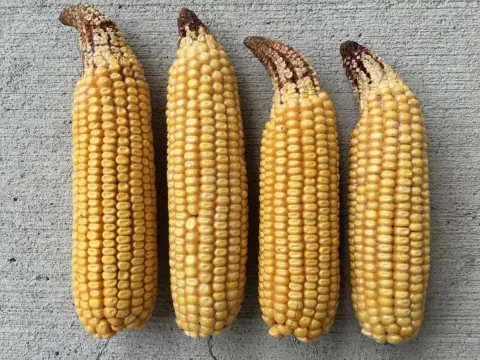
Ear tip dieback
Extreme drought
The primary symptom is the failure of kernels to develop on the very tip of the maize ear, resulting in a barren or partially filled cob end.
What the section contains
Ear tip dieback
The husks may appear too short to fully cover the cob, leaving the tip exposed to direct sunlight and environmental stressors during the grain-filling stage.
Kernels at the tip are often aborted, shrunken, or entirely absent, while the lower sections of the ear may be fully populated with healthy kernels.
This condition creates a distinct appearance where the cob seems shorter than the genetic potential of the hybrid suggests, often accompanied by silk drying.
Observers will notice that the physiological development halted prematurely, leaving the tip of the cob without the standard physiological maturity of the base.
This is not a biological disease or a biotic infection; it is a physiological disorder driven by severe environmental or nutritional stress.
The mechanism is triggered by a hormonal and metabolic shift within the plant, forcing it to prioritize existing kernels over the development of new ones at the tip.
Since no pathogen is involved, the condition is purely the result of the plant's inability to maintain growth processes under suboptimal environmental conditions.
Biological research indicates that the abortion of ovules at the tip occurs when the plant senses an imminent lack of water or photosynthates.
There is no causative fungus, bacterium, or virus involved, and therefore, anti-pathogen treatments are completely ineffective for this condition.
Severe drought conditions during the critical flowering stage (pollination and silking) are the most significant factors leading to ear tip dieback.
Heat stress, with temperatures exceeding 35°C, can lead to silk desiccation, preventing successful pollination of the distal end of the ear.
Nitrogen deficiencies or limited water availability during the V12 to R1 growth stages can result in insufficient photosynthate supply to support ear development.
High plant population density often exacerbates the issue by increasing competition for water and nutrients, leaving plants with fewer resources for ear filling.
Inconsistent precipitation patterns combined with high evaporation rates create the exact physiological pressure required for kernel abortion at the ear tip.
The primary impact is a measurable reduction in total grain yield, as the missing kernels at the tip represent a direct loss of potential weight.
Exposed ear tips are prone to insect damage, particularly from the corn earworm, which finds easy access to the cob tissue without the protection of husks.
Fungal infection risks increase as pathogens like Fusarium can easily colonize the damaged or aborted kernel sites, leading to mycotoxin contamination.
Harvesting efficiency is affected because the ears are physically uneven, leading to potential difficulties during the shelling and cleaning processes.
The overall crop quality may suffer due to the heterogeneity of the grain size, which can affect market grading and storage shelf life.
Selecting hybrids that demonstrate high stress tolerance and stable performance under variable climate conditions is the most effective preventative strategy.
Adjusting planting densities based on soil water holding capacity helps ensure that each plant has sufficient access to nutrients and water.
Implementing irrigation strategies to provide moisture during the critical R1 (silking) growth stage is the best way to prevent kernel abortion.
Maintaining balanced soil fertility, ensuring adequate nitrogen and potassium levels, supports the plant during high-energy demand periods like pollination.
- Regular monitoring of soil moisture content
- Precision nitrogen management
- Use of stress-tolerant genetics