
Eastern filbert blight
Anisogramma
Description
Symptoms
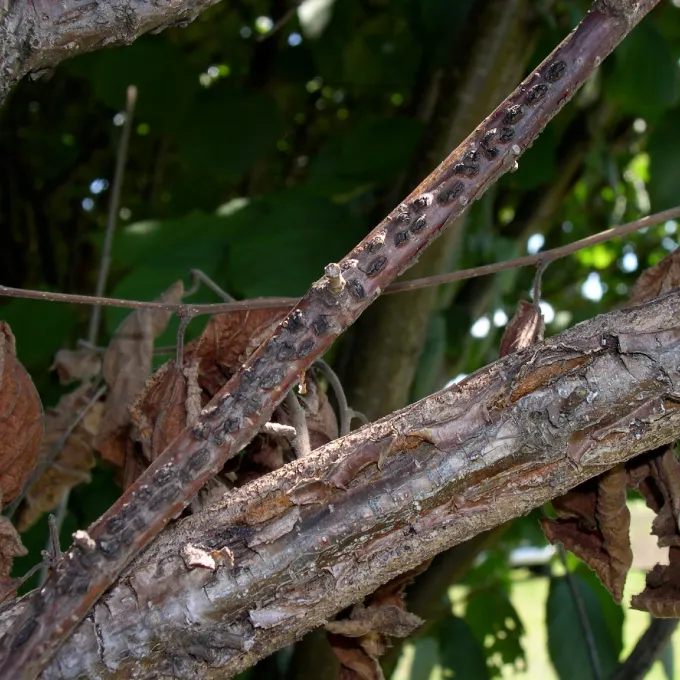
The most prominent symptom of Eastern filbert blight is the appearance of elongated, black, stroma-like structures arranged in rows on the infected branches.
As the disease progresses, the bark of the affected twigs becomes cracked, and in severe cases, the branches develop cankers that may encircle the entire limb.
Leaves on infected branches often show signs of chlorosis, followed by wilting and premature leaf drop as the branch dies from the blockage of vascular tissues.
In the later stages of the infection, the tree canopy may appear sparse and thin, with dead or dying branches visible throughout the orchard.
The wood underneath the canker becomes brittle and is prone to breaking during high wind events, which further contributes to the degradation of the tree structure.
Pathogen
The causal agent of this disease is the fungus Anisogramma anomala. It is a highly specialized ascomycete that specifically infects hazelnut trees of the genus Corylus.
The fungus has a two-year life cycle. Following the initial infection of young twigs, the symptoms remain hidden for over a year before becoming visible in the second season.
The pathogen colonizes the cambium and phloem of the tree, creating fungal mats that eventually burst through the bark to release reproductive spores.
As the fungus develops inside the wood, it disrupts the movement of water and nutrients, which eventually leads to the death of the infected branches.
Due to the long incubation period, orchards can be heavily infested long before the symptoms become obvious to the grower during regular inspections.
Conditions for development
The spread of the disease is highly dependent on wet weather conditions, particularly during the spring months when the spores are actively released and disseminated.
High relative humidity and rainfall promote the germination of spores on the surface of young, susceptible hazelnut shoots, facilitating the initial infection process.
Orchards planted at high densities with poor air circulation are more susceptible to the disease, as they retain moisture on the branches for longer durations.
The presence of wild hazelnut trees or neglected orchards in the vicinity serves as a constant source of inoculum, increasing the risk of infection in cultivated groves.
Moderate temperatures during the growing season provide an ideal environment for the fungus to establish itself and progress throughout the host's tissue.
Why it matters
Eastern filbert blight is considered one of the most destructive diseases affecting the hazelnut industry, capable of killing mature trees within a few years.
Infection leads to a significant reduction in fruit production and quality, ultimately resulting in the total loss of commercial value for the affected trees.
If left unmanaged, the pathogen can spread rapidly throughout an orchard, necessitating the removal of entire blocks of trees to contain the outbreak.
The disease weakens the tree's overall vigor, making it more susceptible to other environmental stressors, including frost damage and secondary pest infestations.
The economic impact is substantial, involving both the loss of annual revenue and the high costs associated with orchard restoration and long-term sanitation practices.
Protection
The most effective management strategy is to select and plant hazelnut cultivars that have proven genetic resistance to Anisogramma anomala.
Rigorous sanitation involves pruning out all infected branches at least 30 cm below the visible canker and removing them from the orchard immediately.
All pruned materials must be burned or destroyed to prevent the survival of fungal spores that could lead to re-infection in the following seasons.
A consistent spray program using copper-based fungicides is essential during the period of new shoot growth to provide a protective barrier against incoming spores.
Regular orchard monitoring is critical for the early detection of symptoms, allowing for immediate intervention before the disease can reach epidemic proportions.
Discussion
No discussions yet — be the first.