
Dwiroopa punicae
Dwiroopa punicae
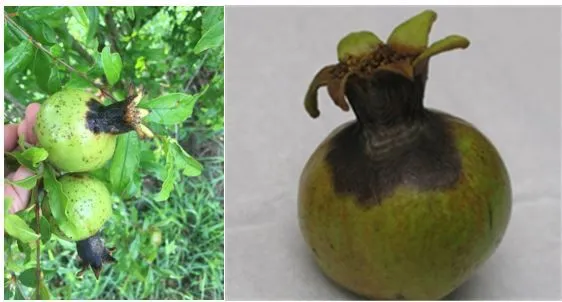
Description
Symptoms
The initial symptom of the disease is the appearance of small, rounded spots on the pomegranate leaf blades. Over time, these formations may change color, turning brown or dark brown, which indicates tissue necrosis.
As the pathogen develops, the spots increase in size and may coalesce, covering a significant area of the leaf. This leads to premature yellowing and subsequent leaf drop, which significantly weakens the tree.
On affected areas with high humidity, a fungal bloom often forms, representing an accumulation of pathogen spores. This bloom is sometimes visible to the naked eye as a grayish or dusty layer.
When young shoots are infected, characteristic ulcers or depressed areas may form on them. This impedes normal sap flow and can lead to branch deformation and eventual dieback.
Fruits are also at risk of infection, manifesting as necrotic spots on the surface that spoil the commercial appearance of the crop. In severe cases, the pathogen penetrates deeper into the fruit tissue, inducing decay.
Pathogen
The causative agent of this disease is the microscopic fungus Dwiroopa punicae. This pathogen belongs to the group of deuteromycetes and specializes in infecting the vegetative and reproductive organs of the common pomegranate.
The fungus is primarily a parasite, utilizing the host plant's tissues to obtain essential nutrients. Conidia play a crucial role in the pathogen's development cycle, facilitating the mass spread of the infection during the growing season.
The infectious material persists in fallen leaves and infected pomegranate shoots, where the fungus overwinters in the form of mycelium or specialized fruiting bodies. With favorable conditions, spores are actively dispersed by wind and rain splashes.
This pathogen is characterized by high host specificity, making Dwiroopa punicae a particular threat to pomegranate orchards in specific climatic zones. Studying the biology of the fungus is essential for timely diagnostic of infections.
Mycological studies confirm that the pathogen actively penetrates the tissue epidermis, destroying cell structures and causing necrotic changes. Understanding the fungal life cycle allows for the development of control strategies at the primary infection stage.
Conditions for development
The development and active spread of the disease depend directly on the level of ambient humidity. Prolonged rainfall and high relative humidity create ideal conditions for fungal spore germination on leaf surfaces.
Temperature plays a decisive role: moderately warm weather promotes the most rapid growth of Dwiroopa punicae mycelium. Sudden temperature fluctuations can induce stress in the plant, making it more susceptible to infection.
Overcrowded pomegranate plantings prevent normal air circulation within the canopy, which traps moisture on the leaves. This creates a microclimate conducive to the rapid spread of infection from tree to tree.
Improper irrigation, especially overhead sprinkling, facilitates the transfer of pathogen spores to healthy plant parts. Using water with high salinity or poor care weakens the pomegranate's immunity, making the fungus's task easier.
Failure to follow agricultural practices, including the lack of sanitary pruning, leads to the accumulation of plant debris, which serves as the primary source of infection at the start of the next season.
Why it matters
The primary damage caused by the disease is premature defoliation, which disrupts the photosynthesis process. The tree loses its ability to accumulate sufficient nutrients needed for winter dormancy and future harvests.
Reduced photosynthetic intensity leads to general exhaustion of the pomegranate, making trees less frost-resistant and more susceptible to pests. Ultimately, this can lead to the death of individual branches.
Crop quality suffers significantly, as infected fruits lose their flavor characteristics and marketability. The disease renders the product unsuitable for long-term storage and transportation, causing economic loss to farmers.
Infection of young shoots leads to slowed plant growth rates. The tree fails to form a proper canopy, which negatively impacts yields in subsequent years of the pomegranate's life.
If disease control is ignored for several seasons, the overall viability of the orchard may drop to a critical level, forcing owners to remove affected trees entirely.
Protection
The fundamental method of control is sanitary pruning and timely removal of infected plant parts. All collected plant material must be destroyed immediately by burning to prevent re-infection.
Effective preventive measures include treating trees with copper-based fungicides at the beginning of the growing season. This creates a protective barrier that prevents fungal spores from germinating on young leaves and buds.
- Thinning the canopy to improve aeration.
- Maintaining proper spacing when planting saplings.
- Using only drip irrigation directly to the roots.
- Applying balanced potassium fertilizers to strengthen immunity.
Upon detection of initial disease symptoms, the use of specialized systemic fungicides is recommended. It is important to rotate products with different modes of action to prevent the development of pathogen resistance.
Regular orchard monitoring allows for early disease detection and the localization of infection hotspots. Agricultural prevention combined with chemical protection is the only way to maintain the health of pomegranate plantations.
Discussion
No discussions yet — be the first.