
Early morel
Ptychoverpa bohemica
Description
Symptoms
The primary indicators are the appearance of fruiting bodies during early spring, typically between April and May, appearing soon after the soil thaws.
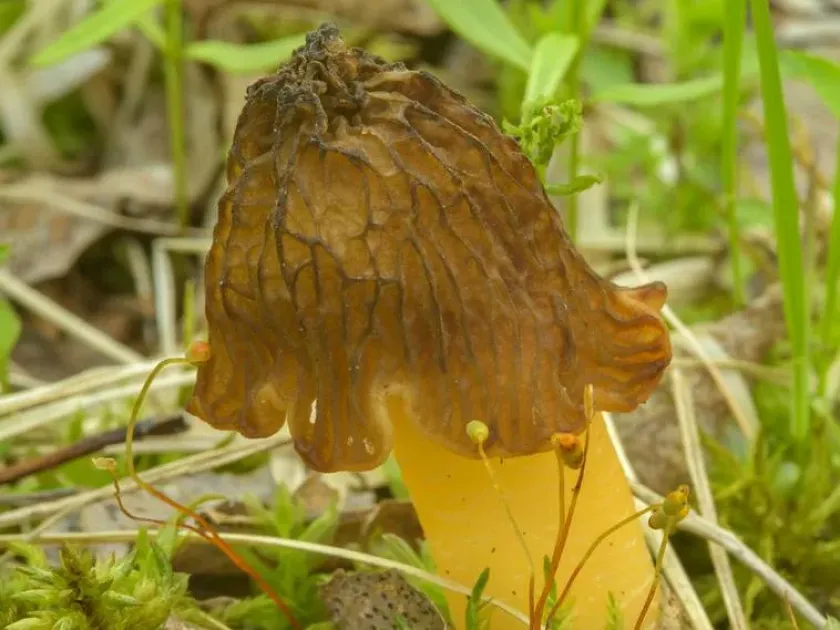
The cap is distinctively bell-shaped and attached to the stem only at the top, a key visual feature that distinguishes it from true morel species.
The surface of the cap is covered in wrinkled, folded ridges, often varying in color from light brown to a rich, dark chocolate tone.
The stem is typically white or cream-colored, often hollow or fragile, and may feature a powdery texture upon close inspection.
These mushrooms usually grow in small clusters in shaded areas where thick layers of humus or wood chips accumulate during the winter months.
Pathogen
The early morel, scientifically known as Ptychoverpa bohemica, is a fungus species belonging to the Morchellaceae family and is not a plant disease.
This organism operates as a saprotroph, meaning it feeds on decaying organic matter rather than infecting living plant tissues or causing physiological damage.
In agricultural science, Ptychoverpa bohemica is not classified as a pathogen, as it does not parasitize crops or interfere with plant vital functions.
The fungus is essentially part of the soil microflora that participates in the natural decomposition of leaf litter and woody organic debris in gardens.
It maintains a non-hostile relationship with garden vegetation, focusing its biological activity solely on the breakdown of dead organic materials.
Conditions for development
Optimal development depends on high moisture levels in the soil and cool air temperatures, which are characteristic of the early spring season.
The fungus thrives in loose, well-draining soil that is rich in decaying organic matter and protected by the shade of deciduous trees.
The presence of woody substrates like aspen, alder, or birch remnants significantly encourages the colonization of this fungal species in gardens.
Spore dissemination occurs via air currents and rainfall, allowing the fungus to establish itself rapidly in suitable ecological niches.
Environmental stability, including the absence of chemical fungicides and the presence of protective canopy, promotes consistent annual appearance.
Why it matters
The early morel causes no direct damage to live plants, as it lacks the physiological capability to extract nutrients from living roots or stems.
The main concern for growers is the potential for confusion with other mushroom species, as some may be toxic if improperly identified or prepared.
Competition for soil nutrients is negligible, as the fungus primarily focuses on broken-down carbon sources rather than living root exudates.
While some gardeners may view the mushroom as an aesthetic nuisance, it poses no threat to the harvest or the health of ornamental or edible crops.
Overall, the fungus contributes positively to soil fertility by recycling nutrients, making it a harmless component of a healthy garden ecosystem.
Protection
No formal protection measures are required, as there is no disease to manage and no pathological impact on the agricultural environment.
Simple cultivation practices, such as routine hoeing and the removal of excess wood debris, can effectively prevent the formation of fruiting bodies.
Managing soil moisture and preventing waterlogging in tree basins can discourage the conditions necessary for the fungus to fruit.
Chemical intervention is unnecessary and generally discouraged, as the early morel is not a pest and provides ecological value to the soil.
Manual removal of fruiting bodies is sufficient for those who prefer to keep their gardening area clear of mushrooms for aesthetic reasons.
Discussion
No discussions yet — be the first.