
Early fieldcap
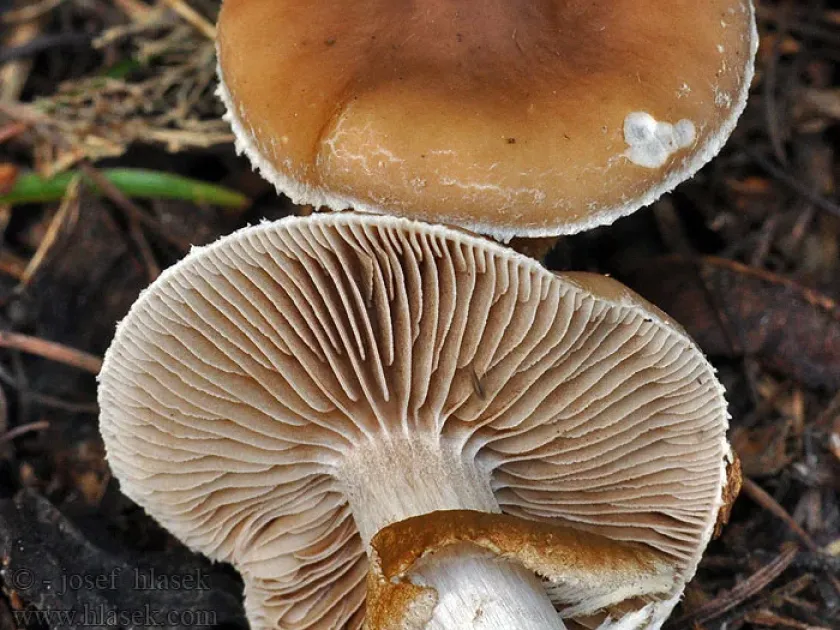
Agrocybe erebia
Description
Symptoms
The most visible sign of infestation is the emergence of clusters of dark, chocolate-brown mushroom caps in the root zone of plants. Their presence indicates an established fungal network within the substrate.
Affected plants often show stunted growth and generalized weakness. The foliage may turn pale green or yellow, indicating that the root system is failing to absorb sufficient water and essential nutrients due to mycelial interference.
When examining the base of the plant, one might observe a whitish or cream-colored fungal growth spreading over the root collar. This mycelial mat is indicative of the organism's active destruction of plant tissues.
Roots infected by Agrocybe erebia become brittle, exhibit brown discoloration, and often emit a distinct earthy or fungal odor. This decay prevents the plant from maintaining its structural integrity and vitality.
- Cluster of mushroom caps near the stem.
- Stunted growth of seedlings.
- Chlorosis and premature wilting of leaves.
- Presence of white mycelial threads in the soil.
Pathogen
The Early fieldcap (Latin Agrocybe erebia) is a mushroom species belonging to the Strophariaceae family. Although it is primarily classified as a saprotroph living on decaying organic matter, it can pose risks to cultivated plants when environmental conditions facilitate excessive mycelial growth near root systems.
The fungus propagates through spores that settle in moist environments. Its mycelium spreads through the topsoil, decomposing available organic residues, which is generally a natural process but can become aggressive in dense garden soil.
Biologically, this species is adapted to humus-rich soils. However, under conditions of ecological imbalance or poor drainage, the mycelium can colonize the weakened roots of seedlings, acting as a secondary pathogen.
The life cycle involves the formation of fruiting bodies that emerge from the soil. These caps release massive amounts of spores, which are disseminated by wind and water splash, ensuring the pathogen's spread throughout the growing area.
Because the fungus is highly adaptive, it can survive in various soil types, making it a persistent presence in gardens that lack proper sanitation and soil moisture management.
Conditions for development
High soil moisture is the primary driver for the development of this fungus. Waterlogged soil, combined with an accumulation of uncomposted organic matter, creates a perfect habitat for the mycelium to thrive.
Temperatures between +15 and +22 degrees Celsius are optimal for fungal colonization. During this period, the mycelium expands rapidly, often coming into direct contact with the roots of garden plants.
Improper mulching practices, such as using fresh wood chips or untreated straw, provide the ideal substrate for Agrocybe erebia to multiply. This creates an environment where the fungus can easily survive and spread.
Acidic soil conditions favor the expansion of this species. By maintaining a balanced soil pH, gardeners can create a less hospitable environment for the fungus to establish its colonies.
Poor aeration in the root zone, frequently occurring in compacted or clay-heavy soils, leads to prolonged moisture retention, which is a critical factor in the persistent survival of this fungal pathogen.
Why it matters
The damage caused by this fungus is primarily rooted in the disruption of nutrient uptake. By degrading the organic matter near the roots, the fungus can release metabolites that are harmful to young, developing roots.
Damaged tissues become susceptible to secondary infections by other, more aggressive pathogens, such as bacteria that cause soft rot, further complicating the plant's health recovery process.
In nurseries, the spread of Agrocybe erebia often results in the rejection of saplings. The reduced growth and vigor make these plants unsuitable for commercial use or landscaping purposes.
The mycelium consumes available soil nitrogen during the decomposition process, which can lead to chronic nutrient deficiencies in nearby plants, resulting in poor flower or fruit production.
Continuous fungal activity alters the soil structure, potentially causing it to become excessively porous or silted, which further hinders the root system's ability to anchor the plant and access necessary resources.
Protection
Effective control starts with proper irrigation management. Ensuring adequate drainage and avoiding water stagnation in the root zone is the most important step in preventing fungal growth.
Maintaining garden hygiene is essential. Removing fallen leaves, decaying wood, and other organic debris from around the stems prevents the accumulation of material that the fungus uses for sustenance.
The application of biological control agents, such as Trichoderma species, is highly recommended. These beneficial fungi act as natural antagonists and suppress the growth of Agrocybe erebia in the soil.
For severe infestations, systemic fungicides labeled for soil-borne root pathogens can be used. These should be applied via soil drenching, ensuring the product reaches the root system effectively.
Finally, monitoring and correcting soil pH levels through regular liming can help keep the environment unfavorable for the fungus, ensuring long-term protection for your garden plants.
Discussion
No discussions yet — be the first.