
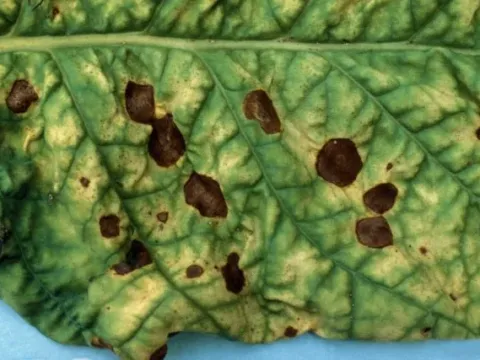
Early blight of potato
Alternaria infectoria
The causative agent of early blight in potatoes is a group of fungi belonging to the genus Alternaria, primarily Alternaria solani and Alternaria infectoria. This disease is known for its distinct spot-forming nature.
What the section contains
Early blight of potato
The fungal mycelium can survive in soil, crop debris, and even infected tubers for extended periods. The infection typically attacks the plant during the vegetative growth phase, starting from the lower leaves.
The fungus reproduces via spores, which are spread by wind, rain splashes, and insects. Its high adaptability allows it to infect potato crops under a wide range of environmental conditions.
The pathogen's life cycle includes a dormant phase in the soil and an active stage during the potato growing season. Infection usually begins when temperatures rise above +12...+15 degrees Celsius.
The inoculum pressure increases significantly in fields where agricultural practices do not prioritize the removal of plant residues after harvest.
Initial symptoms appear as small, dark, brown or black circular spots with a characteristic concentric ring pattern, often referred to as "bull's eye" lesions.
As the disease progresses, these spots expand and coalesce, covering large sections of the leaf blade, eventually leading to premature leaf senescence and death.
Elongated dark brown lesions may also develop on the stems. In high humidity, a velvety olive-black layer of fungal spores may form on the surface of the lesions.
Infection of the tubers manifests as dry rot. These tuber lesions appear sunken with distinct edges, and the flesh beneath them turns dark brown or black.
Unlike late blight, early blight does not cause wet, mushy rot. The affected tissues remain dry and firm, which is a key diagnostic feature for identification.
The development of the disease is favored by alternating periods of high humidity and warm, dry weather. Optimal temperature ranges for fungal growth are between +22 and +28 degrees Celsius.
Disease outbreaks are frequently triggered by stress factors, such as moisture deficit, nitrogen deficiency, or significant temperature fluctuations during the growing season.
The presence of free moisture (dew or light rain) on foliage facilitates spore germination, while subsequent dry weather stresses the plant, making it more susceptible to infection.
Severe outbreaks often occur in the second half of the growing season, as mature plants naturally begin to lose their resistance to fungal pathogens.
Poor field hygiene and the presence of weeds that act as alternative hosts further exacerbate the spread of the fungus throughout the crop.
The primary harm caused by early blight is the premature defoliation of the potato plant, which limits the photosynthetic area and leads to a substantial reduction in tuber weight.
In cases of severe infection, yield losses can range from 15 to 30 percent, and under favorable conditions for the pathogen, losses may exceed 50 percent of the total potential yield.
The disease significantly impairs the marketability of tubers, making them unsuitable for long-term storage due to the progression of dry rot.
Affected tubers become more vulnerable to secondary infections, such as bacterial soft rots, which can destroy the harvested crop during storage.
Interruption of normal development leads to lower starch accumulation and reduced nutritional quality, diminishing the overall value of the potato harvest.
Key management strategies include strict crop rotation, ensuring potatoes are not planted in the same field for at least 3-4 years, and the use of certified disease-free seed tubers.
Deep plowing after harvest is essential to bury crop residues, which act as the primary reservoir for the pathogen to survive into the next season.
- Maintaining balanced soil fertility, particularly with potassium and phosphorus, strengthens plant resistance.
- Application of protective and systemic fungicides during the growing season at the first sign of symptoms.
- Consistent weed control to remove alternative hosts that harbor the fungal spores.
Chemical control programs often involve rotating different classes of fungicides to prevent the development of resistant fungal strains.
Post-harvest management requires immediate destruction of haulms to reduce the total amount of inoculum left in the soil for future potato crops.