
Exidiaceae
Exidiaceae
The disease is caused by fungi belonging to the Exidiaceae family, a group of jelly fungi (basidiomycetes). These organisms are primarily xylotrophic, meaning they feed on and decompose wood tissues.
What the section contains
Exidiaceae
While they typically function as saprotrophs, they can act as opportunistic pathogens, colonizing living trees that have been weakened by environmental stress or physical injuries.
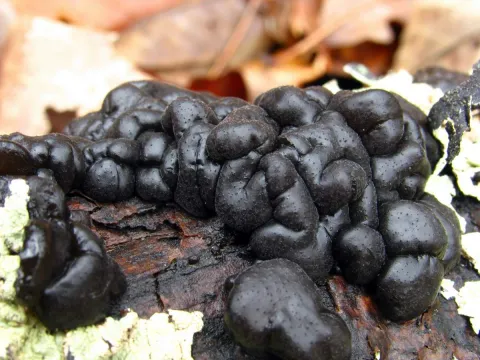
A distinctive biological trait is the production of gelatinous or cartilaginous fruiting bodies. These structures exhibit hygroscopic properties, drying out in the sun and swelling again when moisture levels rise.
The fungi propagate via spores which are easily dispersed by wind, raindrops, and occasionally insects, ensuring efficient spread throughout the growing season.
Once inside the tree, the mycelium penetrates the wood, breaking down complex polymers like cellulose and lignin, which compromises the tree’s structural integrity.
The primary symptom of an Exidiaceae infection is the emergence of jelly-like growths on the bark, which can appear as wrinkles, lobes, or brain-like clusters.
These fruiting bodies often change color and texture depending on humidity, ranging from translucent and whitish to deep brown or even black when mature.
Affected bark may show signs of splitting, drying, or peeling, as the fungal growth underneath disrupts the normal development of the cork cambium.
Internally, the wood may exhibit signs of rot or discoloration, often accompanied by a soft, spongy texture indicating that the mycelium has degraded the timber.
General signs of tree distress include thinning foliage, premature yellowing, branch dieback, and an overall decline in vigor across the entire canopy.
Exidiaceae fungi thrive in high-humidity environments, making periods of prolonged rainfall or foggy weather ideal for their development and spore production.
Physical wounds such as frost cracks, sunscald, or pruning cuts serve as primary entry points for the fungal spores to colonize the tree's interior.
Temperatures between 15°C and 25°C are generally optimal for fungal metabolism, though these organisms are highly adaptable to various climatic shifts.
Crowded planting schemes or poor crown ventilation lead to high humidity around the bark, creating a favorable microclimate for the fungus to establish itself.
Trees suffering from nutrient deficiencies or drought stress lack the natural resources to mount an effective chemical defense against fungal colonization.
The major harm caused by these fungi is the long-term degradation of the tree's structural wood, significantly increasing the risk of mechanical failure and windthrow.
For fruit-bearing trees, the infection redirects energy away from production, leading to lower yields and a reduction in the overall longevity of the orchard.
The cumulative effect of wood decay leads to the permanent loss of limb function and, in severe cases, the death of the entire tree as the transport system is blocked.
Furthermore, colonized wood becomes a nursery for secondary pathogens and wood-boring insects, which accelerate the total decline of the plant.
The presence of widespread wood decay renders the timber commercially worthless and poses a safety hazard in residential or park settings.
The most effective management approach is proactive sanitation, which includes the immediate removal and destruction of infected limbs to minimize spore loads.
All mechanical wounds, especially after routine pruning, should be sealed with appropriate wound dressings or copper-based fungicides to block entry points.
Ensuring optimal tree health through balanced fertilization and correct irrigation helps the tree maintain natural resistance against potential fungal threats.
Applying protective fungicide sprays to the bark during high-risk seasons can inhibit spore germination and surface colonization by the fungus.
Maintaining proper spacing and thinning out dense branches improves air circulation, which keeps the bark surface dry and significantly limits the growth of jelly fungi.