
Exidiopsis effusa
Exidiopsis effusa
Description
Symptoms
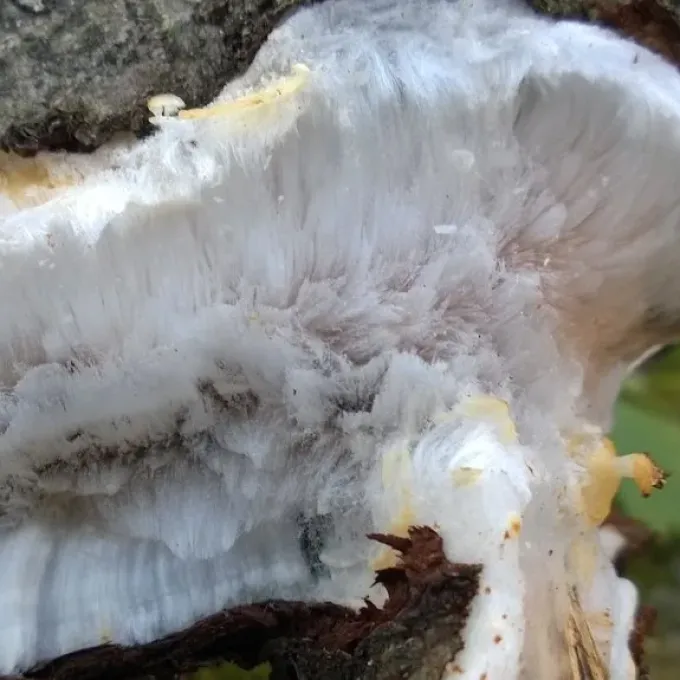
The external manifestation of the disease is the formation of specific fungal fruiting bodies on affected areas of wood or bark. As it develops, the fungus forms a thin, effuse, often gelatinous layer that adheres tightly to the substrate.
The color of the mycelial films and fruiting bodies can vary from whitish to cream or grayish shades, depending on the moisture level and the age of the colony. Upon drying, the coating becomes difficult to notice, turning into a thin, almost transparent film.
The infection is often localized in areas of bark damage, cracks, or on dying branches. The surface of affected areas may take on a matte or slightly shiny appearance, which is especially noticeable under high humidity conditions.
The fungus does not cause deep destruction of living tissues but contributes to changing the appearance of the bark surface. In the early stages of colonization, the signs may be hidden under a layer of dead host plant tissues.
A characteristic sign is the ability of the fruiting bodies to swell rapidly upon contact with moisture, which distinguishes them from many other types of saprotrophic fungi living on dead wood.
Pathogen
The causative agent of the disease is the fungus Exidiopsis effusa, which belongs to the group of basidiomycetes, specifically the order Auriculariales. This pathogen is a specialized saprotroph or a weakly parasitic organism.
The biology of the pathogen is closely related to the decomposition of lignin and cellulose in the tissues of dying or weakened woody plants. The fungus develops hyphae that penetrate the intercellular spaces of plant tissues.
The fungus reproduces via basidiospores, which are actively dispersed by air currents. After landing on a favorable substrate, the spores germinate, forming a mycelium capable of rapidly occupying the bark surface.
The life cycle of the fungus depends heavily on the availability of nutrients in the substrate and the general health status of the tree. Under optimal conditions, it is capable of forming fruiting bodies throughout the growing season.
The genetic plasticity of this species allows it to adapt to various types of woody substrates, ensuring wide distribution in forest and garden ecosystems.
Conditions for development
The development of Exidiopsis effusa is directly limited by the ambient humidity level. The fungus shows maximum activity during periods of prolonged rain, fog, and high relative air humidity.
The temperature optimum for mycelial growth and fruiting body formation is in the moderate range. The pathogen prefers shaded areas protected from direct sunlight, where moisture is retained for longer periods.
The presence of weakened or damaged areas of bark is a key factor for successful colonization. The fungus develops most effectively on wood with disturbed tissue hydro-balance.
Spore dispersal is activated during periods of moderate winds, which facilitate the transport of basidiospores over significant distances. Planting density and poor air circulation create ideal conditions for epiphytotics.
The accumulation of large amounts of plant debris or the presence of rotting branches near healthy trees significantly increases the risk of secondary infection of healthy crops.
Why it matters
The main damage from Exidiopsis effusa lies in accelerating the destruction of the bark on weakened trees. Although the fungus is often considered a saprotroph, its presence indicates a general decline in the plant's immunity.
In orchards and forest nurseries, the presence of this fungus can lead to the premature death of individual branches. This reduces the ornamental value of plants and their overall productivity in the long term.
The fungus creates conditions for the settlement of secondary pests and other more aggressive pathogens that can penetrate the wood through areas damaged by the fungus.
Disruption of the bark's integrity leads to the drying of tree tissues, which negatively affects sap flow and the transport of nutrients to growth points. This creates a vicious cycle of weakening the plant organism.
For the forestry industry, the accumulation of fungal biomass reduces the commercial quality of the wood, making it unsuitable for certain types of use due to changes in physical and mechanical properties.
Protection
The primary protection measure is strict adherence to agronomic practices, including regular sanitary pruning. Removing diseased and dead branches prevents the accumulation of the pathogen.
It is important to ensure proper ventilation of the tree canopy by forming a sparse structure. This prevents moisture stagnation and creates unfavorable conditions for fungal development.
All cuts and mechanical damage to the bark must be immediately treated with antiseptic agents or garden varnish to prevent spore penetration.
If chemical means are necessary, broad-spectrum fungicides aimed at protecting the bark during high humidity periods are used. Copper-based preparations show high effectiveness.
Preventive soil care, including balanced fertilization, increases the natural immunity of plants, making them less susceptible to colonization by saprotrophic fungi.
Discussion
No discussions yet — be the first.