
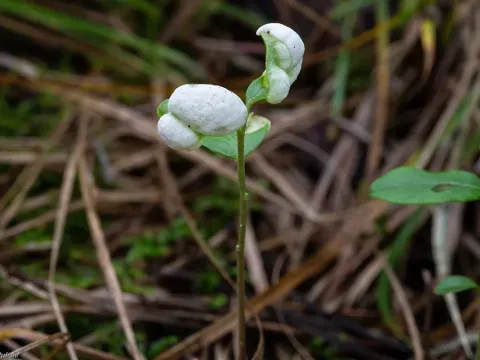
Exobasidiosis
Exobasidiomycetes
Exobasidiosis is caused by fungi of the order Exobasidiales, primarily belonging to the genus Exobasidium. These are specialized parasitic fungi that mainly infect Ericaceae plants, including blueberries, cranberries, lingonberries, and rhododendrons.
What the section contains
Exobasidiosis
The disease is a fungal infection characterized by the growth of mycelium within the plant tissues, leading to abnormal cell hypertrophy and tissue distortion. The fungus typically resides in buds and young shoots, remaining systemic throughout the plant's life.
The lifecycle of the pathogen is closely synchronized with the host plant's phenology. In spring, spores are disseminated by wind, rain splashes, and insects, infecting new plant organs during their initial growth stages.
The mycelium develops intercellularly within the plant host and eventually emerges on the surface to produce basidia and spores. This sporulation process serves as a continuous source of secondary infection throughout the growing season.
The pathogen is highly resilient as it overwinters within the host plant tissue, protecting itself from extreme temperature fluctuations and environmental stresses.
The most characteristic sign of exobasidiosis is the development of galls, swellings, or deformations on leaves, shoots, and fruit. Affected tissues thicken significantly and lose their natural shape and color.
The coloration of infected areas changes to pale green, pink, or bright red. Often, a whitish, powdery layer of fungal spores appears on the underside of the leaves, which is a diagnostic feature of the disease.
When flower buds are infected, blossom development is severely disrupted. Flowers may become deformed or fail to open, and fruit ovaries may turn into distorted, unusable fleshy structures.
Infected shoots typically become stunted, twisted, or brittle, eventually drying out. Severe infections lead to premature leaf drop, which significantly weakens the entire plant's vigor.
Diagnosis is usually confirmed by visually identifying the characteristic gall-like growths coated in fungal spores, which clearly distinguish this disease from other fungal or physiological disorders.
The development of exobasidiosis is favored by high humidity and cool, wet spring weather. Persistent moisture on plant surfaces is essential for spore germination and infection.
Overcrowded plantations or sites with poor airflow maintain high local humidity, creating an ideal microclimate for the fungus. Lack of ventilation prevents foliage from drying out after rain or dew.
Frequent rainfall during the critical period of bud break and leaf emergence increases the risk of mass infection. Water droplets are the primary vehicle for spreading spores from diseased parts to healthy tissues.
Improper fertilization, particularly excessive nitrogen application, forces soft and succulent tissue growth, making plants more susceptible to fungal penetration and colonization.
The infection can persist on a site for years. Because the fungus is a perennial parasite, it stays within the plant tissue, dormant or active, waiting for favorable conditions to trigger new infection cycles.
The primary economic impact of exobasidiosis is a significant reduction in berry yields. Infected fruit becomes distorted and loses both market quality and nutritional value.
The disease severely weakens the host plant's health. By impairing photosynthesis in deformed leaves, the plant accumulates fewer carbohydrate reserves, leading to poor winter hardiness and increased mortality.
Persistent shoot infection leads to gradual dieback. When the infection level is high, the total assimilating leaf surface area is drastically reduced, leading to long-term decline and potential death of the berry bushes.
Financial losses increase due to the cost of intensive disease management, including the use of fungicides and the manual labor required for sanitation, which complicates the profitability of fruit production.
Weakened plants become more vulnerable to secondary pests and other diseases, necessitating a complex and expensive plant protection strategy throughout the growing season.
Sanitation is the cornerstone of exobasidiosis control. Regular monitoring and immediate removal of all deformed shoots and leaves are essential to prevent the spread of spores.
Maintaining optimal plant spacing to ensure good air circulation is vital. Proper ventilation helps leaves dry out quickly, significantly reducing the probability of successful spore germination.
Early spring applications of copper-based fungicides before bud break are effective in limiting the primary infection. These treatments must be applied precisely according to the regional guidelines.
For ongoing management, integrated biological control agents can be used to suppress fungal growth without leaving toxic residues on the harvested berries.
- Routine inspection of plantations.
- Pruning and destroying all symptomatic growth.
- Managing nitrogen levels to prevent succulent growth.
- Using disease-free planting stock.