
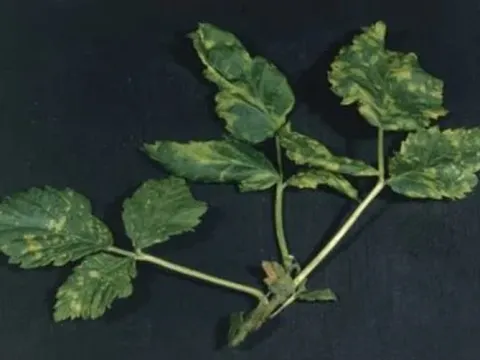
Raspberry leaf curl
Cherry leaf
The primary symptom of this disease is severe stunting of the plant, which is why it is commonly referred to as the leaf curl or dwarf disease. Infected canes appear significantly shorter, thinner, and less vigorous than healthy ones.
What the section contains
Raspberry leaf curl
Leaves on affected plants exhibit noticeable curling, yellowing, or chlorotic mottling. This deformation severely impacts the photosynthetic capacity of the plant, leading to overall physiological decline.
Fruit production is heavily compromised; berries are often misshapen, small, crumbly, and lack the expected flavor. Over time, the plant may stop producing any viable fruit at all, becoming an empty husk.
Root systems are also severely weakened, which reduces the plant's ability to uptake water and nutrients. This systemic decline eventually leads to the premature death of the entire raspberry stool.
Early identification is challenging, as symptoms may be subtle initially. Growers must conduct thorough inspections during the active growing season to catch early signs of infection.
Raspberry leaf curl is caused by a virus (Raspberry leaf curl virus) which is a systemic pathogen. Once infected, the virus spreads through the plant's vascular tissue, affecting all organs.
The disease exclusively impacts red and black raspberries. Because the virus becomes integrated into the plant's system, there is no chemical cure available to eradicate it from the infected plant.
The virus is primarily transmitted by aphids, which act as vectors. When an aphid feeds on an infected plant, it carries the viral particles to the next healthy plant it lands on.
The virus is not mechanically transmitted by soil or water, but it persists within the living root systems and crowns of the raspberry plants throughout the year.
Transmission through contaminated pruning tools is possible, although aphids remain the most critical factor in the rapid spread of the virus within a field.
The rate of infection is tightly linked to aphid population dynamics. Warm, dry weather conditions usually favor aphid reproduction, leading to an increased risk of disease outbreaks.
Poor field hygiene, such as failing to control weed populations or leaving neglected wild raspberry bushes nearby, provides a constant source of infection for the commercial patch.
Inadequate spacing between plants and lack of proper canopy management create humid microclimates that attract insects and make it easier for them to move between plants.
Introducing non-certified, infected nursery stock is the most frequent cause of new outbreaks. Once introduced, the virus can quickly permeate the entire field if not managed immediately.
Environmental stress factors, including drought or waterlogging, can make plants more susceptible to the virus and exacerbate the speed at which symptoms manifest.
The economic impact is devastating as the disease renders raspberry plantings non-productive. Yield loss often reaches 100% in heavily infested patches over a short period.
The quality of harvested fruit drops below market standards, leading to a complete loss of revenue for growers. Berries become unmarketable due to their small size and poor quality.
Plants weakened by the virus have significantly lower winter hardiness. This makes them prone to damage or total loss during cold winters, adding to the financial burden of the grower.
The necessity to rogue and destroy entire blocks of plants represents a substantial capital loss and requires significant investment for orchard re-establishment.
In regions where the virus is endemic, maintaining a successful raspberry operation requires constant, high-cost vigilance and strict adherence to sanitary protocols.
Management of Raspberry leaf curl relies entirely on preventative strategies because there is no way to cure an infected plant once the virus is established.
- Strict rogueing: immediately remove and destroy any plants showing even slight signs of leaf curl.
- Effective vector control: use systemic insecticides to manage aphid populations throughout the season.
- Use certified virus-free planting stock from reputable nurseries.
- Establish a buffer zone by eliminating wild raspberries and weeds within the surrounding area.
- Practice rigorous tool sanitation by disinfecting pruning equipment between individual plants to prevent mechanical transfer.