
Raspberry rust
Phragmotelium pauciloculare
Description
Symptoms
Early signs of raspberry rust appear in spring as small, yellowish-orange dots on the upper surface of young leaves.
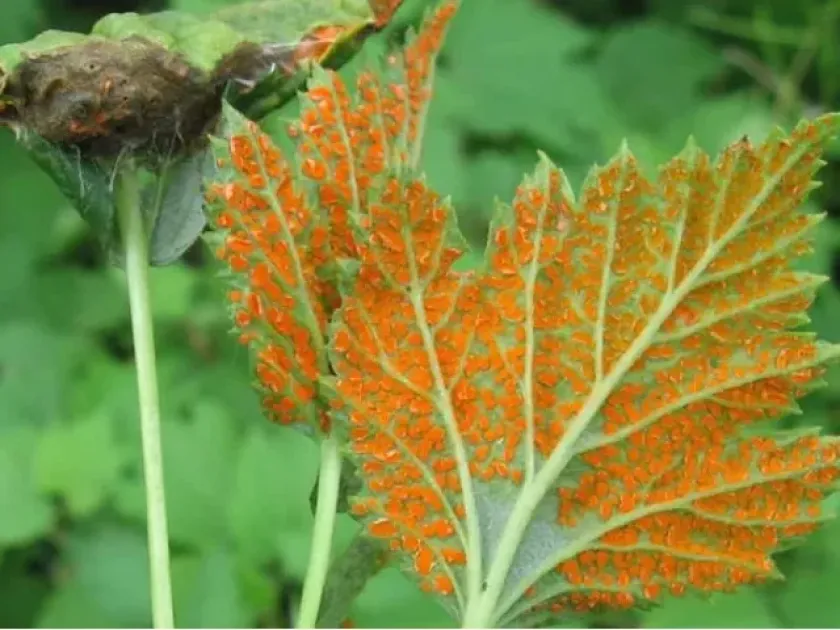
As the infection progresses, bright yellow or orange pustules containing fungal spores emerge on the underside of the leaves.
Infected leaves eventually turn yellow, curl up, become brittle, and drop prematurely, leaving the plant exposed and weakened.
Necrotic spots and lesions may develop on the stems, which can harbor secondary infections and hinder nutrient transport.
By late summer, the rust-colored spots may darken to brown or black, indicating the production of overwintering fungal structures.
Pathogen
The causative agent of this disease is the pathogenic fungus Phragmotelium pauciloculare, which is highly specialized for Rubus species.
This microscopic parasite lives within the leaf tissues, drawing nutrients from the host plant and disrupting its vital physiological functions.
The fungus undergoes a multi-stage life cycle, allowing it to survive in the form of dormant spores on infected plant debris throughout the winter.
The pathogen spreads primarily through airborne spores, but water splashes and insect vectors also play a significant role in dispersal.
By infecting the plant during the growing season, the fungus significantly undermines the host's ability to produce energy through photosynthesis.
Conditions for development
The development of Phragmotelium pauciloculare is highly dependent on environmental humidity and moisture levels on the plant surface.
Frequent rainfall, prolonged dew, and foggy conditions are ideal for the germination of fungal spores and their entry into host tissues.
Poorly ventilated plantings with high plant density create a microclimate that encourages rapid fungal growth and spore transmission.
Warm temperatures coupled with excessive soil moisture accelerate the disease cycle, leading to severe outbreaks in infested patches.
Neglecting basic sanitation, such as leaving weed cover and fallen leaves, provides the pathogen with the perfect environment for early spring activation.
Why it matters
The primary damage caused by raspberry rust is the severe reduction of the photosynthetic surface area, leading to stunted plant growth.
Premature defoliation prevents the plant from accumulating necessary reserves, making it susceptible to cold stress during winter months.
Fruit quality is significantly compromised; berries become small, dry, and unmarketable, causing substantial financial losses for growers.
Consistent rust pressure year after year can exhaust the root system, eventually leading to the death of entire canes or whole plants.
The spread of the disease across a plantation reduces the overall productivity of the crop, forcing growers to invest in expensive remedial measures.
Protection
The first line of defense is strict field sanitation: removing and burning all fallen leaves and infected plant debris in the autumn.
Proper pruning and maintaining adequate spacing between rows ensure good airflow, which helps keep the foliage dry and limits fungal germination.
Applying copper-based fungicides as a preventative measure in early spring is highly effective in stopping the initial infection cycle.
Maintaining plant health through balanced fertilization and proper irrigation helps the raspberry bushes develop natural resistance to the pathogen.
In cases of severe infestation, using targeted systemic fungicides according to local agricultural guidelines is necessary to save the crop.
Discussion
No discussions yet — be the first.