
Raspberry spur blight
Didymellaceae
Description
Symptoms
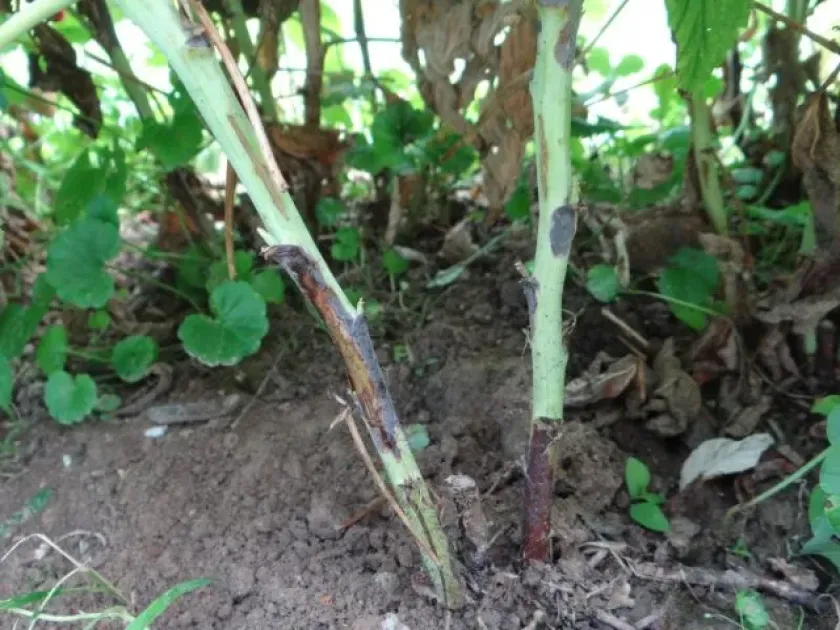
The primary symptom is the appearance of purple-brown spots at the base of leaf petioles on the stems. Over time, these spots expand and may encircle the cane.
Affected bark eventually cracks longitudinally and horizontally, giving the stem a distinct, ragged appearance. Small black dots, the fruiting bodies of the fungus, appear within these lesions.
Leaves on infected canes may yellow, curl, and drop prematurely. In severe cases, the infection can reach the flower buds, causing them to wither and fail to produce fruit.
On current-season canes, symptoms become visible during the second half of the summer, particularly in the lower canopy area.
During winter, infected canes lose their hardiness and are prone to cold injury, often resulting in dead tissue in the spring.
Pathogen
The causal agent of spur blight is the fungus Didymella applanata, a member of the Ascomycota division. This pathogen primarily affects the stems and buds of plants in the Rosaceae family, specifically raspberries.
The fungal life cycle involves the formation of pycnidia and pseudothecia on infected plant parts. Spores of the pathogen are disseminated by rain splash, wind, and insects throughout the growing season.
The pathogen survives as mycelium within the bark tissues of infected canes during the winter months. In spring, when environmental conditions are suitable, it begins to produce spores that infect new shoots.
The disease development is closely linked to the physiological state of the plant, as the fungus typically enters through wounds or cracks caused by insect damage, such as that from the raspberry cane midge.
The mycelium colonizes the cortical tissue, causing structural damage that interferes with the plant's nutrient transport and overall vitality.
Conditions for development
Optimal conditions for spur blight development are high relative humidity and moderate temperatures ranging from 15 to 20 degrees Celsius.
Dense plantings with poor air circulation create a microclimate that facilitates rapid spore germination and infection spread.
Excessive nitrogen fertilization leads to vigorous, soft growth, which is more susceptible to fungal penetration compared to hardened tissue.
Weed infestation and poor soil drainage contribute to excessive moisture around the base of the canes, increasing the risk of widespread infection.
Prolonged wet weather during the active growth phase of young canes is a critical factor in the severity of disease outbreaks.
Why it matters
The economic impact of spur blight stems from the reduction in cane vigor and the potential death of replacement canes, which are essential for the following year's crop.
The disease decreases overall fruit yield and negatively affects the quality and aesthetic appeal of the berries, reducing their market value.
Weakened canes are prone to breaking under the weight of the fruit or due to wind, complicating orchard management and harvesting.
If left unmanaged, the inoculum level increases over several seasons, eventually making the raspberry patch unproductive.
Plants weakened by the fungus are more susceptible to secondary infections and pest attacks, making recovery significantly more difficult.
Protection
The most effective management strategy is cultural control: pruning and burning infected canes immediately after harvest to reduce the local inoculum.
Proper plant spacing is vital to ensure adequate ventilation and to prevent the build-up of humidity within the rows.
- Apply preventative fungicides during the green tip stage of growth.
- Utilize copper-based fungicides during the dormant season to sanitize the plantation.
- Implement integrated pest management to control vectors like the raspberry cane midge.
Adjusting fertilization regimes by reducing nitrogen in late summer helps the canes harden off before winter, increasing their resistance.
Selecting disease-resistant raspberry cultivars is the most reliable long-term strategy for minimizing chemical dependency and maintaining high yields.
Discussion
No discussions yet — be the first.