
Raspberry septoria
Sphaerulina rubi
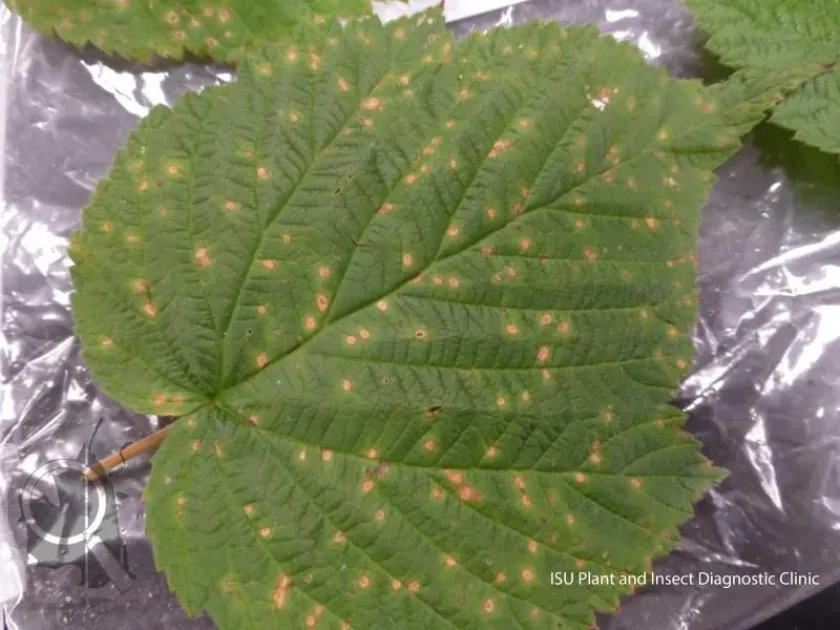
Description
Symptoms
Symptoms initially appear in late spring or early summer as small, circular, light-brown spots on the leaves. These spots are often surrounded by a dark brown or purple border.
As the disease progresses, the center of the spots turns whitish or gray, and numerous tiny, black, pimple-like structures called pycnidia appear in the center of the lesions.
Lesions can also form on the stems, appearing as light-colored areas with dark edges. Over time, the bark in these areas may crack or split, causing the stems to weaken significantly.
Severe infestations cause infected leaves to turn yellow, wither, and drop prematurely. This defoliation puts stress on the entire plant, affecting its overall health and vigor.
If the infection reaches the fruit stalks and flowers, it can inhibit berry development, leading to smaller, misshapen, or completely aborted fruits.
Pathogen
The causative agent of raspberry septoria leaf spot is the fungus Sphaerulina rubi (formerly Septoria rubi). It is a persistent fungal pathogen that primarily affects the foliage and stems of raspberry and blackberry plants.
The fungus overwinters as mycelium and pycnidia on dead or infected plant tissues left on the ground or remaining on the canes. It thrives in debris, serving as a primary source of inoculum.
In spring, when temperatures rise and rain occurs, the fungus releases spores that are spread by water splash, wind, or human activity to the young, succulent tissues of the plants.
The fungus requires periods of high humidity to germinate and penetrate the host tissue. Once inside, it colonizes the tissue and develops new pycnidia to continue its life cycle.
Because the pathogen can produce multiple generations of spores within a single growing season, it can spread rapidly throughout a raspberry plantation if the environmental conditions are favorable.
Conditions for development
Raspberry septoria thrives in wet, temperate conditions. Frequent rainfall, high humidity, and overcast skies provide the moisture needed for spore production and spread.
Poor air circulation within the planting rows is a major contributing factor. When bushes are too crowded, moisture remains on the foliage for longer periods, facilitating fungal infection.
The lack of proper sanitation, such as failing to remove infected plant parts or fallen leaves at the end of the season, creates a conducive environment for the pathogen to persist.
Conditions that promote soft, rapid vegetative growth, such as excessive nitrogen fertilization, can make the raspberry tissues more susceptible to the fungal invasion.
Orchards with heavy weed competition suffer more, as weeds trap moisture and restrict airflow around the base of the plants, creating a microclimate ideal for the fungus.
Why it matters
The most significant impact of septoria is the reduction in photosynthetic capacity due to premature leaf loss, which limits the plant's ability to produce energy.
Stem damage interferes with the vascular system's ability to transport nutrients and water, often leading to stunted plant growth and reduced cane longevity.
Plants weakened by the disease exhibit lower winter hardiness, making them more prone to frost injury or cold-related death during the winter months.
The commercial quality of the fruit is severely compromised, as the fungus can affect the overall development and appearance of the berries, rendering them unsellable.
Long-term consequences include a decline in total yield and the potential need for costly orchard renovation if the disease is left uncontrolled over several seasons.
Protection
- Maintain proper spacing between plants to ensure good airflow and rapid drying of foliage.
- Practice strict sanitation by removing and burning all canes and leaves showing signs of infection.
- Avoid overhead irrigation, which spreads spores from the soil to the leaves.
- Apply preventive fungicides during the early season and immediately after harvest.
- Select resistant cultivars that demonstrate better tolerance to fungal leaf spots.
Discussion
No discussions yet — be the first.