
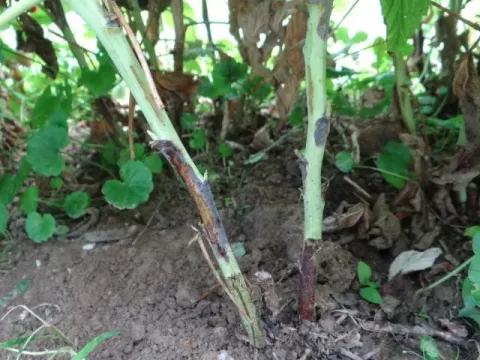
Raspberry spur blight
Xenodidymella applanata
Raspberry spur blight is caused by the fungus Xenodidymella applanata (formerly Didymella applanata), which specifically affects raspberry and blackberry canes.
What the section contains
Raspberry spur blight
The life cycle of the pathogen involves the production of both conidia and ascospores, allowing it to remain active and contagious throughout the growing season.
Infection is initiated in early spring when ascospores are released from the overwintering fungal structures located on old, infected canes from the previous year.
The fungus infiltrates the outer tissue of the cane, spreading its mycelium through the bark and causing structural damage to the plant's vascular system.
Pathogen survival is highly efficient; the fungus remains dormant in dead plant debris and leaf litter, ensuring a persistent risk to new shoots every spring.
The primary symptom is the appearance of purple or reddish-brown lesions that develop at the leaf nodes on the lower parts of young canes during the summer.
As the season progresses, these lesions expand and change color, often turning grayish-brown, while the purple perimeter remains as a diagnostic hallmark.
By late summer, the centers of these lesions become peppered with small, dark fruiting bodies known as pycnidia, which signify the maturation of the fungus.
Leaves on infected canes may show triangular brown spots with yellowish halos, eventually leading to chlorosis and premature leaf drop in severe cases.
In winter, infected canes are prone to cracking and freezing, which leads to the death of the buds and a significant reduction in the next season's yield.
The disease thrives in warm, humid climates, especially when prolonged rainy periods occur during the rapid growth phase of the young canes.
Temperatures ranging from 15°C to 20°C combined with frequent rainfall create the optimal environmental window for spore germination and infection.
High planting density significantly worsens the condition by trapping humidity inside the canopy, which prevents the canes from drying out after rainfall.
Over-fertilization with nitrogen results in soft, succulent cane tissue, which is much more susceptible to the mechanical penetration of the fungal hyphae.
Poor orchard sanitation, such as failing to thin out the canes or remove weeds, encourages a localized microclimate where the fungus can flourish.
The primary economic harm comes from the loss of fruit-bearing potential due to the death of nodes and buds on the infected canes during the winter.
The disruption of nutrient flow within the stem leads to diminished berry size and quality, making the produce less attractive for fresh market sale.
In neglected fields, the infection can cause systemic weakness, resulting in the death of entire canes and necessitating a costly replanting of the berry patch.
Plants weakened by spur blight become more susceptible to frost damage and secondary pathogen attacks, leading to overall plantation decline.
Reduced photosynthetic activity due to foliage loss further limits the plant's energy storage, impacting the long-term vigor of the entire raspberry bush.
Effective management begins with selecting certified disease-free planting material to ensure the patch starts without an existing infection load.
Sanitation is paramount: immediately prune and burn all diseased or spent canes after harvest to remove the source of overwintering inoculum.
Maintain proper spacing between rows and within the row to maximize airflow, which helps keep the canes dry and inhibits fungal growth.
- Avoid excessive nitrogen to keep cane tissue firm and resistant.
- Apply copper-based fungicides as a protective spray in early spring.
- Monitor and manage pests that cause wounds to the cane epidermis.
Balanced application of potassium and phosphorus fertilizers is recommended to harden the plant tissues and improve natural defense mechanisms against the disease.