
Raspberry rust
Arthuriomyces
Description
Symptoms
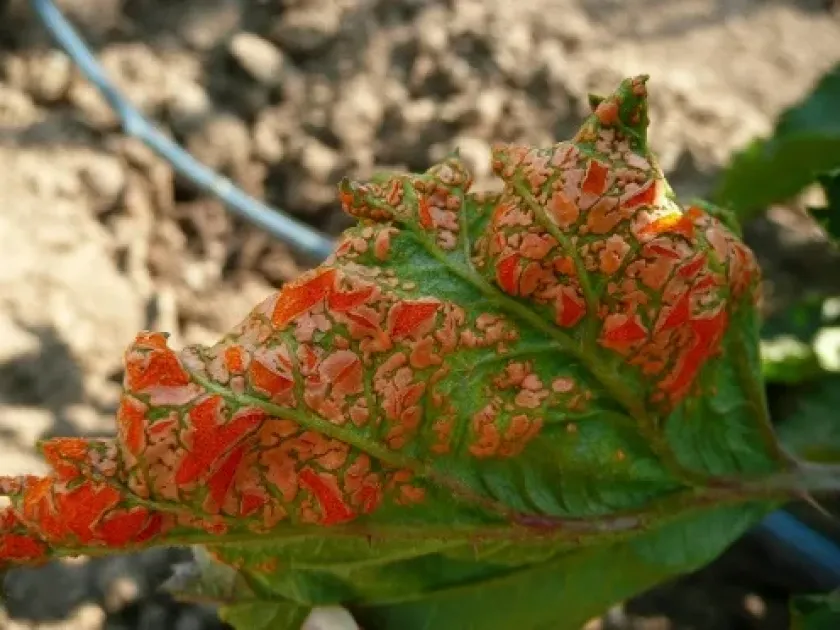
The most visible symptom occurs in spring when bright orange or yellow spots (aecia) appear on the leaves. These structures are concentrated along the veins on the underside of the foliage.
Systemic infection leads to severe stunting. Infected bushes exhibit shortened internodes, reduced leaf size, and a general lack of vigor compared to healthy plants.
The stems of affected plants often show signs of physical damage, including cracks and necrotic lesions, where the fungus releases masses of orange spores into the environment.
Floral development is frequently disrupted, leading to flower deformation or abortion. This directly results in a significant reduction in fruit yield and poor quality berries.
As the disease progresses, leaves turn yellow, curl, and drop prematurely. The plant's ability to photosynthesize is severely impaired, weakening the entire bush and increasing susceptibility to other stresses.
Pathogen
The disease is caused by the fungus Arthuriomyces peckianus, which belongs to the order Pucciniales. It is a highly specialized, systemic pathogen that specifically targets plants of the genus Rubus.
The fungus maintains its life cycle by developing mycelium within the systemic tissues of the host plant, including the roots and crown. This internal colonization makes the disease chronic and persistent.
Arthuriomyces produces various types of spores that facilitate its reproduction and spread during the growing season. The ability to persist in perennial plant parts allows it to survive throughout the year.
The infection process is intricately linked to the metabolic activity of the raspberry plant. As nutrients flow in the spring, the fungus activates and begins to colonize new shoots from within.
Because the pathogen is systemic, it is extremely difficult to eradicate once it has established itself within the vascular system of the raspberry bush, requiring intensive management.
Conditions for development
High humidity and moderate temperatures are the primary environmental drivers for Arthuriomyces development. Moisture on the leaf surface is essential for spore germination and infection.
Plantations with dense, overcrowded foliage are at higher risk because poor airflow prevents the leaves from drying quickly after rainfall or irrigation.
The presence of wild blackberry or raspberry nearby often acts as an inoculum source, as these plants frequently harbor the pathogen without being severely damaged themselves.
Extended periods of overcast, damp weather in the spring facilitate rapid spore dispersal across the field, allowing a small initial infection to turn into a widespread outbreak.
Poor soil drainage and low-lying areas that retain water also contribute to favorable conditions for fungal growth, increasing the persistence of the pathogen in the root zone.
Why it matters
The primary impact of raspberry rust is a drastic reduction in yield, both in quality and quantity. Infected bushes become unproductive and represent a permanent liability to the plantation.
Chronic infection drains the plant of energy reserves, making it less hardy against winter cold and drought. This often leads to the death of affected bushes within a few growing seasons.
Beyond the direct loss of fruit, the cost of managing the disease—including chemical applications and the necessary removal of plants—creates a significant financial burden for producers.
The systemic nature of the pathogen means that even if external symptoms are pruned away, the fungus remains within the root system, eventually reappearing on new growth.
Infection serves as a source of airborne spores that threaten neighboring healthy raspberry blocks, potentially causing an entire nursery or farm to become infested.
Protection
The most effective strategy for control is the immediate rogueing and destruction of infected bushes. Plants should be dug out completely, including roots, to prevent the pathogen from surviving.
Starting with certified, disease-free nursery stock is essential. Avoiding the introduction of infected plants is the only way to ensure a clean start for new raspberry blocks.
Cultural practices such as thinning out dense growth improve air circulation, helping to keep foliage dry and reducing the chances of fungal spore germination.
Preventative fungicide applications, particularly those containing copper, can be used in the early spring to protect healthy tissues from initial infection by airborne spores.
- Remove and burn infected plant material.
- Implement strict spatial isolation from wild Rubus species.
- Ensure proper spacing during planting.
- Maintain balanced plant nutrition to improve natural immunity.
Discussion
No discussions yet — be the first.