
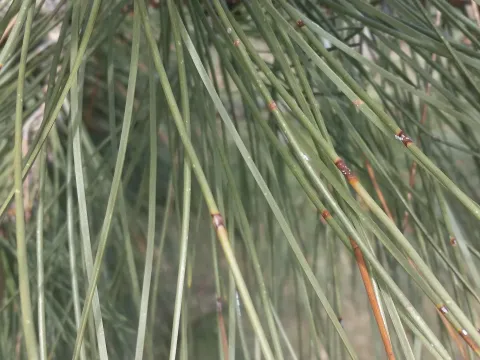
Dothistroma needle blight
Dothistroma pini
The disease is caused by the fungus Dothistroma pini, which primarily infects pine species, leading to severe needle damage and tree decline.
What the section contains
Dothistroma needle blight
The pathogen is a necrotrophic fungus that invades the needles through stomata, releasing toxins that cause the characteristic localized lesions.
Within the needle tissue, the fungus forms stromata, which eventually burst through the epidermis to release conidia, spreading the infection to other needles.
Survival of the pathogen occurs in fallen needles and on living branches during winter, serving as a reservoir for the next infection cycle.
The life cycle of the fungus is closely tied to moisture, which is essential for the dispersal and germination of spores during the growing season.
Initial symptoms include small green spots that quickly transition into reddish-brown or dark brown necrotic lesions on the needles.
A hallmark sign of the infection is the development of distinct transverse bands across the needles, which is a key diagnostic feature.
As the disease progresses, small black fruiting bodies appear on the surface of the lesions, indicating that the fungus is ready to produce spores.
Heavily infected needles turn yellow and brown, leading to premature needle drop, which often starts from the lower branches of the canopy.
In severe cases, the tree may show significant thinning of the crown, giving it a sparse and sickly appearance compared to healthy neighboring trees.
High humidity and persistent rainfall are the most significant environmental drivers for the development and spread of Dothistroma pini.
Warm temperatures, ranging between 15°C and 25°C, create the optimal conditions for spore release and rapid infection of new needle tissue.
Dense stand density and poor air circulation within the forest canopy facilitate the accumulation of humidity, favoring the fungus.
Splashing water from heavy rains is the primary mechanism for dispersing spores from the lower, infected canopy to the upper parts of the tree.
Trees under physiological stress, such as those grown in nutrient-poor soils or inappropriate climates, are more susceptible to the disease.
Dothistroma needle blight leads to significant reduction in the photosynthetic capacity of the tree, directly impacting growth and vigor.
Persistent defoliation over several years can result in tree mortality, particularly in young pine plantations where the crown is less robust.
The disease weakens the tree's immune system, making it more prone to secondary infestations by bark beetles and other wood-boring insects.
Economic damage is substantial in forestry sectors, as the blight reduces timber yield and necessitates expensive disease management programs.
In ornamental landscapes, the disease severely detracts from the visual value of the trees, often requiring frequent and costly chemical treatments.
Sanitation is a critical control measure, involving the removal and destruction of fallen needles to reduce the amount of primary inoculum.
Chemical control, specifically copper-based fungicides, is effective when applied during the peak periods of spore dispersal in the spring and summer.
Improving air circulation through thinning operations helps maintain lower humidity within the stand, discouraging fungal growth.
Selection of resistant or less susceptible pine varieties is a recommended long-term strategy for managing the disease in high-risk areas.
- Timely removal of infected slash and fallen needles.
- Monitoring weather patterns to time fungicide applications accurately.
- Ensuring adequate tree spacing during the establishment of plantations.