
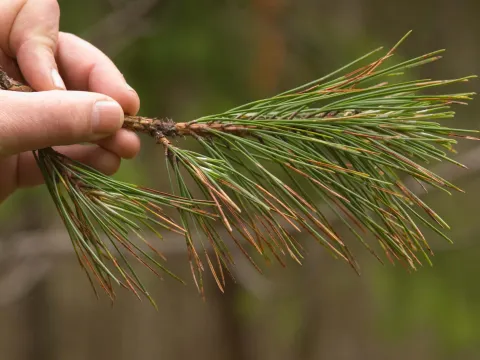
Dothistroma needle blight
Dothistroma
Dothistroma needle blight is a significant fungal disease caused primarily by the ascomycete fungus Dothistroma septosporum.
What the section contains
Dothistroma needle blight
The fungus penetrates needles through the stomata, eventually developing stroma that rupture the needle epidermis to release spores.
The pathogen is highly dependent on environmental moisture to spread its conidia via rain splash from infected to healthy needles.
It can persist in fallen needles and on living branches, allowing it to survive through the winter and reinfect the canopy in spring.
The biology of the fungus is well-adapted to cool, humid environments, where it can maintain a persistent infection cycle year after year.
Early symptoms manifest as dark green, water-soaked spots on the needles, which eventually transition into characteristic reddish-brown bands.
The presence of minute, black, fruit-like bodies known as stroma appears on the necrotic tissue, which is diagnostic of this disease.
Lower branches of the tree are typically the first to show symptoms, as they stay moist for longer periods compared to the upper canopy.
Advanced stages of the disease lead to severe needle chlorosis and premature shedding, giving the tree a sparse or thin appearance.
Needle tip dieback is common, with the distal portion of the needle often turning tan or brown while the base remains green for some time.
The disease thrives in areas with high rainfall and frequent morning mists, which facilitate the germination of fungal spores.
Warm, wet summers are particularly conducive to the rapid spread of the infection throughout the forest or plantation.
Dense, unthinned stands of timber create a humid microclimate that traps moisture, promoting optimal conditions for pathogen growth.
Young, rapidly growing trees and those with reduced vitality are often more susceptible to infection compared to mature, healthy trees.
Geographic locations with consistent rainy seasons often see the most frequent and severe outbreaks of Dothistroma needle blight.
The primary damage is caused by the chronic loss of foliage, which drastically reduces the photosynthetic capacity of the tree.
Reduced photosynthesis leads to decreased annual growth increments and overall weakening of the tree's health and vigor.
Economic losses in the forestry sector are significant due to mortality in nurseries and reduced wood production in plantations.
Trees severely affected by the disease are significantly more prone to secondary infestations by bark beetles and other wood-boring insects.
Long-term infections can compromise the aesthetic and ecological value of forest stands and ornamental conifer plantings.
Copper-based fungicides are the standard chemical control, applied as a preventative measure during the wet periods of the year.
Proper silvicultural practices, such as thinning the canopy, are essential to improve air circulation and reduce humidity within the stand.
Removing and destroying fallen infected needles can significantly reduce the amount of inoculum available for further spread.
Selecting disease-resistant provenances or species for reforestation helps mitigate the impact of the disease in high-risk areas.
Regular monitoring of nurseries and young plantations allows for early detection and rapid management response to prevent spread.