
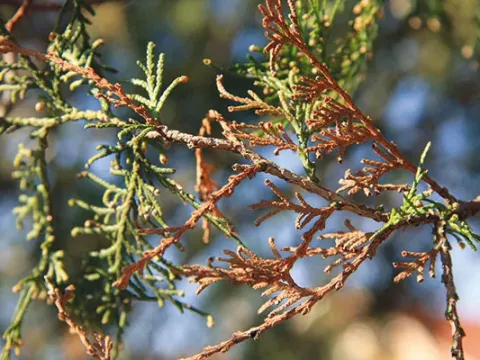
Didymascella thujina
Didymascella thujina
The primary symptoms of this fungal disease appear as small, yellowish spots on the needles, which eventually turn brown or dark olive as the fungus matures. Infected needles often drop prematurely, leading to unsightly thinning of the foliage.
What the section contains
Didymascella thujina
A distinctive feature of the infection is the development of tiny, circular or elliptical fruiting bodies on the underside of the needles. These structures are dark brown to black and become clearly visible during the spore dispersal phase.
The disease typically starts from the lower branches of the canopy, where moisture levels are higher, and progresses upwards. Young trees and dense hedges are particularly susceptible to widespread infection and foliage loss.
Infected branches often look scorched or withered. Unlike natural needle shedding, the spots associated with this pathogen have distinct borders and a characteristic texture caused by the erupting fruiting bodies.
Severe infestations can lead to significant needle loss across the entire plant, weakening its physiological state and leaving it vulnerable to other environmental stresses or secondary pests.
The disease is caused by the specialized Ascomycete fungus known as Didymascella thujina. This pathogen is highly host-specific, primarily targeting species within the Thuja genus, particularly Western red cedar and arborvitae.
The fungus develops within the epidermal tissues of the needles, where it forms apothecia. These fruiting bodies produce and release ascospores that act as the main mechanism for the pathogen's spread throughout the landscape.
The dissemination of spores is facilitated by wind currents, rain splashing, and physical contact between infected and healthy branches. Moisture is the key factor for successful spore germination and penetration into the host.
The mycelium of the fungus can overwinter within the tissues of infected needles that remain on the tree or have fallen to the ground. This allows the disease to re-emerge as soon as favorable conditions return in the spring.
As a specialized parasite, this fungus thrives in temperate climates with high rainfall, where the humidity remains trapped within the dense foliage of ornamental Thuja trees.
High relative humidity and frequent rainfall during the spring and summer are the primary drivers of Didymascella thujina development. Dense plantings that lack proper air circulation create the perfect microclimate for the pathogen.
Poor airflow within the canopy prevents foliage from drying out after rainfall or morning dew, significantly increasing the risk of spore germination. Trees planted in low-lying areas with poor drainage are also at a higher risk.
Temperatures ranging from 15 to 20 degrees Celsius, accompanied by persistent damp conditions, are optimal for the fungus to spread. During these periods, the pathogen can move quickly from one branch to another.
Improper spacing of trees during planting is a major factor that facilitates the rapid spread of the disease. When branches interlock, they trap humidity and create a continuous pathway for fungal spores to colonize the entire row.
The accumulation of infected plant debris around the base of the trees serves as a persistent reservoir for the fungus. If not managed properly, this debris will ensure a recurring cycle of infection year after year.
The primary economic and aesthetic damage caused by this disease is the significant reduction in the ornamental value of Thuja trees. Thinning of the foliage turns lush greenery into sparse, unhealthy-looking branches.
For nurseries, this infection is devastating as it renders the stock unsalable. The loss of foliage and the resulting weakened growth mean that plants fail to meet quality standards for landscape use.
Chronic infection impacts the tree's photosynthetic capacity, leading to stunted growth and overall physiological depletion. This makes the plant less resilient to external factors like winter desiccation or summer drought.
If left untreated, the disease can eventually kill individual branches or cause severe systemic decline. In high-density settings like living walls or hedges, the blight can spread uncontrollably without intervention.
The pathogen is particularly aggressive in humid, cool environments, making it a persistent challenge for gardeners and professional landscapers managing large collections of Thuja species.
Sanitation is the first line of defense; this includes pruning infected branches and collecting fallen needles from the base of the trees to reduce the fungal inoculum levels in the environment.
Improving air circulation through proper spacing and occasional pruning is crucial to reduce the humidity trapped within the canopy. This allows the foliage to dry faster, making it harder for spores to establish.
Chemical control involving fungicides, such as copper-based products or systemic triazoles, should be applied during the early stages of the growing season to protect healthy needles and prevent new infections.
Avoid overhead irrigation to minimize moisture on the foliage. Direct water towards the root zone to keep the branches dry and less favorable for fungal growth.
- Regular sanitation by removing infected plant parts.
- Ensuring adequate spacing between plants during installation.
- Applying fungicides during peak infection periods in spring.
- Disinfecting pruning tools to avoid spreading spores.
- Promoting plant health through balanced fertilization and care.