
Didymella blight
Didymella exigua
The causal agent of Didymella blight is the ascomycete fungus Didymella exigua (formerly classified as Phoma exigua). It is a widespread pathogen affecting various horticultural and agricultural crops.
What the section contains
Didymella blight
This fungus belongs to the class Dothideomycetes and exists as a facultative parasite that can persist for long periods in soil and on crop debris left in the field.
The pathogen's life cycle involves the formation of pycnidia and pseudothecia, which produce spores that serve as the primary inoculum for infection in the spring.
The fungus invades host plants through micro-wounds, natural openings like stomata, or damaged tissues, quickly establishing its mycelium within the plant structure.
Due to its high adaptability and ability to produce spores over extended periods, the fungus can cause recurring outbreaks if environmental conditions are favorable.
Symptoms of Didymella blight typically appear as small, circular or angular spots on leaves, which can gradually expand and merge over time.
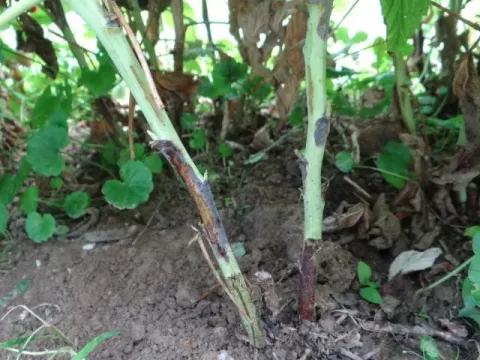
On stems, the disease manifests as elongated necrotic lesions, often concentrated around node areas and leaf attachment points, leading to weakened stems.
A distinctive diagnostic feature is the appearance of small, dark, pimple-like structures known as pycnidia within the center of the necrotic spots.
As the infection progresses, affected leaves show chlorosis, wilting, and premature senescence, significantly reducing the plant's overall photosynthetic capacity.
In cases of fruit infection, the pathogen causes sunken dark lesions, which not only reduce marketability but also serve as entry points for secondary pathogens.
The development and spread of Didymella blight are heavily influenced by environmental humidity and moderate temperatures, typically during spring and early summer.
Temperatures ranging from 18°C to 25°C provide an ideal environment for spore germination and rapid mycelial colonization of host plant tissues.
Extended periods of rain, heavy dew, or high atmospheric humidity facilitate the splash-dispersal of spores from infected plant parts to healthy growth.
Poor aeration in dense plantings creates a stagnant, humid microclimate that significantly accelerates the rate of new infections within the crop.
Excessive moisture on foliage for prolonged durations allows the fungus to penetrate the plant epidermis more efficiently, leading to severe outbreaks.
The economic impact of Didymella blight is significant, primarily due to the loss of plant vigor and reduced total yield per hectare.
Premature leaf drop stunts growth, preventing the plant from accumulating necessary energy reserves for subsequent seasons or fruit development.
Stem lesions can lead to branch dieback and, in severe instances, the collapse of entire sections of the plant, especially in woody crops.
The quality of harvested produce is compromised, as necrotic spots render fruits unsuitable for the fresh market and susceptible to post-harvest decay.
Long-term infestation can weaken the entire plant population, leading to progressive decline and the need for premature replanting of the crop area.
Effective management begins with rigorous field sanitation, including the complete removal and destruction of crop residues where the fungus overwinters.
Cultural practices such as pruning to improve air circulation and maintaining proper plant spacing are essential for reducing the risk of disease spread.
The strategic application of copper-based fungicides or systemic chemical treatments can provide effective control, particularly in years with high rainfall.
Integrated disease management involves monitoring for early symptoms and immediately removing affected shoots to lower the total spore load in the environment.
Choosing resistant cultivars and ensuring balanced fertilization are fundamental steps to improve plant health and increase natural defense mechanisms against Didymella exigua.