
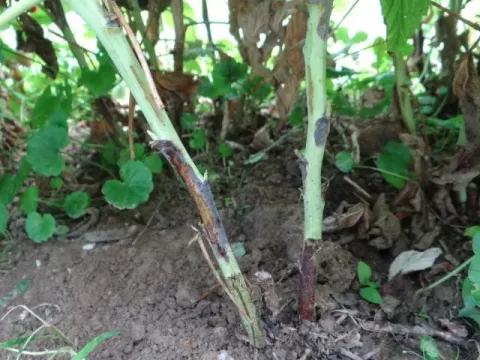
Didymella blight
Didymella subherbarum
Didymella blight is a fungal infection caused by the ascomycete fungus Didymella subherbarum. In modern phytopathology, this pathogen is recognized as a micro-fungus capable of affecting a broad range of herbaceous plants and woody shrubs.
What the section contains
Didymella blight
The life cycle of the pathogen includes both conidial and sexual (ascospore) stages, which contributes to its high resilience under various environmental conditions.
The fungus overwinters in crop debris, soil, and on infected perennial plant parts in the form of pycnidia and perithecia, acting as the primary source of inoculum.
Dissemination during the growing season occurs through spores spread by wind, rain splashes, or insect vectors, facilitating rapid infection of healthy plant tissues.
The fungal mycelium penetrates plant tissues through natural openings such as stomata or via micro-wounds, leading to local cell necrosis and tissue degradation.
Initial symptoms present as small, light-brown or gray spots, often surrounded by a darker border, which gradually expand as the infection progresses.
Punctiform fruiting bodies known as pycnidia frequently appear on the affected stems or leaves, visible as tiny black bumps protruding from the necrotic surface.
As the disease advances, stem tissues lose their structural integrity, becoming brittle and prone to breakage, often leading to the premature drying and wilting of the plant.
In conditions of high humidity, a spore-laden layer or slimy exudate may develop on the surface of the lesions, indicating active fungal reproduction.
The root collar and lower stem zones may show signs of darkening and ulceration, which disrupts nutrient transport and causes severe stunting of the plant.
The development of Didymella blight is heavily dependent on moisture levels, as the presence of free water on foliage is crucial for spore germination.
Optimal temperatures for mycelial growth range between +18 and +25 degrees Celsius, though the pathogen remains viable even in cooler climate conditions.
High planting density, poor air circulation, and excess humidity create a microclimate that drastically accelerates the spread of spores and infection rates.
Imbalanced nutrient management, particularly excess nitrogen application, lowers the plant's natural resistance, making tissues more susceptible to Didymella subherbarum.
Mechanical damage caused by field operations or insect feeding provides entry points for the pathogen, worsening the severity of the infection during the growth period.
The damage caused by Didymella blight involves the destruction of vegetative organs, leading to a significant decrease in overall yield and crop quality.
Disruption of photosynthesis due to leaf necrosis leads to reduced sugar accumulation, inferior flavor profiles, and poor marketability of fruits and vegetables.
Severe stem infection often leads to the death of shoots, which is especially detrimental to perennial crops, as it reduces winter hardiness and long-term plant longevity.
In nursery settings, the disease can cause mass mortality among young seedlings, resulting in major financial losses for growers and farming operations.
Chronic infection weakens the plant's physiological state, making it highly vulnerable to secondary pathogens and other environmental stressors throughout the season.
Primary control strategies involve rigorous crop rotation and the prompt destruction or removal of crop debris that serves as a reservoir for the infection.
Prophylactic application of systemic and contact fungicides is essential during critical periods when moisture levels are high and weather favors disease progression.
Effective agronomic management, such as maintaining appropriate plant spacing and performing timely pruning, improves air circulation and lowers the disease pressure.
Balanced fertilization, focusing on potassium and phosphorus, helps maintain plant health and bolsters natural resistance to fungal invasion.
- Use of disease-free planting material
- Regular sanitation and removal of affected shoots
- Application of copper-based or triazole fungicides
- Optimizing irrigation to avoid foliage wetting