
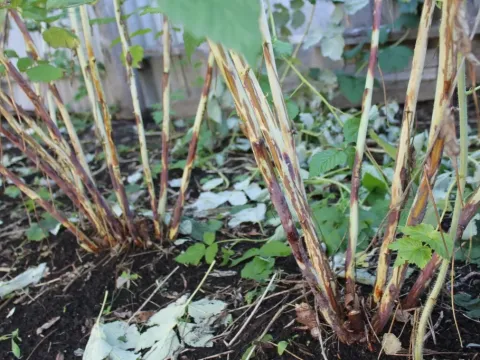
Didymella blight
Didymella pedeiae
The disease is caused by a fungus belonging to the Didymella genus, specifically known as Didymella applanata in many horticultural contexts. It is a well-known pathogen that affects various plants, causing significant tissue necrosis.
What the section contains
Didymella blight
The fungus produces both conidia and ascospores, allowing it to survive in various forms depending on environmental conditions. It remains active in plant debris or on the stems, ensuring the survival of the infection throughout the year.
Once established, the fungal mycelium colonizes the stem tissues, feeding on the host and disrupting the plant's vascular system. This internal invasion is what triggers the visible external symptoms on the plant.
The life cycle is closely synchronized with the growth of the host plant. High moisture levels trigger the release of spores, which are then dispersed by wind or splashing water, infecting new growth during the spring.
Due to its specialized life cycle, the pathogen is highly adapted to exploit any weakness in the host's defenses, making it a persistent threat in susceptible gardening environments.
The hallmark of the disease is the appearance of purplish-brown spots, particularly at the leaf axils where the leaf petiole attaches to the stem. These spots are the primary indication of an active infection.
Over time, these spots expand, often coalescing to cover large portions of the stem. The affected bark eventually cracks and peels, which is a critical sign of structural damage to the plant tissue.
Foliage on the infected stems begins to yellow and wither prematurely. This decline in leaf health affects the plant's overall energy production, leading to stunted growth and poor fruit development.
Tiny black fruiting bodies, known as pycnidia, appear on the surface of the lesions towards the end of the season. These structures serve as the reservoir for the pathogen to overwinter safely.
In cases of severe infestation, the stems become brittle and break easily, especially under the weight of foliage or fruit. This physical damage often leads to the total loss of individual productive canes or branches.
The development of the disease is heavily favored by cool, damp weather conditions. Humidity is the primary driver for the germination of fungal spores, and high moisture levels are necessary for the infection process.
Poor air circulation, often caused by overly dense planting or lack of pruning, creates stagnant microclimates where humidity levels remain high, allowing the fungus to thrive and spread.
Over-fertilization with nitrogen induces rapid, lush vegetative growth that is soft and more susceptible to fungal penetration. These delicate tissues offer little resistance to the invading mycelium.
Any physical trauma to the stem, such as that caused by insects or machinery, provides an easy entry point for the fungus. Reducing these injuries is vital to preventing the establishment of the disease.
The presence of leaf litter and debris at the base of the plant allows the fungus to survive the winter. This detritus acts as a breeding ground that releases fresh spores as soon as temperatures rise in the spring.
The primary economic harm of the disease is a significant reduction in yield. The interruption of the plant's vascular flow prevents nutrients from reaching the fruit, resulting in smaller, lower-quality harvests.
Plants weakened by the fungus exhibit lower winter hardiness. During cold spells, the damaged stems are more likely to suffer from winter kill, further depleting the productive potential of the plantation.
Chronic infection drains the plant's energy reserves, leading to poor root development and long-term decline. Eventually, the plant may become incapable of producing viable new growth.
Left unmanaged, the blight can spread through an entire crop, necessitating the complete removal of plants to prevent further outbreaks. This loss of established perennials is a major cost to growers.
In addition to direct losses, farmers must invest in labor-intensive sanitation and chemical controls to suppress the disease, which increases the total cost of production for the season.
Effective management begins with strict sanitation. Removing and destroying all infected stems after harvest is crucial to reduce the amount of inoculum that will be present in the coming season.
Maintaining adequate plant spacing is essential for airflow. Proper pruning helps ensure that the canopy dries out quickly after rain, which prevents the fungus from germinating.
- Selecting disease-resistant varieties.
- Balanced fertilization, favoring potassium over excess nitrogen.
- Integrated pest management to prevent stem injury.
- Timely fungicide applications during the period of high infection risk.
Chemical control usually involves copper-based sprays or systemic fungicides. It is important to alternate between different classes of chemicals to prevent the development of resistant fungal strains.
Biological control agents, such as beneficial microorganisms, can be applied to create a competitive environment on the surface of the plant, effectively inhibiting the growth of the pathogen.