
Didymella blight
Didymella glomerata
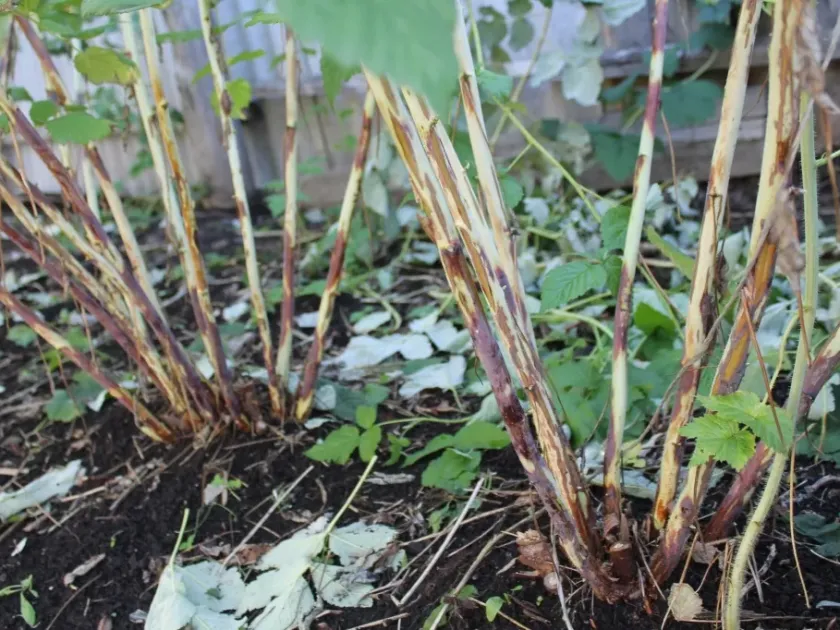
Description
Symptoms
Initial symptoms of the disease appear as dark, irregular purple-brown spots on young canes or stems, which gradually expand and can eventually girdle the entire circumference of the affected area.
As the infection progresses, the tissues within the affected zones become necrotic, eventually cracking and revealing the internal vascular structure, which turns greyish as the cells die.
Small black dots, known as pycnidia, often emerge on the surface of dead bark in late summer or autumn; these are the reproductive structures of the fungus, essential for its survival during the winter months.
Leaves on infected stems often exhibit chlorosis, curling, and premature abscission, which significantly reduces the photosynthetic capacity of the entire plant, leading to stunted growth.
In severe cases, the infected stems become extremely brittle and prone to snapping during wind events, which causes direct structural damage to the plant and potential collapse of the crop canopy.
Pathogen
The causative agent of this disease is the fungus Didymella glomerata (anamorph Phoma glomerata), an ascomycete that can persist for long periods in infected plant debris, dead wood, and soil as mycelium or pycnidia.
The biological cycle of this pathogen is strictly dependent on high humidity and free moisture, which facilitate the production and dispersal of spores through rain splashes or dew accumulation on plant surfaces.
Infection primarily occurs through small wounds in the epidermis, pruning cuts, or sites where leaf stalks connect to the main stem, where water can easily pool and stay stagnant for long periods.
The fungus acts as a facultative parasite, meaning it can easily colonize weakened or stressed tissues, utilizing a broad spectrum of enzymes to break down plant cell walls and extract nutrients.
Asexual reproduction through conidia allows the fungus to spread rapidly across fields, often assisted by wind, splashing rain, and even insect activity, leading to multiple infection cycles within one season.
Conditions for development
The development and rapid spread of the disease are highly dependent on cool to moderate temperatures, typically between 15°C and 25°C, combined with high relative humidity or frequent rainfall.
Overcrowded plantings that lack adequate air circulation create a microclimate with high moisture levels, which is highly conducive to the germination of fungal spores on plant surfaces.
Excessive nitrogen fertilization often leads to rapid, succulent growth that is physically weaker and more susceptible to pathogen entry through small micro-cracks or natural openings in the plant tissue.
Mechanical injuries caused by improper pruning techniques or the presence of various stem-boring insects create entry points for the fungus, significantly increasing the incidence of the disease.
Failure to remove infected plant material or debris from the soil surface provides an ongoing reservoir of inoculum, ensuring the disease returns year after year to the same site.
Why it matters
The main economic damage from this blight is the reduction in yield caused by impaired sap flow, which results in smaller fruits, lower sugar content, and overall poor quality of the final harvest.
Infected plants show signs of general decline, including poor cane development and reduced vigor, which makes them less competitive against weeds and more prone to other secondary infections.
The disease drastically reduces winter hardiness, leading to severe frost injury or complete dieback of infected canes, which can result in significant losses for growers in temperate regions.
The cost of implementing management strategies, such as frequent fungicide applications and extra labor for pruning, significantly increases the production costs per unit of yield.
Without an effective management program, the pathogen can permanently establish itself in the field, making it difficult to maintain a healthy and profitable commercial crop over the long term.
Protection
The most effective management approach starts with rigorous cultural practices, including the removal and destruction of all infected canes and debris to eliminate the source of inoculum.
Ensuring proper plant spacing and thinning helps to improve air circulation, lowering the humidity around the canes and making the environment less favorable for fungal spore germination.
Chemical control involving the use of targeted fungicides should be performed during the active growing season, especially during periods of wet weather or immediately following pruning activities.
It is essential to rotate products with different active ingredients to manage resistance, as the pathogen has a high potential to adapt to frequently used chemical agents.
- Regular sanitation pruning
- Optimal plant spacing for ventilation
- Control of stem-feeding insects
- Prophylactic fungicide applications
- Balanced fertilization programs
Discussion
No discussions yet — be the first.