
Didymella americana
Didymella americana
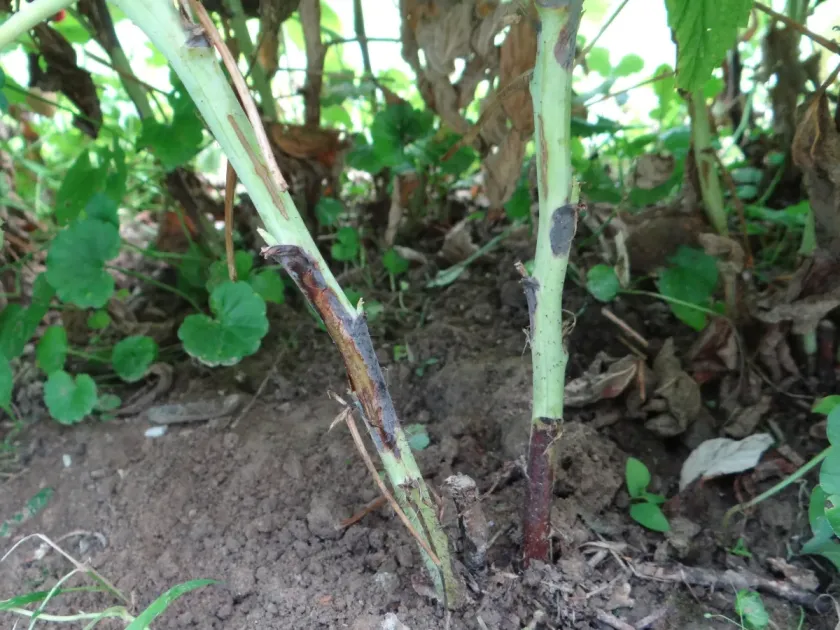
Description
Symptoms
The initial signs of infection appear as small, chlorotic spots on leaves and stems, which gradually expand and change color to dark brown or black as the tissue dies.
Lesions often exhibit distinct margins, sometimes accompanied by a yellowish halo, representing the plant's physiological stress response to the invading fungal mycelium.
A definitive diagnostic feature is the presence of numerous small, black, pinhead-like structures known as pycnidia, appearing in the center of the necrotized lesions on the leaves.
As the disease progresses, leaves may curl, wither, and prematurely abscise, significantly impacting the plant's overall canopy structure and its capacity for photosynthesis.
In severe infestation cases, stem lesions can become girdling, leading to a disruption of vascular transport and the eventual wilting or lodging of the entire plant structure.
Pathogen
The causal agent of this plant disease is the fungus Didymella americana, a member of the Ascomycota division characterized by its parasitic behavior on specific agricultural crops.
The fungus acts as a necrotrophic pathogen, releasing enzymes that degrade plant tissue to obtain nutrients, which subsequently leads to the appearance of characteristic necrotic lesions.
Its life cycle involves the formation of pycnidia and pseudothecia, which serve as overwintering structures, allowing the pathogen to persist in soil and debris for several seasons.
Dissemination is primarily achieved through airborne spores (ascospores) and conidia, which are efficiently dispersed by wind currents and water splashes during rainfall events.
Genetic studies indicate that this pathogen maintains high variability, enabling it to adapt to various host plant environments and overcome some of the standard defense mechanisms of plants.
Conditions for development
Favorable conditions for the development of Didymella americana include high relative humidity levels, typically above 75%, combined with moderate temperatures ranging from 18 to 25 degrees Celsius.
Water availability, such as prolonged leaf wetness caused by fog, dew, or frequent light rain, is essential for the germination of fungal spores on the plant surface.
Dense crop planting configurations that limit air circulation create a microclimate with high humidity, which acts as a catalyst for the rapid spread of the disease within the field.
Warm and rainy weather patterns are particularly dangerous, as they coincide with the active phase of fungal spore dispersal and the susceptibility window of the host plants.
Poor field sanitation, specifically leaving untreated crop residues on the surface, facilitates the overwintering of the fungus and ensures a high inoculum load for the next season.
Why it matters
The primary economic harm caused by this disease is the reduction in crop yield and quality due to the loss of photosynthetic area and disrupted nutrient transport in the plants.
Premature leaf drop leads to decreased biomass accumulation, which directly impacts the harvest weight and the marketability of the produce, often resulting in significant financial losses.
Affected plants demonstrate diminished vigor, making them more susceptible to subsequent attacks by opportunistic secondary pathogens and environmental stressors like drought or frost.
In cases where the infection affects stems, the loss of structural integrity leads to lodging, which not only complicates mechanical harvesting but also increases the risk of contamination.
Management expenses increase due to the need for repeated fungicide applications and the implementation of more intensive phytosanitary measures throughout the growing season.
Protection
Implementing a diversified crop rotation plan is the most effective long-term strategy, as it disrupts the fungal life cycle by removing the host plant for several growing seasons.
Deep tillage and plowing are essential cultural practices to bury plant debris, accelerating the natural decay of the pathogen and reducing the primary inoculum source in the soil.
Selection of resistant or tolerant crop cultivars is recommended to prevent widespread outbreaks, as breeding for resistance is the most sustainable approach to disease management.
Applying appropriate fungicides at the onset of symptoms can help suppress the disease spread, provided that the timing and application methods follow established agricultural guidelines.
Regular field scouting and the immediate removal of infected plant parts help to contain localized outbreaks and prevent the fungus from spreading to healthy parts of the crop field.
Discussion
No discussions yet — be the first.