
Rhizopus rot
Rhizopus
Rhizopus rot is a fungal infection caused by members of the Rhizopus genus, most notably Rhizopus stolonifer, which is widely recognized as a bread mold but also acts as a serious plant pathogen.
What the section contains
Rhizopus rot
The fungus is a facultative parasite, meaning it primarily lives on decaying matter but can readily infect living plant tissues, especially when they are wounded or stressed.
Its reproductive strategy is highly efficient, producing vast quantities of airborne sporangiospores. These spores serve as the primary inoculum for spreading the disease through fields and storage areas.
Once it establishes contact with a susceptible host, the fungus secretes pectinolytic enzymes. These enzymes break down the middle lamella of plant cells, causing rapid softening and tissue collapse.
The hyphae of the fungus grow aggressively, forming a dense white mycelium that rapidly permeates the interior of fruits, vegetables, and seeds like those of the peanut plant.
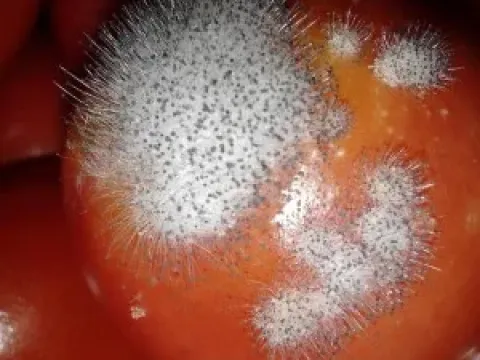
The most diagnostic sign of the infection is the rapid development of a coarse, white, fuzzy mycelial growth covering the affected tissue.
Over time, the mycelium darkens, becoming gray or black as numerous sporangia—the spore-bearing structures—develop on the tips of the hyphae.
Affected tissues become soft and watery. This liquefaction process is frequently accompanied by a distinct, pungent, fermentative odor that signifies advanced decay.
In peanuts, the fungus causes severe rotting of the pods. When pods are cracked open, the kernels are often encased in thick fungal threads, rendering them unmarketable.
On fruits like peaches or tomatoes, the rot can spread from a small puncture wound until the entire fruit becomes a disorganized, mushy mass within a few days.
Warm temperatures, generally between 20°C and 30°C, are ideal for the rapid growth of Rhizopus. The disease can progress significantly faster under these conditions than in cooler environments.
High relative humidity (above 80%) is the single most critical factor for the widespread outbreaks of Rhizopus rot. Moisture is required for spore germination and mycelial spread.
Physical wounding is almost always necessary for the fungus to initiate infection. Cuts, bruises, or punctures from insects and harvesting equipment provide the essential access points.
Poor ventilation in storage facilities creates pockets of high humidity and heat, which are perfect for the development of the fungus in harvested produce.
Crowded plant stands can increase the micro-climate humidity around the plant canopy, facilitating the spread of spores from the soil onto healthy plant parts.
The economic impact of Rhizopus rot is severe, particularly as a post-harvest disease, leading to significant losses during transport, storage, and retail stages.
Peanut production suffers significantly as the fungus can colonize pods while they are still in the ground or during the drying phase, leading to total loss of quality.
Because the fungus spreads so rapidly, an entire shipment or batch of stored vegetables can be lost in a matter of days if a single infected fruit is left unattended.
The disease destroys the organoleptic and commercial quality of the produce, leaving it completely unusable for fresh consumption or processing.
In addition to physical losses, there is a risk of secondary issues such as the production of certain mycotoxins, which can pose food safety risks to consumers and livestock.
The primary control strategy is the mitigation of mechanical damage. Careful handling during harvest and packaging significantly reduces the risk of infection.
Sanitation is paramount. Removing and burying crop debris from fields helps reduce the overwintering inoculum of the pathogen for the next growing season.
Effective pest management is essential, as many insects cause the wounds that lead to infection. Keeping the crop healthy and pest-free minimizes entry points for the fungus.
Proper storage hygiene, including the use of disinfected containers and strict temperature/humidity control, is the most effective way to prevent post-harvest spread.
- Apply approved fungicides when necessary according to label directions.
- Maintain strict hygiene in packing and storage facilities.
- Sort products carefully to remove any damaged or symptomatic specimens.