
Rhodocollybia
Rhodocollybia
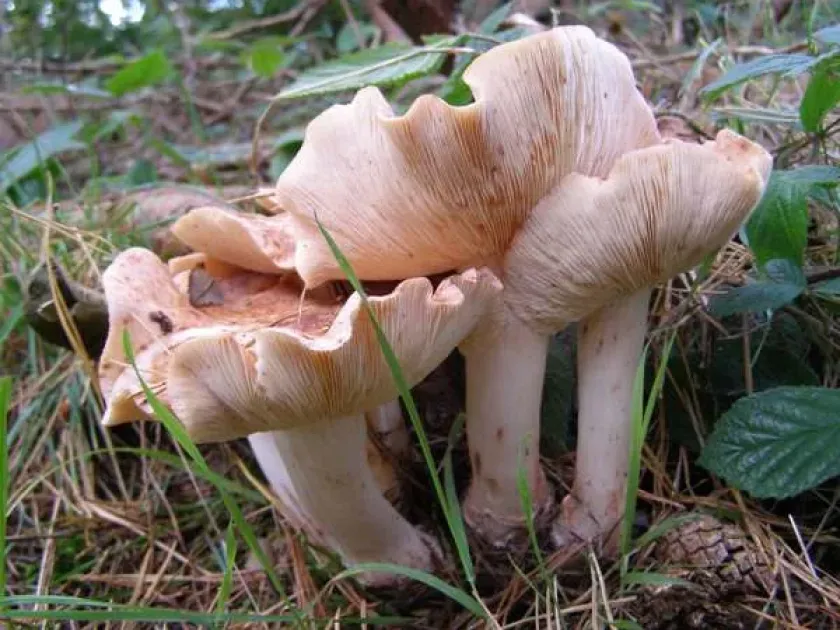
Description
Symptoms
The emergence of fungal fruiting bodies around the base of the trunk or on exposed roots is a primary indicator of established mycelial activity in the root zone.
Affected trees typically exhibit reduced vigor, characterized by chlorosis, early needle or leaf senescence, and stunted growth compared to healthy specimens.
Upon examination of the root collar, necrotized bark and underlying mycelial mats, often white or cream-colored, reveal the extent of the infection.
Roots infected by Rhodocollybia undergo soft rot, resulting in softened, dark-stained tissue that emits a distinct, pungent fungal odor.
Increased susceptibility to windthrow is a critical symptom, as the structural degradation of major lateral roots compromises the plant's stability.
Pathogen
Rhodocollybia is a genus of fungi belonging to the family Marasmiaceae. While primarily known as saprotrophs that decompose leaf litter, certain species, such as Rhodocollybia butyracea, can act as opportunistic pathogens.
The pathogen is a basidiomycete that spreads through vegetative mycelium, which colonizes dead organic matter before transitioning to the roots of weakened plants.
The fungus reproduces via spores, which are disseminated by wind or splashing water, settling on damaged areas of the host plant where infection initiation occurs.
It acts as a facultative parasite, exploiting the stress of the host plant to invade vascular tissues, thereby disrupting nutrient and water uptake.
Scientific identification of the pathogen relies on the macro-morphology of the fruiting bodies, characterized by specific cap colors and gill attachment styles.
Conditions for development
High soil moisture levels and high humidity are the primary drivers for spore germination and the rapid expansion of the fungal network within the substrate.
The accumulation of woody debris and organic mulch serves as a vital nutrient reservoir, allowing the fungus to maintain a stable population before infecting living hosts.
Mechanical damage to the root system, often caused by heavy machinery, digging, or burrowing rodents, facilitates the entry of hyphae into healthy plant tissues.
Poor soil drainage and low oxygen content (hypoxia) in the root zone significantly weaken the plant's immune system, making it more susceptible to opportunistic colonization.
Moderate temperatures during spring and autumn seasons provide the ideal physiological conditions for the development of fruiting bodies and active spore release.
Why it matters
The fungus causes severe economic damage in nurseries, leading to the high mortality of seedlings and reduced crop uniformity.
In forest stands, it contributes to the degradation of timber quality, as internal rot patterns compromise the wood structure and limit industrial utility.
Presence of the disease leads to landscape devaluation and requires intensive management interventions, such as the removal of infected trees and sanitation harvesting.
Long-term harm includes the persistent build-up of inoculum in the soil, which complicates reforestation efforts and risks the health of subsequent plantings.
Severe root decay results in the loss of aesthetic value and structural safety in urban forestry and landscape architecture settings.
Protection
The cornerstone of management is strict sanitation, which involves the removal of dead woody material and stumps that serve as long-term breeding sites for the fungus.
Maintaining optimal irrigation and fertilization programs ensures that plants remain vigorous and less likely to fall prey to opportunistic fungal pathogens.
- Sanitary logging of infected trees;
- Removal and burning of decayed root material;
- Chemical treatment of the soil with registered fungicides;
- Improving soil drainage to prevent moisture stagnation.
Integrated disease management (IDM) practices, including the use of biological control agents that compete with Rhodocollybia, are increasingly recommended.
Regular site inspections during the spring peak season allow for the early detection and localization of infection foci, preventing widespread outbreaks.
Discussion
No discussions yet — be the first.