
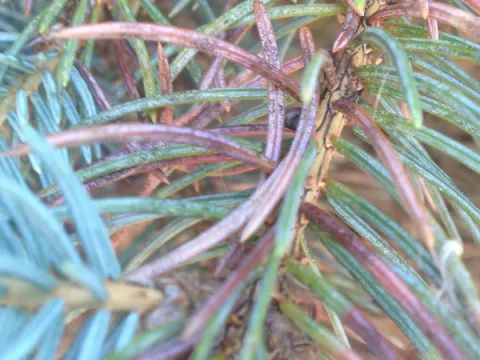
Rhizosphaera needle cast
Rhizosphaera
The causal agent of this disease is the fungus Rhizosphaera kalkhoffii. It is a common ascomycete fungus that specifically targets the foliage of coniferous trees, especially spruce species.
What the section contains
Rhizosphaera needle cast
The fungus acts as a parasite that infects the needles. It penetrates the stomata, which are the small breathing pores on the needle surface, and begins to colonize the internal tissues.
Inside the needle, the fungus develops its mycelium, which disrupts the tree's ability to perform photosynthesis. This internal colonization leads to the eventual death of the needle tissue.
The pathogen reproduces by forming spores known as conidia. These spores are spread primarily by splashing rain and wind, allowing the infection to move to healthy needles and adjacent trees.
The fungus is capable of surviving on fallen needles on the forest floor or under the tree for a significant amount of time, acting as an inoculum source for new infections.
The first noticeable symptom is the discoloration of the needles on the previous year's growth. The needles turn from a healthy green to a yellow, then brown or purplish-brown color.
If you examine the underside of the infected needles with a magnifying glass, you will see rows of tiny black dots. These dots are the fruiting bodies (pycnidia) of the fungus, arranged in lines along the stomata.
Needle drop usually starts from the lower branches and works its way up the tree. As a result, the tree becomes thin and sparse, showing significant crown loss.
Unlike some other needle diseases, the infected needles often remain attached to the twigs for a period after dying, before eventually falling off. This creates a distinct pattern of partial defoliation.
The tips of the branches often stay green while the older needles closer to the trunk turn brown, giving the spruce a patchy and sickly appearance.
Rhizosphaera needle cast thrives in environments with high humidity and moderate temperatures. Rainy spring and summer weather creates the perfect conditions for spore germination and infection.
Poor air circulation is a major contributor to the spread of the disease. Trees planted too closely together or in areas with little wind exposure remain damp for longer periods, favoring the fungus.
Stressed trees, particularly those suffering from drought or nutrient deficiencies, are much more susceptible to infection. A weak tree has less natural resistance to fungal invasion.
Shaded areas also foster the disease, as sunlight is essential for drying out the foliage after rain. Reduced light levels keep the canopy wetter for longer, helping the pathogen grow.
Prolonged wet seasons are the most dangerous periods for conifers, as the continuous moisture allows the fungus to spread rapidly throughout the entire canopy of the tree.
The primary damage caused by this disease is the premature shedding of needles. This loss of foliage severely impacts the aesthetic value of the tree, making it look unsightly.
Since the needles are the tree's food-producing organs, losing them reduces the plant's overall energy reserves. This slows down growth and leads to thinner annual growth rings.
Persistent infections weaken the tree's immune system, making it more vulnerable to secondary pests like bark beetles, which can kill a stressed tree quite rapidly.
Trees suffering from significant needle loss are less capable of surviving environmental stressors, such as harsh winter freezes or intense sun exposure, increasing the risk of cold injury.
In nursery settings, this disease is highly detrimental as it renders the stock unsellable and requires significant financial investment to treat the infected plants.
Sanitation is the first line of defense. It is crucial to collect and destroy all fallen needles from beneath the tree to remove the primary source of fungal spores.
Preventive fungicide treatments are highly effective if applied correctly. Copper-based fungicides are commonly used in the spring to protect new growth from infection.
For more severe cases, systemic fungicides can be applied to stop the progression of the mycelium inside the needles. Professional applications should be timed correctly with weather conditions.
Improving cultural practices is vital for long-term health. Thinning out the canopy to improve air circulation and ensuring proper watering and fertilization helps the tree resist the disease.
When selecting new trees, ensure they are disease-free. Avoid planting susceptible species in areas where the disease is known to be prevalent or in locations with poor airflow.