
Rhizosphaera needle cast
Rhizosphaera pini
The disease is caused by the fungus Rhizosphaera pini (and sometimes Rhizosphaera kalkhoffii), which belongs to the group of mitosporic fungi. It is a specialized pathogen that primarily targets the needles of various coniferous species.
What the section contains
Rhizosphaera needle cast
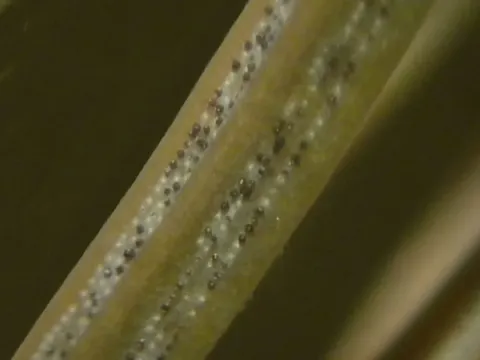
The fungus produces small, reproductive structures known as pycnidia. These structures emerge through the stomata on the lower surface of the needles, which is a characteristic feature of this pathogen.
Under magnification, these pycnidia appear as tiny, dark-colored dots arranged in neat, parallel rows along the midrib of the needle. This specific pattern is key for accurate field diagnosis of the disease.
The life cycle of the pathogen is driven by moisture. During wet weather, spores are released from the pycnidia and spread to new, healthy needles via rain splashes or wind currents, initiating new infection cycles.
The fungus colonizes the internal tissues of the needle, consuming nutrients and eventually killing the needle cells. Even after the needle dies and falls, the fungus remains active as a saprophyte, utilizing the debris to maintain the infection cycle.
The most visible symptom is the discoloration of needles on the previous year's growth. Healthy green needles gradually turn yellow, then develop a dull brown or purplish-brown appearance.
The infection typically starts in the lower canopy where the environment is more humid and sheltered. Over time, the disease spreads upward and outward through the tree, significantly thinning the foliage.
Upon close inspection of the discolored needles, you will see the hallmark diagnostic sign: rows of black fungal fruiting bodies (pycnidia) emerging from the stomata lines on the underside of the needle.
Premature needle cast is a common consequence of this infection. Affected needles eventually drop off, leaving the branches bare or with only a small tuft of living needles at the very tips.
Chronic infestation makes the tree appear sparse and aesthetically damaged. While the tree rarely dies immediately, the sustained loss of foliage significantly compromises its vitality over several years.
The development of Rhizosphaera needle cast is heavily dependent on prolonged moisture and moderate temperatures. The fungus thrives when needles remain wet for extended periods.
High planting density is a major risk factor, as it restricts airflow and keeps the canopy environment humid. Trees planted too close together in landscape designs are highly susceptible to infection.
Sites with poor sunlight penetration and limited air circulation, such as those near dense buildings or large hedges, create ideal conditions for the pathogen to thrive throughout the growing season.
Overhead irrigation, especially during the evening, exacerbates the issue by extending the time that needles remain wet. This practice effectively facilitates the transfer of spores from old needles to healthy ones.
Old needles that fall to the ground act as a reservoir for the fungus. If this debris is not cleaned up, the fungus can continue to produce spores during the following spring, leading to reinfection of the tree.
The primary damage caused by this disease is the reduction of the photosynthetic capacity of the tree. As needles drop prematurely, the tree's ability to produce energy is severely limited.
This physiological stress weakens the host, making it more susceptible to secondary attacks by insect pests, such as bark beetles or scale insects, which often target stressed spruce trees.
The loss of foliage ruins the aesthetic value of the tree, which is a significant concern in urban forestry, public parks, and high-end residential landscaping where spruce trees are prized for their appearance.
If the infection persists for several consecutive years, the tree may undergo terminal decline. Younger trees are especially vulnerable and may die quickly if the infection is not managed.
In silviculture, widespread outbreaks can stunt the growth rates of conifers and disrupt the health of the entire stand, leading to long-term economic and ecological losses.
Effective management begins with improving tree health through proper maintenance. This includes pruning to improve air circulation and removing fallen debris from beneath the canopy to minimize the spore load.
Chemical control involves the timely application of fungicides. Treatment should start early in the spring, just as the new needles are beginning to emerge, to provide a protective barrier.
Copper-based fungicides are traditional and effective tools for preventing spore germination. For more established infections, systemic fungicides may be required to reach the fungus inside the needle tissue.
Improving the cultural environment is essential. Growers should avoid overhead irrigation and ensure that trees are spaced appropriately to facilitate rapid drying of the needles after rainfall.
- Thinning the canopy to allow for better air movement.
- Sanitation: collecting and disposing of all fallen needles.
- Applying copper-based fungicides as a preventative measure.
- Using systemic fungicides for curative treatment.
- Monitoring the lower canopy for early signs of needle discoloration.