
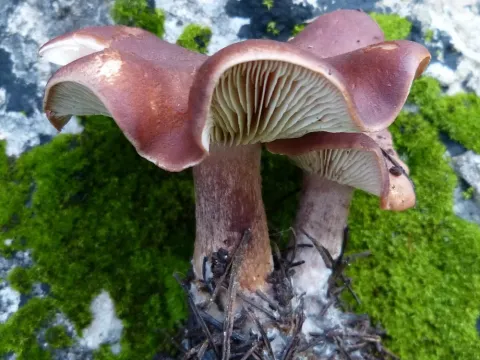
Rhodocybe
Rhodocybe
The genus Rhodocybe belongs to the Entolomataceae family of basidiomycete fungi. From an agricultural perspective, these are primarily soil-dwelling saprotrophs.
What the section contains
Rhodocybe
These fungi thrive by decomposing organic matter in the soil, such as plant debris, leaf litter, and straw, playing a natural role in nutrient cycling.
While not typically considered primary plant pathogens, their presence signifies a specific organic environment that may influence the soil microbiome.
The biological cycle of Rhodocybe involves the enzymatic breakdown of complex celluloses and lignins, which is essential for healthy soil structure.
Laboratory identification of species within this genus is complex, as it requires careful analysis of spore prints and microscopic characteristics of the basidia.
Development of Rhodocybe species is heavily dependent on high moisture levels in the soil and atmosphere, typically favoring temperate climates.
They prefer shaded environments where sunlight does not dry out the soil surface, allowing for consistent growth of mycelial networks.
Substrates rich in organic carbon provide the necessary energy source for their rapid proliferation, particularly in poorly managed plots.
The optimal temperature range for these fungi is generally between 15°C and 22°C, making late summer and autumn their peak activity period.
Soil pH levels influence the distribution and density of these fungi, with most species favoring neutral to slightly acidic conditions.
Rhodocybe does not directly attack healthy living plant tissues but can pose indirect risks to agricultural productivity through nutrient competition.
When these fungi decompose large amounts of organic material, they may immobilize nitrogen, creating a temporary deficiency for surrounding crops.
Dense mycelial growth in the rhizosphere can disrupt proper soil aeration and water infiltration, potentially stressing plant root systems.
In greenhouses or specialized cultivation systems, an overabundance of saprotrophic fungi indicates an imbalance in soil organic matter management.
While rare, excessive moisture and presence of these fungi around seedlings can create secondary conditions that favor damping-off by other pathogens.
Management of Rhodocybe involves physical and cultural practices to regulate moisture levels and organic matter decomposition in the field.
Deep cultivation and regular turning of the soil help disrupt mycelial networks and improve oxygenation, which is unfavorable for many saprotrophs.
Ensuring proper drainage is a critical step in preventing the humid environment these fungi require for their reproductive cycle.
Proper management of plant debris and composting cycles reduces the available substrate for fungal development near sensitive crop areas.
- Regular soil aeration via cultivation.
- Managing irrigation to avoid waterlogging.
- Prompt removal of decaying organic material.