
Cytospora canker of apple
Cytospora mali
The disease is caused by the fungus Cytospora mali, a pathogenic agent that colonizes the bark and cambium of apple trees. It acts as a weak parasite that thrives primarily on stressed or damaged wood tissue.
What the section contains
Cytospora canker of apple
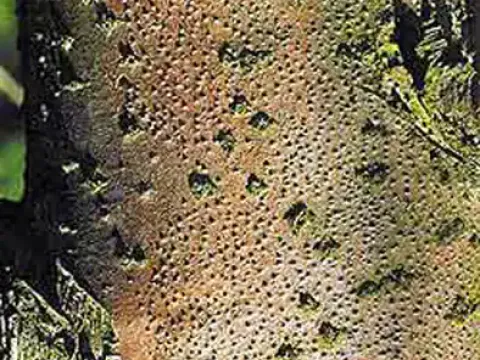
The fungus produces numerous pycnidia, which appear as small, pimple-like structures on the bark surface. These structures house millions of conidia that are released during humid weather to propagate the infection.
The pathogen remains viable in infected branches, dead bark, or abandoned wood for extended periods. It is highly resilient to environmental stressors, allowing it to overwinter successfully within the tree structure.
Infection usually occurs when fungal spores encounter wounded bark, such as frost cracks, sunburn, or poorly executed pruning cuts. Once inside, the mycelium spreads, disrupting the transport of nutrients and water.
Host susceptibility plays a crucial role in the infection process. Trees that are nutritionally deficient or water-stressed are significantly more prone to rapid colonization by Cytospora mali compared to healthy specimens.
The initial symptoms are characterized by the appearance of sunken, darkened, reddish-brown patches on the bark. As the disease advances, the bark becomes brittle, dry, and often cracks around the infection site.
Small, elevated bumps (pycnidia) become visible on the affected area, indicating the maturation of fungal spores. Under moist conditions, these pustules can exude visible tendrils of spores.
Internal wood tissue beneath the canker turns brown or dark, exhibiting clear signs of decay and necrosis. Over time, the bark may peel away from the wood, leaving large, unsightly lesions on the trunk or branches.
Foliage on affected branches often turns yellow, wilts, and drops prematurely. Eventually, the entire branch dies, becoming brittle and dysfunctional, which negatively impacts the tree's overall vigor.
- Sunken reddish-brown lesions on the bark.
- Presence of small pimple-like pycnidia on lesions.
- Cracking of the bark around the canker margin.
- Brown discoloration of the inner bark and cambium.
- Wilting, yellowing, and death of distal branches.
Environmental conditions such as prolonged humidity and poor ventilation within the canopy promote the development of the disease. High moisture levels facilitate the release and spread of spores.
Mechanical injuries, including pruning wounds, hail damage, or animal feeding, act as primary infection courts. Frost damage during winter is a common trigger for the initial onset of the disease.
Inadequate orchard management, specifically improper irrigation or fertilization, makes trees more susceptible. Nutritional stress reduces the tree's ability to compartmentalize and seal off fungal infections.
Trees planted in poorly drained soil or those experiencing extreme seasonal temperature fluctuations are at a higher risk. Such stress factors compromise the plant's structural integrity and immune responses.
Overcrowded orchards with low light penetration and poor air circulation create a conducive environment for spores to land and germinate on the bark surface throughout the growing season.
Cytospora canker is a destructive disease that can lead to the complete death of apple trees if left unmanaged. The girdling effect of large cankers interrupts vascular transport, starving the rest of the tree.
Reduced fruit quality and yield loss are common consequences of the disease as the tree directs its energy toward survival rather than fruit production. Productivity levels drop significantly.
The disease spreads rapidly within an orchard, creating multiple foci of infection. This necessitates costly interventions and potentially the removal of entire trees to protect remaining healthy ones.
Structural damage caused by the fungus renders limbs weak and susceptible to breaking under wind or fruit load. Long-term health is severely compromised, significantly shortening the tree's lifespan.
The infection serves as a persistent reservoir of inoculum for other susceptible pome fruits in the vicinity. This makes long-term orchard sanitation and disease control a continuous necessity.
Effective control requires a proactive approach, emphasizing rigorous sanitation and proper cultural practices. Maintaining tree health through balanced fertilization and hydration is the primary line of defense.
Pruning should be conducted during dry weather, and all cuts must be sanitized. Infected branches must be pruned well below the visible lesion, removing all diseased wood from the orchard immediately.
Wounds and pruning cuts should be sealed with appropriate wound dressings or fungicides to prevent spore entry. Painting trunks can protect the bark from sunscald and frost cracks, preventing infection.
Applying copper-based fungicides during the dormant season and early spring can help suppress spore populations. Thorough coverage of trunks and scaffold branches is essential for optimal results.
Regular monitoring of the orchard is critical for early detection of cankers. Removing minor infections early significantly increases the chances of saving the tree and preventing a wider outbreak.