
Cytospora canker of actinidia
Cytospora actinidiae
Description
Symptoms
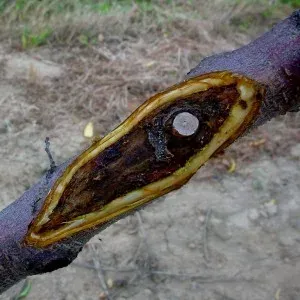
The primary symptom is the appearance of localized bark discoloration, typically shifting to brown or reddish-brown shades. These areas often become depressed or sunken compared to the surrounding healthy bark, marking the development of necrotic lesions.
On the surface of the infected bark, numerous small, blister-like pustules (pycnidia) develop. During periods of high humidity, these pustules can exude visible masses of spores, often appearing as yellowish or orange filaments or droplets.
A hallmark sign of the infection is sudden wilting of the foliage on affected branches. Leaves may turn yellow, curl, and drop prematurely, indicating a severe failure in the plant's nutrient and water transport systems.
As the disease advances, the bark often develops longitudinal cracks and eventually peels away from the wood. Beneath the lesion, the wood becomes brittle and darkened, signaling that the mycelium has deeply penetrated the plant's internal structure.
- Localized sunken bark lesions.
- Visible blister-like pycnidia.
- Premature yellowing and leaf fall.
- Longitudinal bark cracking and peeling.
- Brittle, discolored internal wood tissue.
Pathogen
The causative agent of the disease is the imperfect fungus Cytospora actinidiae, belonging to the class Ascomycetes. This pathogen typically acts as an opportunistic parasite, thriving on weakened or physiologically stressed host plants.
The fungus persists in infected plant tissues and woody debris. Its mycelium colonizes the bark and cambium layers, causing structural damage and interrupting the vascular system, which is essential for transporting water and nutrients throughout the vine.
Reproduction is facilitated by the formation of pycnidia — small, embedded fruiting bodies that develop beneath the outer bark. Under favorable moisture conditions, these structures release spores that are easily spread by wind, rain splashes, and gardening tools.
Biologically, this condition is classified as a bark necrosis or canker disease. It predominantly targets the stems and primary branches of the Actinidia genus, leading to progressive tissue death if not contained.
The fungus is highly aggressive in environments where the host plant's natural immunity is compromised by environmental stress, poor cultural practices, or significant mechanical trauma.
Conditions for development
The most critical factor favoring infection is the presence of entry points in the bark. Winter frost cracks, sunscald injuries, and fresh pruning cuts provide ideal environments for the fungus to establish itself.
High humidity and consistent rainfall are essential for the germination and spread of Cytospora spores. Extended wet periods during the growing season significantly increase the risk of disease transmission within the orchard.
Poor horticultural practices, such as failing to disinfect pruning shears between cuts, are a primary cause of rapid pathogen spread. Using contaminated equipment effectively spreads spores from one plant to the entire collection.
Nutrient imbalances or inadequate irrigation create stress that lowers the plant's resistance. An actinidia vine that is not properly nourished lacks the defensive capacity to isolate and fight off fungal invasions.
Thermal stress, including rapid fluctuations in temperature, induces micro-fractures in the bark. These physiological disruptions are the primary gateways for Cytospora actinidiae to penetrate and infect healthy vines.
Why it matters
Cytospora canker poses a significant threat as it leads to the death of major branches and overall physiological decline of the vine. This reduction in structural integrity results in decreased fruit yield and potential total loss of individual plants.
Infected vines experience a loss of winter hardiness. Due to the compromised vascular system and bark damage, the plant becomes highly susceptible to freezing, which often results in severe winter kill.
The economic impact involves the high cost of intensive sanitary measures and the replacement of mature, productive vines. Rebuilding a healthy orchard after a severe outbreak is a slow and costly process for growers.
If left unmanaged, the pathogen reservoir in the orchard increases, making it increasingly difficult to cultivate healthy Actinidia. This creates a cycle of persistent infection that threatens the long-term viability of the crop.
Reduced leaf area due to branch dieback prevents the plant from accumulating necessary reserves, further weakening the vine and predisposing it to secondary pests and additional environmental damage.
Protection
Strict sanitary management is the most effective control method. All infected branches must be pruned out, including 10–15 cm of healthy tissue, and must be burned immediately to eliminate the source of inoculum.
Disinfection of all pruning tools using alcohol or fungicidal solutions between every cut is mandatory to prevent the mechanical transmission of spores to healthy plant parts.
Proper wound treatment is essential. Any exposed surfaces, such as large pruning cuts, should be covered with copper-based wound sealants or specific horticultural balsams to create a protective barrier against fungal colonization.
Maintaining high plant vigor through balanced fertilization and optimal irrigation is crucial. A healthy, stress-free vine possesses stronger natural defenses that can effectively inhibit the development of Cytospora infections.
Applying preventative sprays containing copper in early spring, before bud break, helps reduce the fungal spore load on the bark surface and minimizes the risk of new infection outbreaks during the critical early growing season.
Discussion
No discussions yet — be the first.