
Cyttaria
Cyttaria
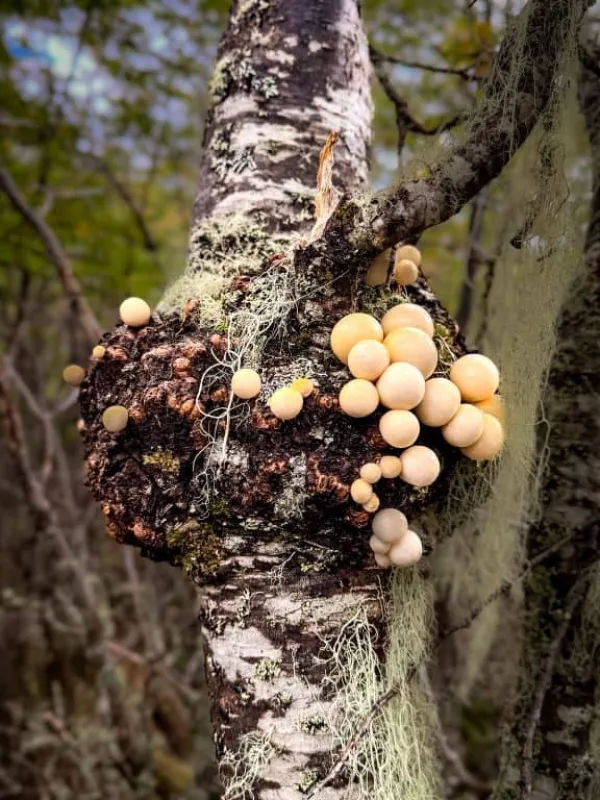
Description
Symptoms
The primary symptom of a Cyttaria infection is the presence of distinctive, bulbous, or irregular galls on the branches and main trunk of the infected tree.
When the fungus enters its reproductive cycle, it develops highly visible fruiting bodies on the surface of these galls. These structures can be yellow, orange, or white and often resemble small cups or honeycomb-like clusters.
As the galls expand, the bark overlying the infection becomes cracked and severely deformed. This structural damage is often accompanied by necrotic patches in the adjacent woody tissues.
Infected trees often display signs of general decline, such as chlorosis of the foliage, reduced annual growth rates, and premature shedding of leaves during the growing season.
Affected branches eventually lose their structural integrity. They become brittle and are prone to breaking under the influence of heavy wind, snow, or simply due to their own weight.
Pathogen
Cyttaria is a genus of parasitic ascomycete fungi that exclusively infect trees of the genus Nothofagus, commonly known as southern beech. As an obligate parasite, the fungus depends entirely on the living tissues of the host tree for survival.
The life cycle of the pathogen is intricately linked to the host's physiology. The mycelium invades the cambium and sapwood, triggering the plant to develop abnormal, hypertrophied growths known as galls.
The fungus belongs to the family Cyttariaceae. Unlike many other wood-decaying fungi, Cyttaria is a biotrophic parasite, meaning it extracts nutrients from living cells without immediately killing the entire host tissue.
During its reproductive phase, the fungus produces specialized fruiting bodies that emerge directly through the bark of the host tree. These structures are often distinctively clustered and colorful.
Spore dispersal is facilitated by wind and water droplets. Once spores land on susceptible bark surfaces, they germinate and penetrate the tree's defensive layers, establishing new infection sites.
Conditions for development
The development of Cyttaria is strongly correlated with cool, humid environments. High atmospheric moisture levels are essential for the germination of fungal spores and the subsequent colonization of host tissues.
The disease thrives in dense forest stands where airflow is restricted, facilitating the movement of spores between closely spaced trees. Humid microclimates provide the best conditions for the fungus to persist.
Mechanical damage to the bark, caused by abiotic factors like frost or wind, or biotic factors like insects, significantly increases the tree's susceptibility by creating entry points for the pathogen.
The pathogen's activity is seasonal, with the production of fruiting bodies occurring when temperature and humidity parameters are optimal for the fungus's physiological needs.
The mycelium of the fungus can remain dormant within the host's vascular tissues for extended periods, surviving unfavorable conditions until the environment becomes conducive to further growth and reproduction.
Why it matters
The most significant impact of Cyttaria is the disruption of the tree's vascular system. By invading the sapwood, the fungus interferes with the translocation of water and essential nutrients throughout the plant.
The chronic stress caused by the parasitic infection significantly weakens the host tree, rendering it more vulnerable to secondary attacks by other fungal pathogens and wood-boring insects.
Extensive gall formation leads to significant wood degradation, reducing the economic value of the timber and making it unsuitable for high-quality wood processing or construction.
Persistent infection often leads to the premature death of the tree, which can cause significant gaps in the forest canopy and disrupt local biodiversity patterns.
The loss of reproductive potential in heavily infected trees, combined with the mortality of younger specimens, hinders the natural regeneration of Nothofagus forest ecosystems.
Protection
Currently, there are no effective chemical treatments or fungicides capable of eradicating the fungus once it has become established within the tree's woody tissues.
Sanitary management is the primary strategy for disease control. This involves the systematic removal and disposal of heavily infected trees to reduce the overall spore load in the forest environment.
Preventative measures, such as avoiding mechanical injury to healthy trees and managing secondary pest populations, are crucial to minimizing the incidence of new infections.
Continuous monitoring of forest health is essential for the early identification of infection hotspots, allowing for localized management and the containment of the pathogen's spread.
Future research and development efforts are focused on identifying and promoting resistant genotypes of southern beech, which could lead to more resilient reforestation efforts in affected regions.
Discussion
No discussions yet — be the first.