
Cytospora canker of willow
Sillia ferruginea
Description
Symptoms
The first signs of Cytospora canker appear as localized areas of dead bark, which eventually develop into deep, sunken cracks or cankers. The infected bark tissues turn brown and may become brittle, indicating the death of the underlying cambium layer.
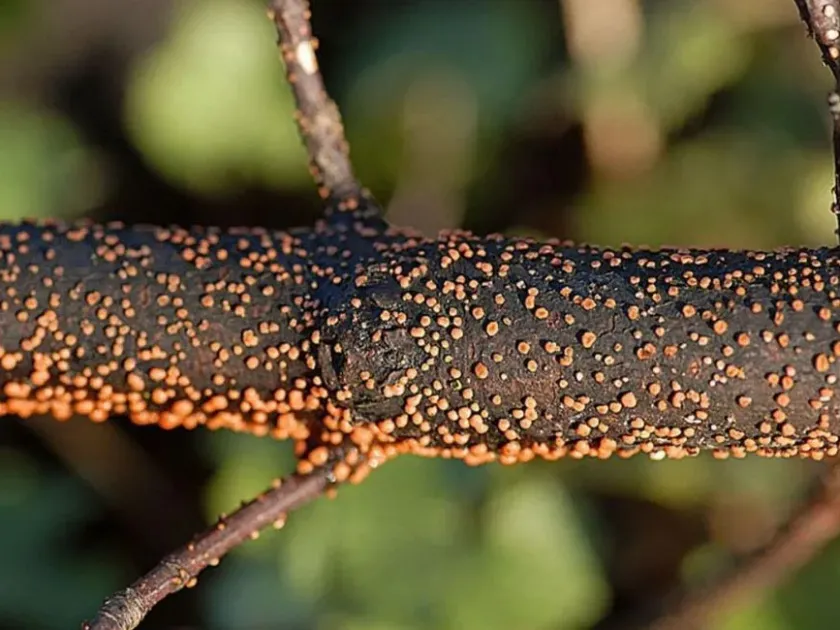
Small, bump-like structures known as pycnidia form on the surface of the infected bark. These are the fruiting bodies of the Sillia ferruginea fungus, which often release spore masses as thin, curled tendrils during humid weather conditions.
Branches affected by the disease lose their turgor, leading to leaves turning yellow, wilting, and falling prematurely. This process typically begins at the branch tips and gradually progresses towards the main stem.
When the bark of an infected branch is removed, the wood underneath typically shows a distinct brown discoloration, often bordered by a dark zone. This signifies that the fungal mycelium has successfully penetrated the xylem tissues.
If the infection girdles the branch or trunk, the flow of nutrients and water is completely obstructed, causing the entire branch or tree to die rapidly. Large, irregular patches of peeling bark are a common indicator of advanced stages.
Pathogen
The pathogen responsible for this disease is the fungus Sillia ferruginea, an ascomycete formerly classified under the Cytospora genus. It acts as a opportunistic parasite that targets willow trees already under environmental stress.
The fungus persists in dead bark and wood tissues throughout the winter, primarily in the mycelial form. This allows it to remain a viable source of infection within the host plant for several years.
During spring and autumn, the fungus produces conidia that are disseminated by wind, splashing rain, and insect activity. These spores seek out new, susceptible tissues to initiate a fresh cycle of infection.
The pathogen primarily enters the willow through wounds such as frost cracks, sunscald injuries, pruning cuts, or damage caused by borers. Once established, it can easily overwhelm the tree's natural defense mechanisms.
Sillia ferruginea is highly adaptable and thrives in environments where host trees are stressed by adverse weather or poor soil conditions, making it a major concern for willow plantations and nurseries.
Conditions for development
The disease is heavily influenced by the physiological state of the tree. Drought, waterlogging, or poor soil nutrient levels significantly weaken the willow, making it more vulnerable to fungal colonization.
Drastic temperature fluctuations during the dormant season often cause bark damage, creating optimal entry points for the pathogen. Willows planted in areas with poor air circulation are particularly prone to severe outbreaks.
Crowded plantings and excessive shading prevent proper drying of the bark after rain, creating a humid microclimate that favors spore germination. These conditions allow the fungus to spread rapidly among neighboring trees.
Improper pruning techniques, especially when performed during wet or rainy weather without sanitizing tools, frequently result in secondary infections that lead to the development of cankers.
Springtime conditions characterized by high humidity and moderate temperatures are ideal for the rapid development of the fungus. Trees that have suffered winter injury are especially susceptible to early spring infections.
Why it matters
Cytospora canker is a destructive disease that significantly reduces the lifespan and aesthetic value of willow trees. It is particularly harmful in commercial nurseries and urban landscape settings.
The infection disrupts the vascular system, preventing the tree from maintaining its canopy. This results in dieback, branch breakage, and, in severe cases, the complete death of the host tree within a short period.
Infected trees become less attractive and often pose a safety risk in park environments, as the structural integrity of the wood is compromised by the spreading necrosis, leading to falling branches.
Persistent presence of the fungus in a planting area serves as an active source of inoculum for healthy trees. This necessitates aggressive sanitation efforts and limits the choice of species for future planting projects.
Economic losses are significant due to the need for costly removal, replacement, and chemical management strategies required to protect the remaining stock in affected plantations.
Protection
The primary control measure is to maintain tree health through proper irrigation, fertilization, and site selection. A healthy, vigorous tree is much better equipped to defend itself against fungal pathogens.
Regular sanitation pruning is essential; all infected branches should be cut well into healthy wood and disposed of immediately. All pruning tools should be disinfected with alcohol or a bleach solution between cuts.
Chemical protection includes applying copper-based fungicides as a preventative measure during the dormant season and early spring. This helps reduce the total spore population and protects vulnerable entry points.
All fallen leaves, dead branches, and bark debris should be gathered and burned or buried far from the planting site to remove potential overwintering sites for the fungus.
To prevent sunscald and frost cracks, white-washing the trunks of young willows can be an effective prophylactic strategy. Keeping the bark intact is the best way to prevent Sillia ferruginea from taking hold.
Discussion
No discussions yet — be the first.