
Cytospora canker of poplar
Cytospora populina
Description
Symptoms
Initial symptoms include the darkening and drying of bark areas. The infected patches may become sunken and develop a reddish-brown or yellowish color.
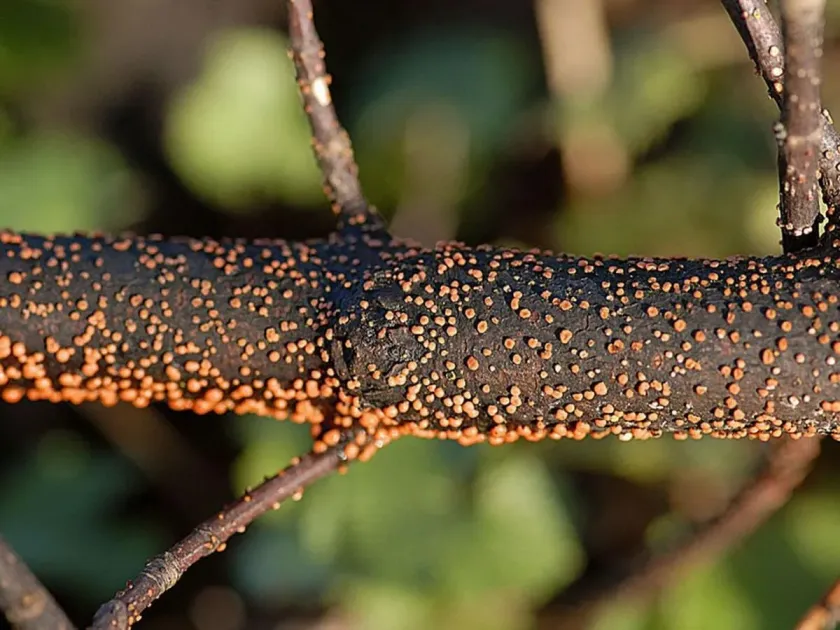
Small, pinhead-sized pimples (pycnidia) appear on the surface of the infected bark. In humid conditions, these release yellow or orange spore tendrils.
The underlying wood often becomes discolored, necrotic, and brittle. As the disease progresses, the bark may peel away from the wood in large sheets.
A distinct canker often forms at the margin of the infected zone as the tree tries to contain the spread. This defense mechanism is frequently insufficient to stop the pathogen.
Branches beyond the canker typically wilt and die back. In severe cases, the foliage on affected branches turns yellow or brown and falls prematurely.
Pathogen
The disease is caused by the ascomycete fungus Cytospora populina. It primarily affects the bark and cambium layers, leading to the necrosis of tree tissues.
The fungus produces pycnidia, which are small dark structures that erupt through the bark. These contain spores that are easily spread by rain, wind, or insects.
The pathogen can survive in dead wood for long periods, making it a persistent threat in infected areas. The mycelium colonizes the inner bark, eventually girdling the branch or trunk.
Infection typically occurs through wounds such as frost cracks, sunscald, insect damage, or improper pruning cuts. Once inside, the fungus spreads rapidly under favorable conditions.
Healthy trees often develop resistance, but those under environmental stress are highly susceptible to successful infection by the fungus.
Conditions for development
The spread of Cytospora populina is heavily favored by cool, moist weather conditions. Rain splash is the primary mechanism for dispersing spores to new sites.
Frost damage during the dormant season creates entry points, making the trees particularly vulnerable when they break dormancy in the spring.
Drought stress, improper site conditions, or poor soil nutrition weaken the poplar's physiological defenses, allowing the fungus to colonize the tree more easily.
Poor airflow in dense, unmanaged stands keeps humidity levels high, which promotes fungal growth and spore production throughout the growing season.
Failure to implement sanitary measures allows the buildup of local inoculum levels, leading to repeated and more severe outbreaks in the area.
Why it matters
Cytospora canker is a destructive disease that causes widespread branch dieback and even mortality in poplar stands. It affects both young saplings and mature trees.
The disease disrupts the tree's vascular system, leading to the gradual death of the canopy. Complete tree mortality can occur within a few years of initial infection.
Infected branches become structurally weak and brittle. This poses a significant safety risk in urban areas and parks due to the potential for falling wood.
The economic impact on nursery operations and timber production is significant, as it renders wood products unusable and forces the destruction of planting stock.
Constant disease pressure requires ongoing monitoring and management, increasing the cost of maintaining healthy poplar-based landscapes.
Protection
The most effective strategy is a strict sanitation program. This includes regular inspection, removal, and disposal of all infected branches and dead trees.
Proper pruning techniques are essential. Avoid injuring the tree bark during maintenance and ensure all pruning tools are disinfected with alcohol or bleach between trees.
Promote tree vigor through regular irrigation during drought periods and balanced fertilization to improve the tree's natural ability to resist infection.
Protecting vulnerable trunks from sunscald using white latex paint can significantly reduce the number of potential infection sites on young trees.
In high-value plantings, copper-based fungicidal sprays applied during the dormant season may help reduce spore loads and prevent initial infections.
Discussion
No discussions yet — be the first.