
Cyathus
Cyathus
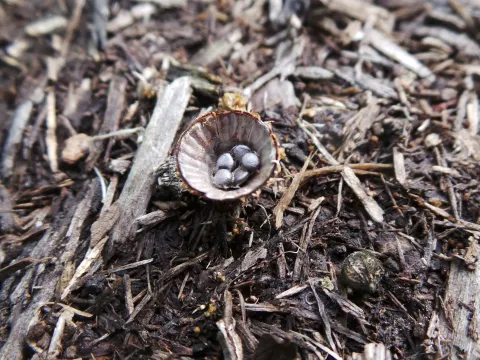
Cyathus is a genus of fungi within the Agaricaceae family, commonly known as "bird's nest fungi." In an agricultural context, they are primarily saprotrophic organisms that colonize decaying plant matter.
What the section contains
Cyathus
The pathogen associated with the presence of these fungi is a mycelium capable of decomposing lignin and cellulose. While they are rarely primary parasites of living crops, their presence indicates potential issues with field sanitation and soil management.
The fungus reproduces via peridioles—small, spore-containing "eggs" housed inside a cup-shaped fruit body. Spores are dispersed when raindrops strike these cups, splashing the peridioles up to a meter away.
Mycologically, the genus belongs to the Agaricales order. Unlike virulent pathogens, they live mainly on dead organic material, but they can compete with beneficial soil microbes for resources.
Their biological activity is strictly dependent on the availability of damp mulch or woody debris, which serves as a substrate for fungal network development.
The most recognizable sign of Cyathus infestation is the appearance of small, cup-shaped fruit bodies up to 1 cm in height, which typically feature a brownish or greyish color.
The presence of these fungi is often accompanied by white, thread-like mycelium visible on the surface of organic substrates, such as straw, hay, or wood chips used for mulching.
Plant tissues affected by direct contact with the fungal colony lose structural integrity, becoming brittle and dark due to the enzymatic breakdown of cellulose.
These fungi tend to grow in dense clusters on moist, shaded soil or on the lower parts of plant stems that remain in contact with the ground for extended periods.
Fruiting body emergence near crops usually correlates with prolonged rainy weather, which provides the necessary humidity for the colony to complete its reproductive cycle.
Development of the Cyathus genus requires high humidity and the presence of undecomposed plant residues in the topsoil layer, which act as a food source.
Optimal temperatures for substrate colonization range from +15°C to +25°C. The fungi prefer loose, organic-rich soils that retain moisture and contain decomposing vegetative matter.
Lack of proper crop rotation and the practice of leaving harvest residues on the soil surface significantly contribute to the accumulation of fungal inoculum.
High-density planting, which limits air circulation, creates a localized microclimate that allows the mycelium to spread from organic debris to weakened parts of living plants.
Poor soil drainage leading to waterlogging is a primary trigger for mass colonization by these fungi, as they require constant moisture to thrive and form fruit bodies.
The primary agricultural harm caused by Cyathus involves competition for nutrients within the soil and the premature degradation of organic fertilizers intended for crops.
By consuming mulch layers too rapidly, the fungus strips the soil of its protective covering, making the ground vulnerable to drying out and increasing erosion risks.
Although the fungus rarely kills healthy plants, it can attack weakened specimens by inducing decay at the crown or basal leaves during direct contact with the substrate.
In greenhouses or nurseries, mass proliferation of these fungi can damage plant starters and promote secondary bacterial infections in damaged plant tissues.
The dense presence of Cyathus mycelium in the rhizosphere can negatively affect beneficial soil microflora, potentially slowing down overall crop development.
The most effective control measure is the timely removal and deep incorporation of plant residues into the soil, which deprives the fungus of its required food source.
Strict adherence to crop rotation practices is essential to prevent the accumulation of specific organic waste that favors these saprotrophic fungi.
Improving soil aeration through regular cultivation and optimizing irrigation schedules helps reduce surface moisture, making conditions unsuitable for the fungus to fruit.
Application of biological fungicides based on fungal antagonists, such as Trichoderma species, effectively suppresses Cyathus mycelium growth in the soil.
In cases of severe infestation, liming the soil to alter the pH level can be beneficial, as most saprotrophic fungi of this type prefer slightly acidic conditions.