
Cyclamen phialophora wilt
Phialophora cyclaminis
Description
Symptoms
The first sign of the disease is the loss of turgor in the leaves, especially during the hot hours of the day, even with sufficient soil moisture. Leaves gradually turn yellow, starting from the edges, and droop, pressing tightly against the pot.
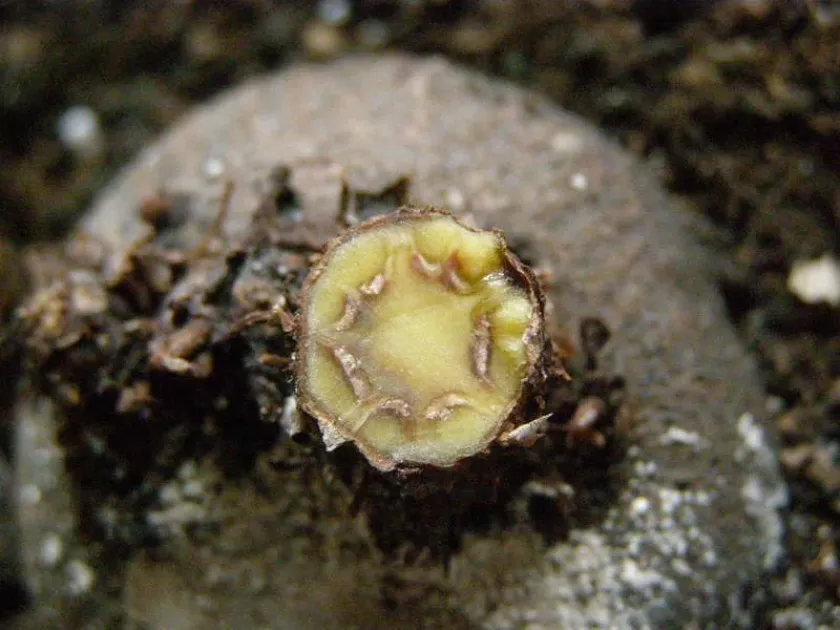
Upon inspecting the crown (root neck), one can observe darkening of the tissues. If a longitudinal cut is made through the tuber or flower stalk, brown vascular bundles are clearly visible, which is a diagnostic sign of vascular system infection.
As the disease progresses, the root system begins to die off. The tuber becomes soft, loses its firmness, and its surface may become covered with mold or areas of rot.
At the final stage of disease development, the plant completely loses its growth capacity and dies. Leaves become dry or slimy, depending on air humidity and the presence of secondary infections.
- Yellowing and wilting of leaves
- Darkening of vascular rings on cross-sections
- Softening of tuber tissues
- Delayed flowering and flower bud drop
- Death of fine roots
Pathogen
The causative agent of the disease is the soil-borne fungus Phialophora cyclaminis, which belongs to the group of imperfect fungi. This pathogen attacks the vascular system of the plant, entering through the root system and minor wounds in the lower stem area.
The fungus is capable of remaining viable in the soil substrate for long periods by forming microsclerotia. Inside the plant, the fungal mycelium develops in the xylem, gradually blocking the flow of water and nutrients to the aerial parts of the plant.
Pathogen reproduction occurs through conidia, which spread via water droplets during watering or through contaminated gardening tools. This makes the disease difficult to control in commercial greenhouse environments.
The biology of Phialophora cyclaminis is closely linked to temperature regimes where the plant's metabolism slows down, but the mycelium remains active. The pathogen exhibits high resistance to adverse environmental factors.
Unlike other fusarium wilts, this specific species is characterized by a specific colonization of tissues, leading to a chronic course of the disease. Vascular damage is accompanied not only by blockage but also by the release of toxins that poison the cyclamen.
Conditions for development
The development of Phialophora wilt is facilitated by waterlogged soil combined with lower temperatures, typical for the autumn-winter growing season of cyclamens. Standing water triggers the activation of dormant fungal spores.
High air humidity combined with poor ventilation creates a favorable environment for the spread of the infection. Frequent top-watering, where water accumulates in the center of the leaf rosette, contributes significantly to contamination.
Using non-sterile substrate is a primary risk factor. The pathogen often enters the cultivation area along with peat or store-bought soil mixtures that have not undergone heat treatment.
Temperature stresses, such as sudden fluctuations or overheating of tubers on sunny windowsills, weaken the plant's immune system. A stressed cyclamen becomes an easy target for Phialophora cyclaminis colonization.
Crowded planting prevents normal air circulation. In such conditions, a microclimate with high humidity forms on the soil surface and around the crown, providing ideal conditions for fungal mycelium growth.
Why it matters
Phialophora wilt poses a serious threat to commercial floriculture, as it causes massive loss of cyclamen crops in a short time. The infection can completely destroy batches of planting material.
The disease is economically dangerous because symptoms often appear at the flowering stage, making commercial sale impossible. It is extremely difficult to fully cure an infected plant, and it is usually recommended to discard it.
The pathogen can persist in pots, on gardening tools, and in the debris of infected plants. This creates a risk of constant re-infection of new batches of flowers over many years.
Loss of plant aesthetic value leads to direct financial losses for the producer. Even partial infection of a collection requires significant expenses for room disinfection and quarantine measures.
The disease contributes to reduced decorative quality even in specimens that do not die immediately. This leads to premature aging of the cyclamen and the absence of full flowering in subsequent cycles.
Protection
The main method of control is prevention: using sterile substrate and high-quality seeds or tubers. It is recommended to steam or heat-treat soil before planting.
It is important to strictly observe the watering regime, avoiding moisture stagnation in the pot. Watering should be done via a tray so that water does not touch the tuber and does not accumulate in the growth point of the leaves.
Upon detection of disease signs, the infected plant must be immediately isolated or disposed of along with the root ball. Pots that contained sick plants must undergo thorough disinfection.
Chemical control includes applying systemic fungicides to the soil at the first signs of the disease. Products based on benomyl or other systemic active ingredients are effective.
Regular greenhouse ventilation and maintaining an optimal temperature regime are the foundation of cyclamen resistance to fungal infections. Hygiene of tools must be maintained by disinfecting them with alcohol or chlorine solutions.
Discussion
No discussions yet — be the first.