
Curvularia leaf spot of millet
Curvularia penniseti
Description
Symptoms
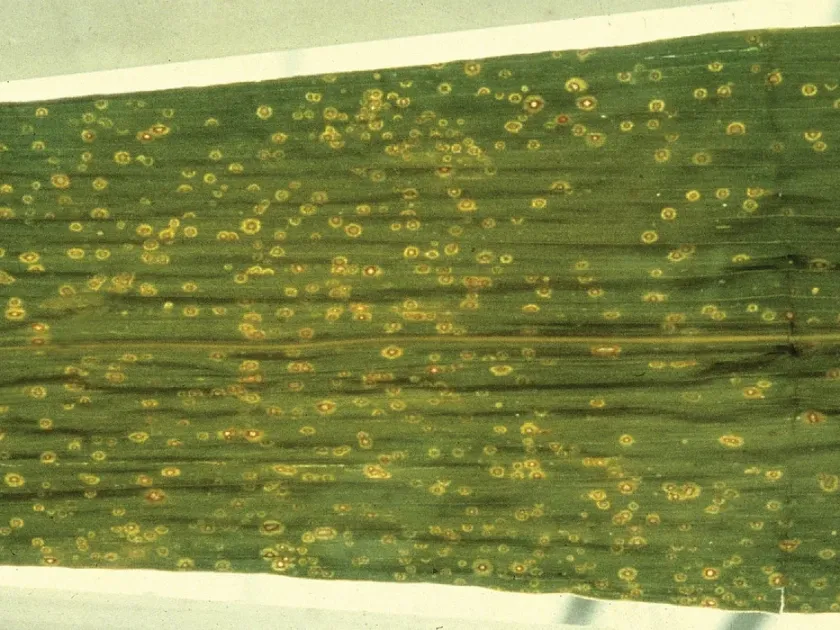
The first symptoms of Curvularia leaf spot in millet appear as small, circular, or oval lesions on the leaf blades. These spots typically exhibit a dark brown or blackish coloration.
As the disease develops, a distinct chlorotic halo often forms around the lesions, indicating a stress response in the plant tissue. Under high humidity, a velvety olive-gray fungal growth may be visible on the surface of the spots.
In cases of severe infection, individual lesions coalesce, covering large parts of the leaf area. This leads to the premature yellowing and drying out of the leaves, significantly reducing the plant's photosynthetic capacity.
The infection can also affect the panicles, causing dark blotches on the glumes. This can disrupt grain filling, leading to shriveled, poor-quality seeds that have low weight and reduced viability.
Early diagnosis is crucial, and farmers should inspect the lower leaves of the crop, as these are the primary sites where the fungus initiates its development and spread.
Pathogen
The pathogen responsible for this disease is the fungus Curvularia penniseti. It belongs to the group of hyphomycetes and spreads by invading the intercellular spaces of the host plant tissue.
The fungus reproduces primarily through conidia—multi-celled spores characterized by their curved or segmented structure. These spores are highly efficient at dispersing via wind, splashing rain, or insect movement.
The pathogen persists in the environment by surviving on infected crop residues, in the soil, and within the seed coat itself. This makes contaminated seed a major source of primary inoculum for new fields.
Curvularia penniseti is known for its ability to infect a wide range of grass species, which helps the fungus remain present in agricultural ecosystems even when millet is not being grown.
The fungus remains biologically active throughout the growing season, producing multiple generations of spores whenever environmental conditions are favorable for germination and infection.
Conditions for development
Curvularia leaf spot thrives under warm and humid conditions. The optimal temperature range for the pathogen's growth and infection processes is between 25 and 30 degrees Celsius.
Prolonged rainfall, heavy dews, and high atmospheric humidity provide the necessary moisture for the conidia to germinate and penetrate the plant's epidermis, fueling disease outbreaks.
Dense crop stands create a restricted microclimate with poor air circulation, which helps maintain higher humidity levels at the canopy base, thereby facilitating the rapid spread of the fungus.
Imbalanced fertilization, particularly high nitrogen application, promotes lush, tender leaf growth. These succulent tissues are more susceptible to fungal entry compared to stronger, more balanced plants.
Poor crop rotation practices, such as planting millet consecutively on the same plot, allow for the buildup of soil-borne inoculum, significantly increasing the risk of early-season infections.
Why it matters
The primary damage caused by Curvularia leaf spot is the significant reduction in leaf area, which hinders photosynthesis and directly affects the accumulation of biomass and final grain yield.
Infection of the panicles negatively impacts grain filling, leading to shriveled or empty seeds. This reduces both the yield quantity and the commercial value of the harvested millet crop.
Seed-borne infection reduces seed germination vigor, leading to poor crop establishment and potentially necessitating re-planting, which increases production costs.
In severe cases, widespread defoliation can weaken the plant so significantly that it fails to mature properly, resulting in further losses during harvest operations.
- Yield losses ranging from 10% to 25% depending on infection timing.
- Reduced seed quality and lower germination rates for future seasons.
- Decreased nutritional quality of the millet grain.
- Increased economic burden due to the need for chemical disease management.
Protection
The most effective strategy starts with using certified, high-quality seed that has been treated with appropriate systemic fungicides to eliminate any seed-borne inoculum.
Implementing a robust crop rotation plan, where millet is grown in the same field only once every 3–4 years, is essential to minimize the survival of the pathogen in the soil.
Deep plowing after harvest helps bury infected plant debris, which accelerates the decomposition of the crop residue and destroys the fungal mycelium residing within it.
During the growing season, if conditions are conducive to the disease, foliar application of effective fungicides can help contain the spread and protect the developing panicles.
Maintaining optimal soil fertility, especially by ensuring adequate levels of potassium and phosphorus, strengthens plant cell walls and enhances the overall systemic resistance of the millet crop.
Discussion
No discussions yet — be the first.