
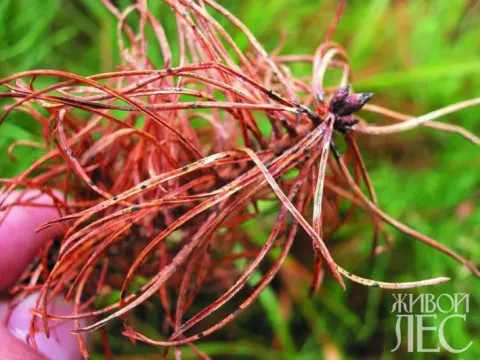
Cyclaneusma needle cast
Cyclaneusma minus
The disease is caused by the ascomycete fungus Cyclaneusma minus. It is a highly specialized pathogen that specifically targets needles of various pine species.
What the section contains
Cyclaneusma needle cast
The primary hosts include species such as Scots pine (Pinus sylvestris), Austrian pine (Pinus nigra), and Eastern white pine (Pinus strobus). The fungus infects older needles, completing its lifecycle within the host tissue.
The fungus produces microscopic fruiting bodies known as apothecia, which emerge through the stomata of the needles. These structures are responsible for the release of spores that perpetuate the infection cycle.
Spore dispersal occurs primarily through rain splashes and wind currents. During wet conditions, the spores are ejected from the apothecia and land on susceptible needles of the same or neighboring trees.
The mycelium resides within the needle, causing cellular collapse and leading to the characteristic symptoms associated with needle cast diseases.
Initial symptoms include the appearance of mottled yellow or brown spots on the needles. As the disease progresses, these spots develop into distinct yellow-brown bands.
A classic diagnostic feature is the premature shedding of one-year-old needles. Heavily infected trees often show thinning crowns, specifically losing their inner and lower needle clusters.
In high humidity, small, light-colored or brownish disc-shaped fruiting bodies appear on the surface of the infected needles, often visible in rows along the needle axis.
Unlike some other needle casts, Cyclaneusma needle cast typically results in a slow, progressive decline in tree vitality rather than sudden, dramatic defoliation.
Over time, the affected needles turn completely brown or tan and fall to the ground, leaving the twigs bare and compromising the overall aesthetic and health of the tree.
High moisture levels are the most critical factor for the development and spread of Cyclaneusma minus. Prolonged periods of rain or fog are essential for spore release and infection.
Dense plantations with poor air circulation are highly susceptible. The lack of drying airflow allows moisture to persist on the needles, creating the perfect environment for the fungus to penetrate.
Trees under stress, whether from drought, nutrient deficiency, or insect damage, show higher vulnerability to infection and often suffer more severe symptoms compared to healthy trees.
Temperature also plays a role, with the fungus showing optimal activity during temperate periods, typically seen in spring and early autumn months.
The presence of infected needle debris on the forest floor provides a significant reservoir of inoculum, ensuring that the disease persists in the area from year to year.
The primary harm caused by Cyclaneusma needle cast is the loss of decorative value in landscape and ornamental settings, where tree appearance is paramount.
In silviculture, the disease leads to a reduction in annual growth increments. Since the pine relies on its needles for photosynthesis, the loss of foliage results in reduced vigor and wood production.
Severe and repeated infections significantly weaken the host, making it more susceptible to opportunistic pathogens and secondary pests like bark beetles, which can eventually kill the tree.
The aesthetic decline in parks and urban settings often necessitates costly management programs, including pruning or chemical treatments to mitigate the damage.
Economic losses arise not only from timber degradation but also from the cost of nursery management and the potential need to remove and replace highly infected specimen trees.
Cultural management is the first line of defense. This includes maintaining proper spacing between trees to ensure good air circulation and reducing humidity in the canopy.
Sanitation is essential; removing and destroying infected needle debris from the ground can significantly reduce the amount of inoculum available for the next season.
Chemical control involving fungicides may be necessary in nurseries or high-value landscapes. Applications of copper-based or systemic fungicides are typically most effective when timed with high-risk weather patterns.
Strategic pruning of the lower, more susceptible branches can help improve airflow and limit the disease progression from the lower parts of the crown upward.
Selecting and planting resistant pine species or varieties remains the most sustainable long-term strategy for preventing widespread outbreaks of Cyclaneusma needle cast.