
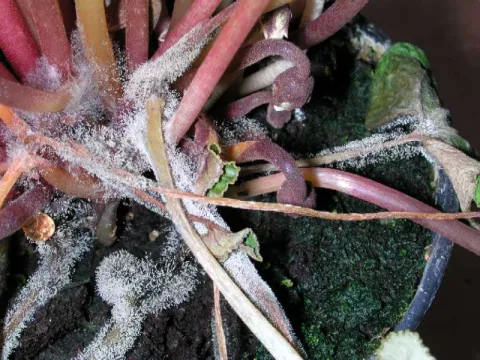
Cyclamen Ramularia leaf spot
Ramularia cyclaminicola
The causative agent of this disease is the fungus Ramularia cyclaminicola, which is a specialized plant pathogen. It belongs to the group of deuteromycetes and specifically targets plants within the Cyclamen genus.
What the section contains
Cyclamen Ramularia leaf spot
The fungus survives in plant debris and soil, where it can persist for long periods as mycelium or resistant spores (conidia). In greenhouse conditions, it relies on these spores for efficient dispersal.
Infection is initiated when spores land on leaf surfaces. Under suitable conditions, they germinate and penetrate the host tissue via stomata or small wounds, establishing a parasitic relationship with the plant.
Cyclamen persicum is the most susceptible host, particularly in intensive greenhouse cultivation where environmental factors can be strictly controlled but also easily mismanaged to favor fungal growth.
The pathogen is highly adapted to the microclimate of indoor cultivation, allowing it to quickly multiply and produce secondary inoculum, which leads to rapid disease development within a crop cycle.
The hallmark of this infection is the appearance of small, circular or irregular spots on the leaves. These spots gradually expand and change color from light tan to a darker, necrotic shade.
A distinctive feature is the development of a whitish to gray powdery layer in the center of the spots. This layer is the mass of spores being produced by the fungus and is visible to the naked eye.
As the infection progresses, the tissues in the affected areas collapse and become brittle. Leaves may turn yellow, exhibit curling, and eventually wither and die prematurely.
When petioles are attacked, the structural integrity of the plant is compromised, causing the foliage to droop. This severely impacts the aesthetic quality and the overall vigor of the cyclamen.
Early identification of the grayish spore patches on the undersides of leaves is critical. Detecting these signs promptly can prevent the spread of the fungus to the rest of the nursery stock.
High relative humidity is the primary driver for the development and spread of Ramularia leaf spot. Environments with humidity exceeding 80% are considered ideal for the pathogen.
The fungus thrives within a moderate temperature range, typically between 15°C and 22°C. These temperatures are commonly maintained in greenhouses during the growing season.
Poor ventilation and air circulation allow moisture to linger on leaf surfaces. This surface film of water provides the perfect medium for fungal spores to germinate and infect the plant tissue.
Overhead irrigation is a significant risk factor, as it splashes spores from infected leaves onto healthy ones. It also keeps the foliage wet for extended periods, which is favorable for the fungus.
Overcrowding plants restricts airflow between pots, leading to a localized increase in humidity and creating a microclimate where the disease can flourish rapidly.
The primary economic impact is the loss of commercial value. Plants with spotted or necrotic leaves are unsuitable for sale, leading to direct financial losses for the grower.
Severe infections suppress plant growth. Because the plant must invest resources into defense, its ability to produce flower buds is greatly diminished, leading to poor or absent blooms.
Left unchecked, the disease can spread throughout an entire batch of cyclamens in a greenhouse, causing total crop failure. This necessitates extensive sanitation and sometimes complete destruction of the stock.
Secondary infections often follow, as the weakened tissue is susceptible to other pathogens, including soft rots that can target the corm. This makes recovery almost impossible.
The presence of Ramularia necessitates intensive management efforts, including fungicide application and rigorous cleaning protocols, which significantly increase the production costs per plant.
Strict sanitation is the first line of defense. All infected leaves and plant debris must be removed and destroyed immediately to reduce the overall spore load in the growing environment.
Improving the greenhouse microclimate is essential. Growers should focus on increasing airflow, reducing humidity levels, and ensuring that foliage remains dry throughout the day.
Adopt sub-irrigation methods or direct watering to the soil base to ensure that leaves do not get wet. This simple change significantly reduces the risk of spore transmission.
Chemical control can be effective if implemented early. Systemic fungicides or those with protective properties should be applied according to local regulations and the manufacturer's guidelines.
- Maintain proper spacing between plants to enhance ventilation.
- Monitor plants weekly for early signs of leaf spots.
- Sterilize pots and growing media before planting new batches.
- Isolate any plants exhibiting suspicious symptoms immediately.