
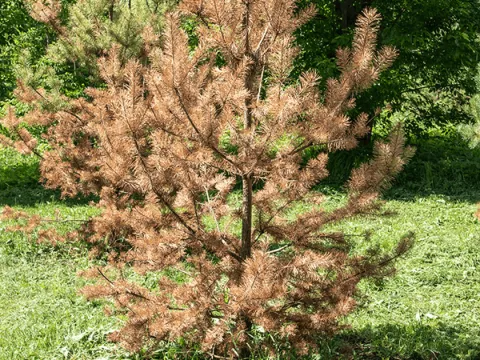
Cyclaneusma needle cast
Cyclaneusma
The disease is caused by the fungus Cyclaneusma minus, an ascomycete pathogen that specifically targets the needles of various pine species, most notably Pinus sylvestris.
What the section contains
Cyclaneusma needle cast
The fungus acts as a parasite, infecting needle tissue through stomata. Following colonization, the mycelium spreads within the needle, gradually breaking down the plant's internal structures.
During the reproductive phase, the fungus produces apothecia, which are small, disc-shaped fruiting bodies that develop on the surface of the needles during periods of high humidity.
These fruiting bodies rupture the needle epidermis, creating characteristic transverse cracks through which spores are released into the environment to infect new host tissues.
The pathogen is capable of surviving for extended periods in needle litter, making the ground beneath infected trees a major reservoir for continuous cycles of reinfection.
The primary symptom of Cyclaneusma needle cast is the premature yellowing and subsequent shedding of needles, typically affecting the previous year's growth.
A distinctive diagnostic feature is the presence of brown transverse bands across the chlorotic needles, which appear as the fungus progresses through the tissue.
As the infection intensifies, the needles turn a dull brown color and drop prematurely, leading to sparse, thin crowns that are noticeably less dense in the lower and middle canopy.
In wet conditions, the small, cream or light brown fruiting bodies of the fungus can be observed on the underside of fallen or attached needles with the help of a hand lens.
The overall impact on the tree's appearance is a patchy, chlorotic look followed by extensive needle loss, which can become quite severe by the end of the summer season.
The development of the disease is highly dependent on environmental conditions, particularly high moisture levels and mild temperatures that favor spore dispersal and germination.
Dense plantations or nurseries with poor air circulation are particularly susceptible to outbreaks, as stagnant air traps the humidity required for the pathogen to thrive.
Trees stressed by poor soil quality, nutrient deficiencies, or drought are significantly more vulnerable to infection compared to healthy, vigorously growing pines.
The spring and autumn months, characterized by frequent rain and fog, are the most dangerous periods for primary infection and the spread of fungal spores.
Failure to implement basic sanitation practices, such as clearing debris and infected litter, provides a constant supply of inoculum that sustains the disease year after year.
Cyclaneusma needle cast significantly reduces the tree's photosynthetic capacity by stripping away healthy needles, which directly impacts tree growth and overall vitality.
In forest nurseries, the disease can render thousands of seedlings unmarketable due to their unsightly appearance and poor health, leading to substantial financial losses.
Chronic infestation weakens the trees, making them more susceptible to secondary pests like bark beetles and other pathogenic diseases, potentially leading to widespread tree mortality.
The economic impact involves both the loss of annual timber increment and the significant expenditure required for continuous fungicide applications in managed forests.
For ornamental landscapes, the aesthetic value of pines is severely compromised, as the thinning canopy loses its characteristic lush appearance and structural beauty.
Effective management begins with strict sanitation, including the removal and destruction of fallen needles to eliminate the primary source of the fungal spores.
Planting density should be carefully managed to ensure adequate airflow within the canopy, which helps keep needle surfaces dry and inhibits fungal growth.
Chemical control involves the application of fungicides during the periods of peak spore release, typically in the spring and late summer, using copper-based or systemic products.
- Regular monitoring of pine stands for early detection of needle discoloration.
- Enhancement of tree vigor through appropriate fertilization and site management.
- Removal of severely infected branches to reduce the immediate inoculum load.
An integrated approach that combines cultural practices and timely chemical treatments is the most reliable strategy to minimize the impact of the disease in susceptible populations.