
Cyclaneusma needle cast
Cyclaneusma niveum
Description
Symptoms
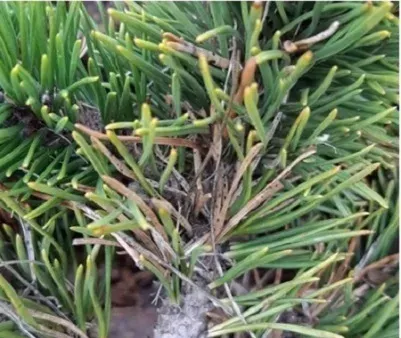
The most distinctive symptom is the discoloration of the needles, which turn yellow or brown before falling prematurely. This often starts in the lower canopy where humidity is highest.
Needle shedding occurs irregularly throughout the year, but mass defoliation is often observed during spring or autumn. Trees may appear sparse, showing only the current year's needles.
Upon closer inspection, white or cream-colored fruiting bodies become visible on the needles. These apothecia contrast with the surrounding brown or yellow tissue of the infected needle.
Unlike some other needle cast diseases, the needles may show distinct mottled patterns. The loss of foliage reduces the tree's photosynthetic capacity, causing stunted growth over time.
In chronic cases, affected pines exhibit a "thin crown" appearance. The lack of foliage is not just an aesthetic issue but a clear indicator of the tree's struggle to maintain its nutrient balance.
Pathogen
The disease is caused by the fungus Cyclaneusma niveum, a pathogen belonging to the order Rhytismatales. It is a well-known agent responsible for premature needle drop in various pine species.
The fungus produces sexual fruiting bodies, known as apothecia, which emerge through the stomata of the pine needles. These appear as small, whitish or cream-colored, waxy horizontal slits.
The life cycle is moisture-dependent, with spore release occurring primarily during wet weather. Rain droplets splash the spores onto healthy needles, initiating new infections during the growing season.
The pathogen persists in the needles that have fallen to the ground. This forest litter serves as a primary reservoir for inocula, allowing the disease to cycle year after year.
Cyclaneusma niveum is host-specific to the genus Pinus. It is particularly aggressive in dense, unthinned stands where the microclimate remains humid and stable for long periods.
Conditions for development
High humidity and mild temperatures are the primary drivers of Cyclaneusma development. The fungus thrives when rainfall is frequent, ensuring the needles stay wet for extended periods.
Stand density is a crucial factor; dense plantations restrict airflow, creating a stagnant microclimate that prevents needles from drying out after rain events.
The optimal temperature for fungal growth ranges between 15°C and 20°C. During these times, the fungus spreads rapidly throughout the tree canopy if the trees are susceptible.
Host stress, whether from drought, nutrient deficiency, or prior insect infestation, makes trees more susceptible to colonization by the fungus.
Accumulation of infected needle litter beneath the trees significantly increases the risk of infection. If the debris is not managed, the spore load remains high enough to sustain the disease.
Why it matters
The primary economic impact is the reduction of timber volume due to the loss of photosynthetic needles. Continuous defoliation leads to significant growth retardation.
In ornamental and urban forestry, the disease destroys the visual appeal of pines, making them unsuitable for landscape use. This results in the need for expensive removal or replacement.
Chronically infected trees become weakened and are highly susceptible to secondary attacks by bark beetles and other wood-boring insects. This often leads to the total mortality of individual trees.
The disease disrupts the ecological balance of the plantation, as the reduced canopy cover leads to changes in the understory and soil conditions.
Control efforts represent a major cost for forestry managers, involving labor for sanitation, regular monitoring, and the potential application of fungicides in high-value nurseries.
Protection
Sanitation is the most effective management tool. Removing and destroying fallen needles significantly reduces the primary inoculum source and helps break the disease cycle.
Thinning the stand is essential to improve air circulation within the canopy. By reducing stand density, managers create a drier environment that is unfavorable for fungal spore germination.
Fungicide applications, particularly those containing copper or systemic compounds, can be used in nurseries to protect young seedlings from initial infection during high-risk seasons.
Selecting resistant pine species or varieties during replanting programs is a long-term solution to mitigate the impact of the disease in reforestation efforts.
Regular forest health monitoring allows for the early detection of the pathogen. Detecting the disease before it becomes endemic is vital for maintaining the health and productivity of the forest stand.
Discussion
No discussions yet — be the first.