
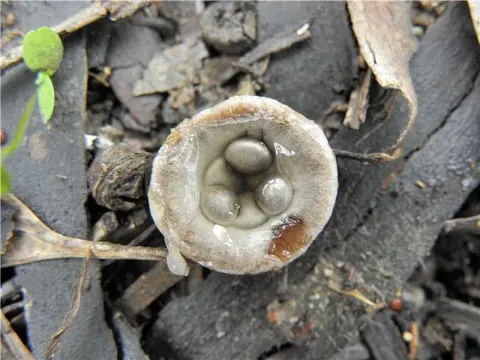
Cyathus olla
Cyathus olla
Cyathus olla, commonly known as the field bird's nest fungus, belongs to the Nidulariaceae family within the order Agaricales.
What the section contains
Cyathus olla
This fungus is primarily a saprotroph, meaning it derives its nutrition from decaying organic matter such as straw, wood chips, and leaf litter.
It is characterized by its distinct, cup-shaped fruiting bodies, which contain spore-filled structures known as peridioles.
While not a primary plant pathogen, it serves as an indicator of organic debris accumulation and moist conditions within the agricultural environment.
Its biological cycle is fascinating: the structure is designed to use the energy of falling raindrops to launch spores out of the cup, ensuring dispersal over a wider area.
Cyathus olla thrives in environments where there is an abundance of crop residues and high moisture levels are maintained.
Cool to moderate temperatures, typically between 15°C and 25°C, are optimal for the rapid colonization of organic substrates by this fungus.
Poorly drained fields that remain saturated for long periods are particularly susceptible to the development of this organism.
In greenhouses, the use of organic mulch or substrates that are kept consistently damp provides a perfect micro-habitat for its fruiting bodies.
Reduced tillage practices that leave plant biomass on the surface of the soil facilitate the survival and reproduction of the species throughout the growing season.
The primary concern regarding Cyathus olla in agriculture is its role as a competitor for nutrients in the rhizosphere of young crops.
Excessive growth of its mycelial network can lead to soil compaction, which negatively impacts root aeration and overall plant vigor.
In nursery settings, the presence of these fungi can contaminate growing media, causing aesthetic issues and potentially harboring other pathogens.
While rarely causing direct infection in healthy tissues, it may act as a stressor, making vulnerable seedlings more susceptible to secondary rots.
Large colonies of the fungus can interfere with the physical preparation of the seedbed, complicating mechanical seeding and early growth stages.
The most effective management strategy involves the timely incorporation of crop residues into the soil to ensure rapid decomposition.
Utilizing microbial stubble digesters can help break down organic matter faster, thereby depriving the fungus of its required food source.
Implementing a balanced crop rotation scheme helps maintain soil health and prevents the over-accumulation of specific organic substrates.
Improving field drainage is critical for reducing the moisture levels that the fungus requires for its reproductive success.
- Deep plowing to bury organic residues deeply.
- Monitoring irrigation systems to prevent over-saturation.
- Removal of infected woody debris in horticultural settings.