
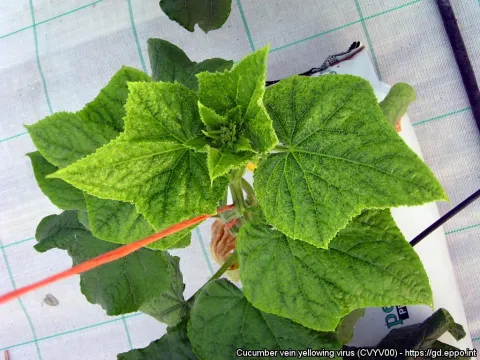
Cucumber vein yellowing
Cucumber vein
The disease is caused by the Cucumber vein yellowing virus (CVYV), which is a member of the Potyviridae family.
What the section contains
Cucumber vein yellowing
It is a highly contagious viral pathogen that significantly impacts the physiological processes of host plants.
The virus is known for its stability in the environment and its ability to spread rapidly within commercial production systems.
The primary hosts include cucumbers, watermelons, melons, and other members of the Cucurbitaceae family.
Understanding the molecular biology of this virus is crucial for developing resistant plant varieties and management strategies.
The disease manifests as a distinctive yellowing of the leaf veins, which eventually develops into interveinal chlorosis.
As the infection advances, the entire leaf surface may turn yellow, severely reducing the plant's photosynthetic capacity.
Infected plants typically exhibit stunted growth, reduced internode length, and overall poor vigor.
Fruit development is often impaired, resulting in smaller, pale, or malformed produce that is unsuitable for the market.
In severe cases, the foliage becomes necrotic, leading to leaf fall and the premature death of the entire plant.
The primary vector for the transmission of CVYV is the whitefly Bemisia tabaci, which transmits the virus in a semi-persistent manner.
High temperatures accelerate the life cycle of the whitefly, thereby increasing the rate of viral spread within the crop.
The virus often survives in weed hosts around greenhouses, which serve as reservoirs between growing seasons.
Increased humidity and sheltered environments, such as glasshouses, provide ideal conditions for insect populations to thrive.
Poor sanitation practices in the nursery can also facilitate the spread of the pathogen through mechanical contamination.
CVYV poses a major threat to agricultural productivity, leading to substantial yield losses in cucumber and melon industries worldwide.
The economic impact includes both the direct loss of fruit and the increased costs associated with pest management and crop replacement.
Viral infections weaken the plants, making them more susceptible to environmental stresses and other secondary plant pathogens.
Crop quality is significantly reduced, affecting the nutritional value and market value of the harvested produce.
The presence of the virus complicates international trade and often necessitates strict quarantine and phytosanitary measures.
Integrated Pest Management (IPM) focusing on whitefly control is the cornerstone of managing Cucumber vein yellowing virus.
Growers should utilize insect-proof screens to prevent the entry of vectors into greenhouse production areas.
Effective weed control in and around the greenhouse is essential to eliminate primary virus reservoirs.
The adoption of resistant or tolerant cultivars is the most effective long-term solution for reducing damage from CVYV.
- Application of appropriate insecticides to suppress whitefly populations.
- Rigorous sanitation to remove and destroy infected plant debris.
- Monitoring programs to detect the early arrival of insect vectors.