
Cucumber mushroom
Macrocystidia cucumis
Description
Symptoms
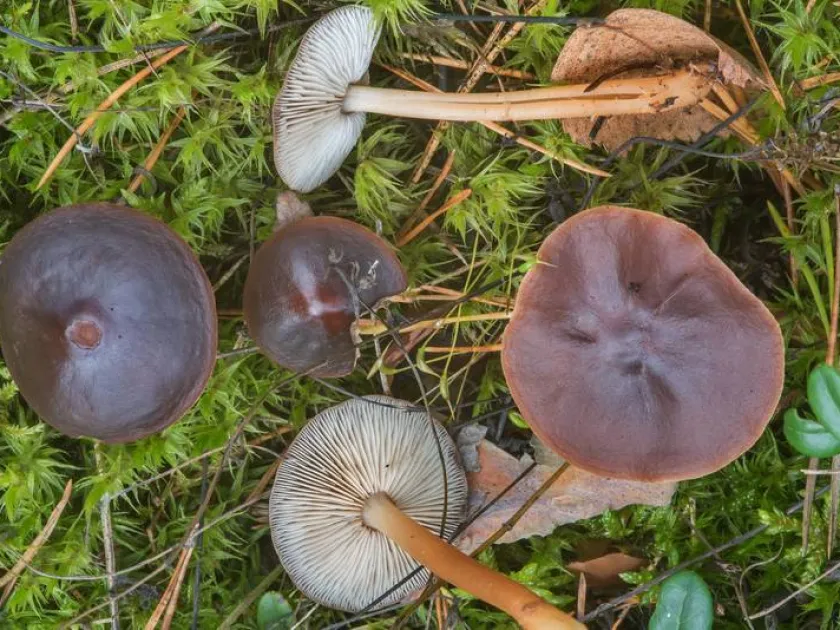
Macrocystidia cucumis, commonly known as the cucumber mushroom, is a small gilled fungus belonging to the family Tricholomataceae. Its fruiting bodies feature a cap ranging from 1 to 4 cm in diameter.
The cap typically displays shades of yellowish-brown or reddish-brown, often fading at the edges. As the mushroom matures, the cap transitions from bell-shaped to a flatter, slightly umbonate appearance.
The gills are cream or pale ochre, usually free or slightly attached to the slender, often dark-colored stipe. The stipe surface may show tiny scales, giving it a fibrous texture.
Its most distinctive feature is the scent. When handled or cut, the flesh emits a strong, clear odor of fresh cucumbers, which is a reliable diagnostic characteristic for identification.
The mycelium of the fungus is white and thread-like, colonizing organic substrates such as leaf litter, decaying wood, or humus-rich soil in shaded areas.
Pathogen
Macrocystidia cucumis is not a plant pathogen. It is a saprotrophic organism that lives exclusively on dead organic matter, playing a vital role in forest and soil ecosystems.
It does not attack living plant tissues, roots, or fruits. Its primary biological function is the decomposition of cellulose and other organic compounds, contributing to soil nutrient cycling.
The life cycle involves the production of spores within the gills, which are then dispersed by wind currents. If spores land on a suitable substrate with enough moisture, they germinate into a new mycelial network.
In a garden setting, the presence of this fungus is an indicator of healthy, decomposing organic material rather than a sign of a disease threatening the crop plants.
Because it lacks the mechanisms to infect living host plants, it does not fit the definition of a parasitic plant pathogen, and therefore, poses no risk to agricultural productivity.
Conditions for development
Development of this fungus requires high moisture levels and an abundance of organic debris. It thrives in humid conditions typical of late summer and autumn seasons.
Temperatures between +12°C and +22°C are ideal for the growth of its mycelial network and the subsequent development of fruiting bodies in the shade.
Shaded, undisturbed areas such as under shrubs, dense planting beds, or mulched areas with high moisture retention are the preferred habitats for Macrocystidia cucumis.
The fungus is often found in soils with a neutral or slightly acidic pH, where leaf mold or decaying wood chips provide a consistent source of carbon and nitrogen.
Excessive moisture combined with stagnant air or poor ventilation in the garden can accelerate the formation of fruiting bodies, making them more visible to the gardener.
Why it matters
There is no direct harm caused by this mushroom to vegetables, flowers, or fruit crops. It does not compete for minerals or water with living plant roots.
Some gardeners may worry that the presence of mushrooms indicates rot in the garden, but in the case of this species, it simply confirms that the soil is rich in decomposing organic matter.
In rare instances, if a thick layer of mulch is heavily colonized, it might temporarily create an anaerobic layer, but this is a rare side effect rather than a pathogenic impact.
The mushroom does not produce toxins harmful to crops or beneficial soil fauna, making it an ecologically benign component of the garden environment.
The overall impact on agriculture is neutral, as the fungus facilitates composting processes, which can actually benefit soil health in the long term.
Protection
Since the fungus is a natural saprotroph and not a disease, chemical control measures are unnecessary and should not be used in the garden environment.
Routine soil maintenance, such as shallow tilling or aeration, can disrupt the mycelial network and discourage the formation of visible fruiting bodies.
Effective management relies on proper composting practices. Ensuring that compost is fully matured before application eliminates the fresh organic debris required for the fungus to grow.
Improving drainage in low-lying areas and avoiding excessive watering helps manage the environmental conditions that favor mushroom development.
Removing the fruiting bodies manually is a cosmetic solution that does not eradicate the underlying mycelium, but the fungus will naturally vanish once the organic substrate is fully decomposed.
Discussion
No discussions yet — be the first.