
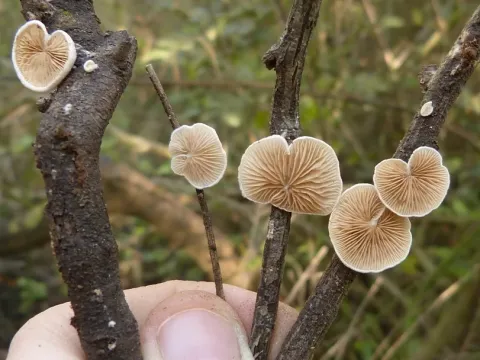
Variable Crepidotus
Crepidotus variabilis
Variable Crepidotus (Crepidotus variabilis) is a basidiomycete fungus within the Crepidotaceae family. In agronomic and arboricultural terms, it is recognized as a wood-decaying organism characterized by its saprotrophic nature.
What the section contains
Variable Crepidotus
The fungus feeds primarily on dead or decaying wood, utilizing a complex system of mycelium to break down lignin and cellulose components. This process is essential for ecological decomposition but can be detrimental in a managed garden setting.
While typically not a parasite on vigorous living trees, the fungus readily colonizes injured, dying, or weak plant tissues, accelerating the natural breakdown of the wood structure.
The fruit bodies of the fungus are notably small, sessile, or lacking a prominent stalk. They appear as delicate, fan-shaped caps that attach directly to the substrate, often emerging in clusters.
The life cycle relies on the production and dispersal of microscopic spores, which travel via air currents to locate new, moist wood surfaces where they can germinate and establish new mycelial networks.
The most prominent sign of a Crepidotus variabilis infestation is the appearance of tiny, white to cream-colored caps clinging to bark, fallen twigs, or decaying branches.
Wood colonized by this fungus becomes notably soft, brittle, and often loses its structural integrity. You may observe discoloration or a pulpy texture in the affected wooden surfaces.
White, thread-like mycelial strands are often visible upon close inspection of the bark, particularly in the crevices where the fungus fruit bodies have attached themselves.
The fruit bodies themselves are ephemeral; they may appear rapidly after rainfall and shrivel quickly during periods of low humidity or high temperatures.
Infection is frequently found on the undersides of horizontal branches or in dense, shaded areas of a tree canopy where moisture is trapped and airflow is restricted.
High humidity and moisture are the primary environmental requirements for the growth and reproduction of this fungus. It thrives following prolonged rainy spells or in permanently humid microclimates.
The fungus shows a strong preference for decaying deciduous wood. Mechanical injuries, such as frost cracks, broken limbs, or pruning wounds, provide ideal entry points for spore colonization.
The optimal temperature for the development of fruit bodies typically ranges between 15 and 22 degrees Celsius. Excessive heat or direct, drying sunlight usually halts its active development.
Poorly ventilated garden areas, where stagnant air and moisture accumulate, create the perfect conditions for the establishment and proliferation of this wood-decaying fungus.
Shaded environments, where there is little direct sunlight to dry out the bark, are significantly more susceptible to colonization by Crepidotus variabilis than open, sunny areas.
The primary concern regarding this fungus is its ability to accelerate wood decay. By breaking down the structural fibers, it makes branches prone to breakage under stress like heavy winds or snow load.
While generally saprotrophic, its presence signals that a plant is under physiological stress or has significant dead wood that could act as a reservoir for other, more aggressive pathogens.
In ornamental and orchard environments, the accumulation of fungal fruit bodies can reduce the aesthetic value and signal a decline in the overall vigor of the affected trees.
Persistent decay at the base of skeletal branches can lead to weakened structural unions, potentially resulting in catastrophic branch failure if the colonization is left unchecked.
Regular infestation requires ongoing sanitary maintenance, diverting labor and resources from other essential agricultural or horticultural tasks.
Regular sanitary pruning is the most effective control strategy. Removing all dead, dying, or diseased wood eliminates the substrate required for the fungus to thrive and produce spores.
Enhancing tree health through proper fertilization and appropriate irrigation helps plants maintain natural defense mechanisms, making them less attractive to opportunistic fungal colonization.
Improving canopy airflow through strategic thinning and pruning helps reduce the humidity levels that the fungus requires to develop, effectively inhibiting its spread.
Applying copper-based fungicides to pruning cuts or wounds can prevent spores from successfully colonizing exposed tissues and establishing new fungal colonies.
In cases where significant wood rot is detected, the affected areas should be cleaned and treated with wound sealants to prevent further moisture infiltration and decay progression.