
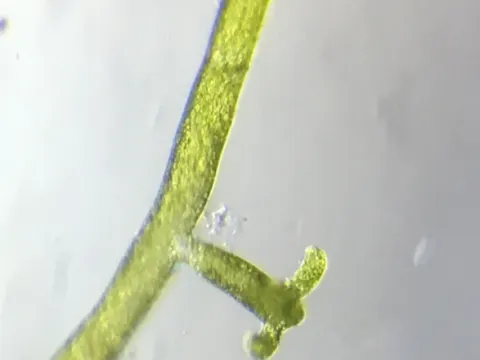
Vaucheria
Vaucheria
Vaucheria appears on the soil surface as a dense, velvety mat that ranges in color from bright green to dark olive. Over time, the colony can thicken and turn brownish or grayish as it matures.
What the section contains
Vaucheria
When the infestation is severe, a solid, rubbery film covers the entire surface of the growing medium. This layer creates a physical barrier that prevents seedlings from emerging properly and inhibits gas exchange.
As the algae photosynthesize, they release oxygen bubbles trapped within the mat, which can lift the soil particles or dislodge young seedlings from the substrate, leaving their roots exposed to the air.
The mats are slimy and moist to the touch. If the greenhouse dries out, the algae mat turns into a thin, brittle, papery crust that peels away easily from the soil surface.
A musty, damp odor is often associated with large colonies of Vaucheria, signaling poor drainage and lack of air circulation in the growing environment.
Vaucheria is a genus of yellow-green algae (Xanthophyceae). Its structure is unique as it exists as a coenocytic organism — a single, large, branched cell containing many nuclei without internal walls.
The organism reproduces through fragmentation of the filaments, the production of zoospores (asexual), or oospores (sexual). This versatility allows it to rapidly colonize any moist, nutrient-rich surface.
Although primarily photosynthetic, Vaucheria is highly adaptable and can persist in low-light conditions by utilizing organic matter present in the soil. It is frequently mistaken for a fungus due to its filamentous growth habit.
The production of resistant oospores enables the algae to survive extreme conditions, including drought and low temperatures, waiting for the right moisture levels to resume its aggressive growth.
It is not a true pathogen in the sense of attacking plant tissues directly like fungi or bacteria, but it acts as an opportunistic colonizer that flourishes where soil conditions are improperly managed.
Constant surface moisture is the primary driver of Vaucheria outbreaks. Greenhouses with overhead irrigation, poor drainage, or inadequate water management are most susceptible to colonization.
High levels of light, particularly in seedling nurseries using artificial grow lights, provide the energy source required for rapid algal proliferation. The combination of light and moisture is the trigger for bloom.
Excessive use of mineral fertilizers, especially nitrogen and phosphorus, provides the nutrient abundance that allows algae to thrive on the soil surface rather than just within the rhizosphere.
Soil compaction or a poor-quality substrate that does not drain well creates the waterlogged surface layer necessary for Vaucheria to establish itself and expand its network.
Contamination via non-sterile soil, reused pots, or water sourced from open ponds or stagnant tanks is the most common way for spores to enter a greenhouse environment.
Vaucheria competes with plants for available nutrients in the surface layer of the soil. This can lead to nutrient deficiencies in young seedlings, which are already in a sensitive growth phase.
The thick film acts as a seal, preventing proper oxygen diffusion into the root zone. This leads to hypoxic conditions that weaken roots, reduce nutrient uptake, and cause overall stunted growth.
Young sprouts may be physically smothered by the algal mat, preventing them from establishing a strong root system. The constant dampness around the stem also softens the tissues, inviting fungal diseases.
The moist, nutrient-rich microenvironment created by the algae serves as a breeding ground for pests like fungus gnats (sciarids). Their larvae subsequently feed on the roots, compounding the damage.
Changes in soil pH or oxygen levels caused by the algae can create a toxic environment for sensitive roots, further weakening the plant's natural defenses against other pathogens.
The most effective strategy is to regulate irrigation by keeping the surface of the soil as dry as possible. Sub-irrigation or watering directly at the base of the plant is recommended over overhead spraying.
Improving air circulation through fans and adequate spacing between pots reduces surface humidity, making the environment less hospitable for algal growth.
Top-dressing the soil with a thin layer of dry, coarse sand, perlite, or fine gravel is a highly effective physical barrier that blocks light and prevents moisture from reaching the algae spores.
For existing infestations, mechanical removal of the top crust is necessary. The removed material should be discarded away from the greenhouse to prevent the spread of spores.
Ensuring the use of sterilized or high-quality peat-based substrates and maintaining clean equipment are essential preventative measures against future outbreaks of Vaucheria.