
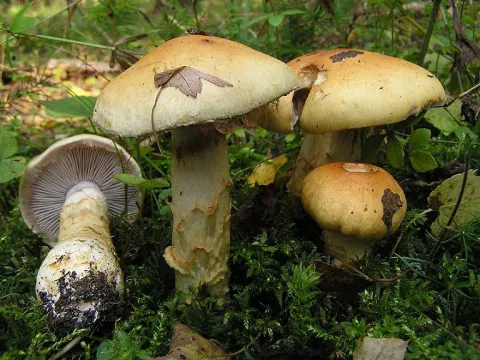
Cortinarius triumphans
Cortinarius triumphans
Cortinarius triumphans, commonly known as the birch webcap, is a mushroom species in the Cortinariaceae family. It is essential to clarify that this organism is not a plant disease or a pathogen of agricultural crops.
What the section contains
Cortinarius triumphans
Biologically, this species is classified as a mycorrhizal fungus. This means it forms a symbiotic relationship with the root systems of specific tree species, most notably birch trees.
The fungus does not infect plant tissues or derive its nutrition by destroying host cells. Conversely, it creates an extensive network of hyphae that assists the tree in absorbing water and essential mineral nutrients from the soil.
The mycelium of the fungus actively spreads throughout the forest floor without invading the living root tissues, instead enveloping them externally, which is typical of ectomycorrhiza.
Therefore, classifying Cortinarius triumphans as a disease is an error in an agronomic context. It is a beneficial forest symbiont, not a parasitic organism.
External signs of this mushroom's presence include the appearance of fruiting bodies near the root zone of host trees, primarily birch, during the period from late summer through autumn.
The fruiting bodies feature a characteristic convex cap with a vibrant ochre-yellow color, often retaining remnants of a slimy veil, giving them a glossy appearance after rainfall.
The stem is sturdy, marked with distinct ring-like zones, which represent remnants of the cortina — a spider-web-like protective layer typical of all Cortinarius species.
The underside of the cap (hymenophore) is lamellate, with gills turning from a cream color in young specimens to a light brown or ochre shade as the spores mature.
When examining the root zone of the trees, one may observe mycelial strands in the soil layer, yet there are no associated necroses, rots, or deformations visible on the tree.
The development of this fungus is strictly tied to the presence of birch stands, as Cortinarius triumphans engages in an obligate mycorrhizal symbiosis with these trees.
Successful formation of fruiting bodies requires moderately moist soils with sufficient humus content and organic matter accumulation in the forest floor.
The fungus prefers moderately warm temperatures in late summer and early autumn, showing active growth in response to consistent rainfall during this timeframe.
Light levels are not a critical factor, as the mycelium resides within the soil and leaf litter, obtaining carbohydrates from the host tree rather than through photosynthesis.
Maintaining ecological balance in the forest is essential, as excessive use of fungicides in adjacent woodland areas can inhibit the development of this symbiotic mycelium.
This organism does not cause harm to agricultural crops, garden plants, or forest trees; therefore, the question of its harmfulness does not apply.
Unlike true phytopathogens, the birch webcap contributes to soil health and enhances nutrient uptake for trees, thereby increasing their resistance to environmental stressors.
The absence of disease symptoms on trees living in symbiosis with this fungus confirms its status as a beneficial component of the ecosystem.
In forestry, the presence of mycorrhizal fungi is considered a positive indicator, reflecting healthy soil conditions and biological well-being of the forest stand.
The presence of Cortinarius triumphans does not require any quarantine or protective intervention, as it poses no threat to yields or plant health.
Since Cortinarius triumphans is a beneficial symbiont rather than a pest, no control measures or chemical protection strategies are required or recommended.
When performing agronomic or forestry tasks near wooded areas, avoid excessive application of pesticides into the soil to prevent disruption of natural mycorrhizal networks.
Preservation of the forest floor supports the population of this fungus, which indirectly fosters the health of birch forests.
Disease management should be focused exclusively on genuine plant pathogens, rather than on symbiotic fungi that form the foundation of forest immunity.
In the event of mistaken identification as a pathogen, it is advised to consult a mycologist to confirm its ecological role and avoid unnecessary destruction of beneficial biota.