
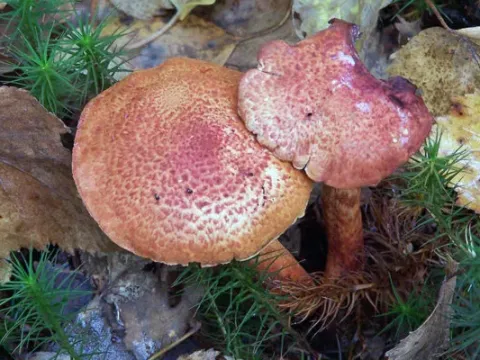
Cortinarius variegatus
Cortinarius variegatus
Cortinarius variegatus is a mycorrhizal fungus belonging to the family Cortinariaceae. It is essential to clarify that this organism is not a plant pathogen or a disease; rather, it is a beneficial symbiont that assists tree health in forest environments.
What the section contains
Cortinarius variegatus
The fungus establishes a symbiotic relationship known as ectomycorrhiza, where the mycelium envelops the roots of host trees. This partnership facilitates the exchange of nutrients, specifically helping trees absorb phosphorus and water from the soil.
This species belongs to the section Phlegmacium, characterized by a glutinous or sticky cap and a distinct cobweb-like veil (cortina) that covers the gills in young specimens.
Unlike parasitic fungi, Cortinarius variegatus does not cause tissue damage, necrosis, or growth suppression in plants. Its presence is typically a sign of a healthy, functioning forest ecosystem.
Biologically, the fungus relies on the tree host for carbohydrates, while the host gains enhanced stress tolerance, making the fungus an integral part of forest tree biology.
The primary sign of its presence is the emergence of fruiting bodies, typically occurring during the late summer and autumn seasons in temperate forests.
The cap displays a distinctive "variegated" or mottled appearance, featuring various shades of yellow, ochre, and olive, often highlighted by a slimy coating when wet.
A key identifying feature is the cortina—a web-like structure protecting the gills in the early stages of development, which leaves brownish spore deposits on the stem as it matures.
The stem is robust and often bulbous at the base, reflecting the typical morphology of the genus Cortinarius, which aids in field identification.
The gills are initially pale or yellowish, transitioning to a rusty-brown color as the spores mature and are released into the environment.
Cortinarius variegatus requires high soil moisture levels and moderate temperatures to produce fruiting bodies effectively.
It predominantly thrives in coniferous and mixed forest environments, where it forms symbiotic relationships with specific tree species.
The fungus prefers acidic soil conditions rich in organic leaf litter, which is common in forest settings that have not been heavily disturbed by agricultural chemicals.
Optimal development is observed during periods of high humidity following rainfall, as the slimy texture of the cap is particularly sensitive to dry conditions.
The longevity of the underground mycelial network depends on the health of the host tree's root system and the stability of the surrounding forest soil.
This fungus poses no harm to agricultural crops or garden plants. It is not a disease-causing agent, and therefore, it causes no economic loss to farmers or foresters.
The ecological impact is overwhelmingly positive, as it contributes to soil structure and facilitates nutrient cycling in forested areas.
However, Cortinarius variegatus is generally considered inedible and potentially toxic, like many other members of its genus, which contain dangerous compounds such as orellanine.
The only potential harm associated with this fungus is accidental ingestion by humans, which emphasizes the need for public awareness regarding mushroom identification.
No agricultural countermeasures are necessary, as the presence of this fungus does not require management or intervention in agricultural or forestry practice.
Since Cortinarius variegatus is not a plant pathogen, no chemical or biological control methods should be implemented.
Management efforts should focus on preserving the forest environment, as the health of these fungi is tied to the integrity of the soil and the host trees.
The use of fungicides in areas where these fungi occur is discouraged, as it can disrupt the natural mycorrhizal networks that support tree growth.
If these mushrooms appear in woodlands, they should be left undisturbed as they contribute to the natural biological balance of the area.
Public education about the risks of mushroom consumption remains the most effective form of prevention regarding the dangers of toxic forest fungi.