
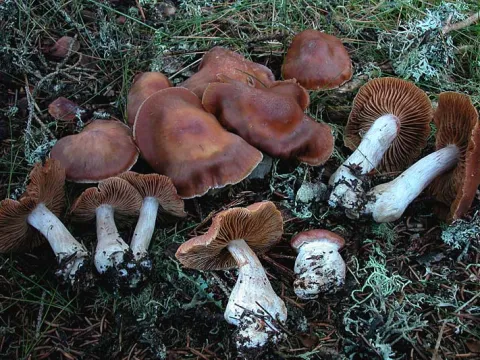
Cortinarius triformis
Cortinarius triformis
Cortinarius triformis is a species of mushroom in the family Cortinariaceae. Within the context of forestry and plant biology, it is recognized as a fungus that predominantly lives in soil and forms mycorrhizal associations with trees.
What the section contains
Cortinarius triformis
This fungus is characterized by its distinct, web-like partial veil known as a cortina, which is visible in young specimens. This structure helps distinguish it from other fungi within the vast Cortinarius genus.
From a biological standpoint, Cortinarius triformis is a saprotrophic or mycorrhizal organism. It plays a significant role in the breakdown of forest litter and the cycling of nutrients within the soil ecosystem.
While not a primary pathogen of major agricultural crops, it is often found in moist woodland environments. Its presence is linked to the decomposition of organic matter in the upper soil layers.
Understanding the biology of this species is essential for forest management, as it interacts with the root systems of various tree species, potentially influencing their nutritional uptake and overall vitality.
The fungus thrives in conditions characterized by high moisture levels and moderate temperatures. It is most commonly found during the late summer and autumn seasons when humidity is at its peak.
Acidic soil conditions, rich in organic debris and leaf litter, provide an ideal habitat for the mycelium to spread. Such environments are typical of coniferous and mixed forest floors.
An optimal temperature range for the development of fruit bodies is typically between 12°C and 18°C. Periods of persistent rainfall are the primary drivers of mass fruiting and spore dispersion.
Shaded areas with minimal direct sunlight allow for the stable moisture levels required for the fungal network to maintain its activity throughout the growing season.
Soil compaction or poor drainage often creates micro-environments that favor the colonization of Cortinarius triformis, as these conditions prevent the rapid drying of the substrate.
While Cortinarius triformis is not typically aggressive against healthy trees, its dominance in the soil can alter the microbial balance. This may lead to the displacement of beneficial mycorrhizal fungi.
In nursery settings, a high density of this fungus can create competition for water and minerals, potentially stressing young seedlings and reducing their growth rate.
The acidic byproducts of the fungus's metabolism can slightly lower the soil pH in localized areas, which may be detrimental to plant species that require neutral or alkaline substrates.
Its presence often acts as a bio-indicator of poor drainage. Consequently, the harm caused to plants is frequently indirect, resulting from the waterlogged soil conditions rather than direct infection.
Large-scale proliferation can lead to soil degradation, where the biological structure of the root zone is changed, making the area less hospitable to more sensitive vegetation.
Management of this fungus focuses on habitat modification. Improving soil drainage is the most effective way to eliminate the moist conditions that Cortinarius triformis requires to thrive.
Applying agricultural lime or wood ash can help neutralize acidic soils, creating an environment that is less favorable for the growth and reproduction of this species.
Regular cultivation and aeration of the soil can mechanically disrupt the mycelial network, preventing the fungus from establishing a stable colony in the root zone.
Maintaining proper site hygiene by clearing excessive leaf litter and preventing the buildup of dead organic matter significantly reduces the available nutrients for the fungus.
- Improve soil drainage systems.
- Adjust soil pH through liming.
- Use regular tilling to disrupt mycelium.
- Sanitize growing areas by removing excess debris.